 Skip to main content

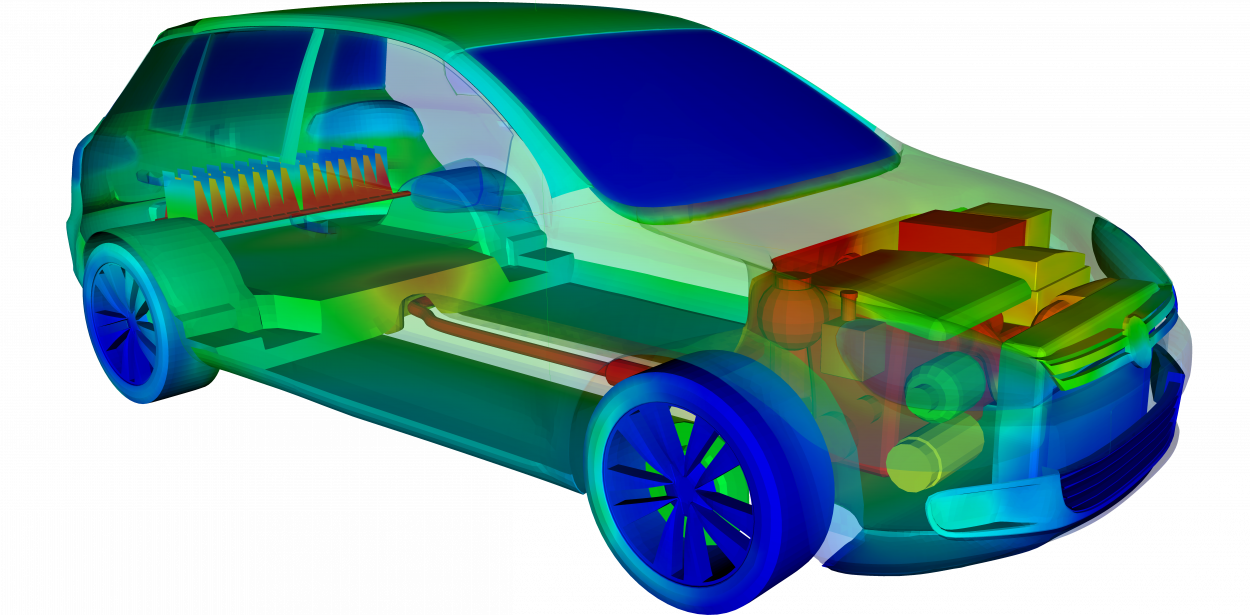
The Battery Thermal Extension is a coupled thermal-electric solver that predicts battery performance.
Transient Analysis
The Battery Thermal Extension uses transient simulation to produce accurate results for critical battery design applications, including packaging, cooling, and lifetime evaluations. By simulating the heat produced during operation and the battery's temperature throughout the entire range of operational scenarios, you can draw accurate conclusions about battery performance for any situation or environment.
Three Electrical Models
Along with the National Renewable Energy Laboratory (NREL), we have developed three coupled thermal-electric models that provide a realistic analysis of battery performance both inside and outside battery cells. With this extension, you can choose between the equivalent circuit and distributed electrical models, depending on the desired level of detail for your model.
Our models include the NTG Equivalent Circuit, the NTG Distributed, and the NREL Equivalent Circuit models. The NTG Equivalent Circuit model is the simplest to build and easiest to calibrate. It has only two electrical input parameters and a simple parameter extraction procedure. The NTG Distributed model applies the NTG Equivalent Circuit electrical equations on an element-level basis to calculate voltage and current density distributions across the faces of the electrodes and computes localized heating effects. The NREL Equivalent Circuit model is similar to the NTG Equivalent Circuit model, but has additional R-C pairs in the electrical circuit that add time constants into the voltage equation for a more detailed and accurate analysis with highly transient drive cycles.
Battery Lifetime Model
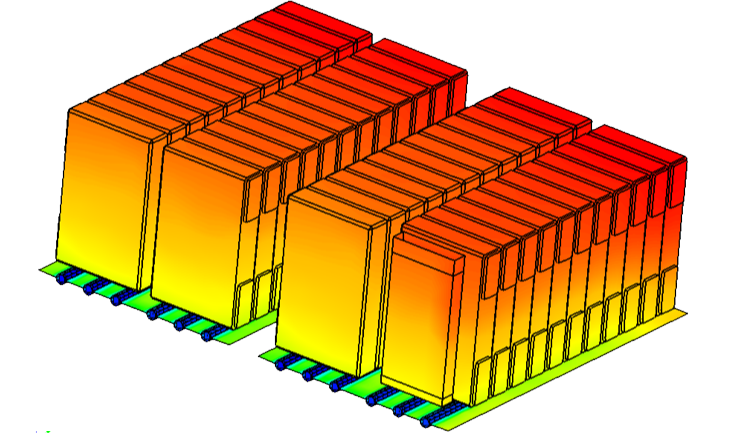
Evaluate the performance, life, and cost of battery pack designs for the entire service life of the pack. Our coupled battery lifetime model uses TAITherm for operation and is integrated into CoThermTM for simplified coupling and process automation. The Lifetime Model describes relative capacity and relative internal resistance as functions of time and number of cycles. Understand how your design affects lifetime and performance in terms of age and decline in performance due to cycling fade. Our model can accurately describe degradation for your battery model.
See What The Battery Extension Can Do
Want to see how the Battery Thermal Extension could work for you? Reach out, and we will set up a time to walk through a live demo with you. One of our technical sales representatives can show you how our fast, transient software can solve your thermal management issues.
Getting Started
Training
We offer hands-on training to help you implement the Battery Thermal Extension. Each year we offer two training sessions in southeast Michigan. Or we can come to your office and deliver training tailored to your needs.
Tutorials
Start on your own. Our step-by-step tutorials cover basic and advanced techniques. Once you have a software license, these tutorials are available for you to advance your knowledge.
Support
We are here to answer your questions at every step. We support our customers before and after the sale. Our commitment to you doesn’t change.