 Skip to main content


What’s beyond ‘realistic’? Reality-based in first-principles physics.
MuSES EO/IR Signature simulation software computes at-sensor
radiance in every waveband from visible gray through infrared
and out to millimeter wavelengths.
Validated EO/IR Accuracy
Electro-optic and infrared renderings in MuSES achieve global benchmark accuracy through a stepwise workflow – beginning with heat sources such as engines, exhaust, bearings, and electronics, followed by an in-band diffuse radiosity solution. Then place your sensor at-range and render multi-bounce, spectrally-summed radiance values, with DeltaT-RSS contrast metrics. Sensor response curve handy? Import it and see what you’ve been missing. With MuSES, you have reality at your fingertips.
Rapid Design for LO
Because MuSES covers physics all the way back to heat sources and environmental loads, you can manage thermal signature contrast and evaluate control kits for low observables design in any global location. Heat shields, cooling schemes, even camo surface treatments can be tested and evaluated for in-band radiance, replete with atmospheric attenuation along sensor line-of-sight. Triage and prioritize your engineering with MuSES early in the development cycle.
Features
Sensor Prediction
Place your sensor at any range, lookdown angle, and azimuth, whether at short range near ground or from aerial and satellite platforms. MuSES signature prediction software takes care of the rest, computing source radiance for both targets and backgrounds, direct, diffuse, and reflected solar, and spectral sources like sky radiance and water reflections. The source radiance is then spectrally attenuated back to the sensor location. Easily script up multiple ranges and LOS’s to build a complete library of band-specific contrast values.
Probability of Detection
Often probability of detection (POD) is computed for numerous ranges from target to sensor; with MuSES you can consider it done. But don’t stop there. MuSES enables your team to test low observables designs, examine operational profiles for vulnerable, high-contrast situations, and even plan the best times for execution. Because MuSES deals in reality, you get accurate POD metrics and can design, plan, and develop systems with speed and confidence.
Satellite Imagery Analysis
Observing individuals, ships, vehicles, and aircraft on the ground from satellites and aerial platforms requires accurate atmospheric attenuation along the sensor line of sight. MuSES employs calls to MODTRAN, the benchmark for physics-based atmospheric radiance computations, along with weather data and solar intensity to yield accurate renderings of ground-based assets. Solar loading, thermal shadows, thermal behavior, and thermal lag are all computed over long time periods to accurately capture the temperature distribution and source radiances for the sensor wave band. Rendering with multi-bounce ray tracing yields physically accurate and realistic contrast metrics.
Remote Imagery Analysis
Using texture mapping, remote imagery can be used to impose a temperature distribution on terrains. This enables you to drive an aerial scenario with realistic terrain temperature distribution on a faceted background component. Targets can be placed on the terrain and rendered against complex, cluttered backgrounds.
Thermal Analysis
MuSES includes the globes’ most advanced thermal solver, TAITherm thermal analysis software, employed by the leading vehicle and aircraft OEMs to rapidly solve thermal behavior and thermal management problems. Because many EO/IR signature challenges are rooted in thermal behavior, MuSES accurately simulates heat transfer and can thus be a virtual test platform for low observables kits or primary system analysis.
See What It Can Do
Curious about MuSES' capabilities? Watch this.
Thermal and EO/IR Signature simulation software that is incredibly fast without sacrificing accuracy.
Transient Thermal Signature Predictions for Your Design
MuSES focuses on transient signature analysis to deliver answers faster without sacrificing accuracy. Reduce your production time while providing optimized designs.
Extensions
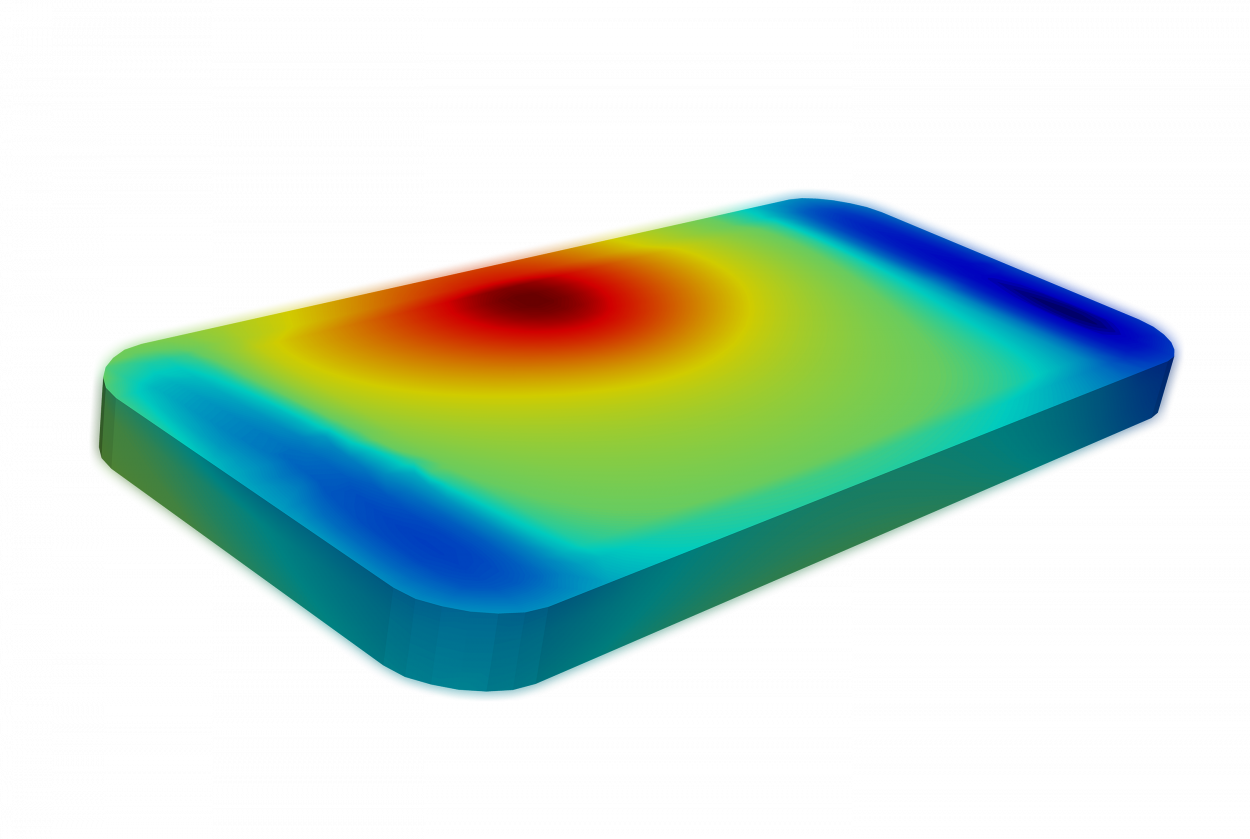
Take Charge with Thermal Simulation
The Battery Extension is designed to analyze the complexities of your batteries at a cell and pack level. As a licensed component of TAITherm, it uses thermal simulation to determine the lifetime, durability, and safety of your battery system. You can verify design choices, and mitigate complications due to safety issues including thermal runaway and aging.
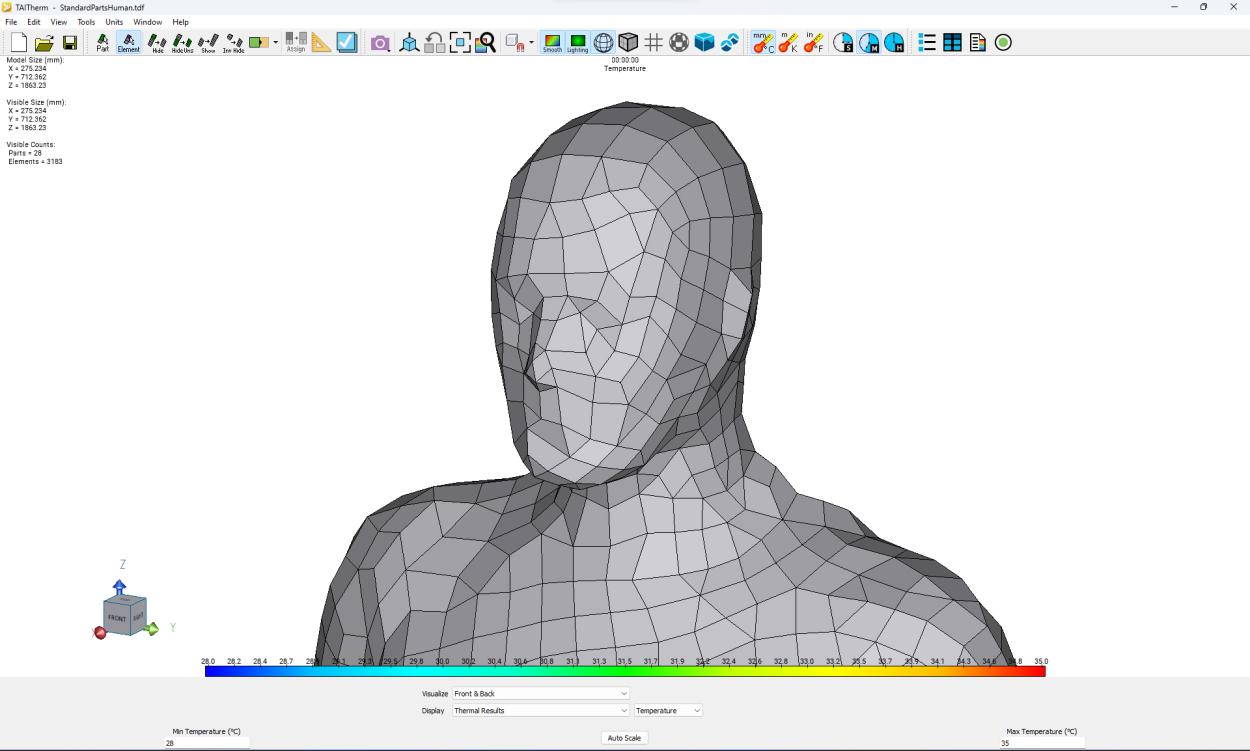
Beyond Comfortable
Our Human Thermal Extension is the state-of-the-art technology for predicting human thermal comfort, safety, and effectiveness. It operates within our thermal analysis software, TAIThermTM, to comprehensively simulate human thermal sensation and thermoregulation under transient and asymmetric environmental conditions. Users can simulate all thermoregulatory responses based on many factors, including activity level. We have developed a comprehensive library of standard human models in various poses, including female and male physiologies. We have also developed an extensive clothing database for rapid model setup.
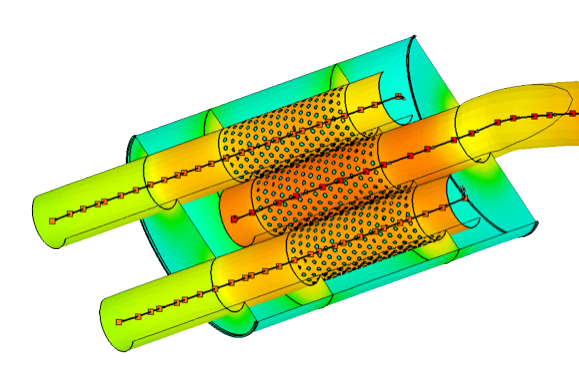
Improved Heat Protection Strategies
The Exhaust Extension uses transient, thermal simulation to solve thermal challenges in one of the most complex systems in a vehicle – the exhaust system. With a library of pre-built components and a simple set-up process, you can optimize your exhaust system design quickly, and understand how it will perform in hot soak or time-based scenarios.
The Exhaust Extension is built to reduce set-up time, generate results quickly, and provide realistic solutions with transient simulation.
Getting Started
Training
The most efficient way to get started is to attend our two-day training. After the training, you will be proficient at using the MuSES Thermal signature prediction software on your own. Additional training is available to cover advanced topics such as infrared simulations, human comfort analysis, thermal comfort simulations, or advanced coupling processes such as steady-state coupling. We offer two training sessions a year in southeast Michigan, or we can arrange private training at your office.
Tutorials
Start on your own. Our step-by-step tutorials cover basic and advanced techniques. Once you have a software license, these tutorials are available for you to advance your knowledge.
Support
We are here to answer your questions at every step. We support our customers before and after the sale, our commitment to you never changes.