
Systems Integration & Co-Simulation
High-Fidelity 3D/1D Co-Simulation for Thermal Management
Bridge System Models and 3D Thermal Simulation
3D/1D coupling is a hybrid simulation methodology that combines system-level 1D models with 3D heat transfer models. 1D system codes excel at solving multiphysics behavior for lumped-parameter components in complex system networks. However, they lack 3D spatial resolution. 3D thermal solvers like TAITherm, by contrast, provide high-fidelity heat transfer solutions. Component performance data represents complex components better than geometry-based physics prediction, though, so TAITherm isn’t the right tool for modeling them. Because both tool types suit long transient simulations of dynamic scenarios, engineers often couple them together.
By coupling these solvers, engineers replace the static, coarsely approximated boundary conditions typical of standalone models. Instead, they use dynamic, physics-based boundary conditions the coupled model derives. This approach captures critical, co-dependent physics effects. It avoids the computing overhead and complexity of forcing either tool to build a comprehensive model alone.

How It Works
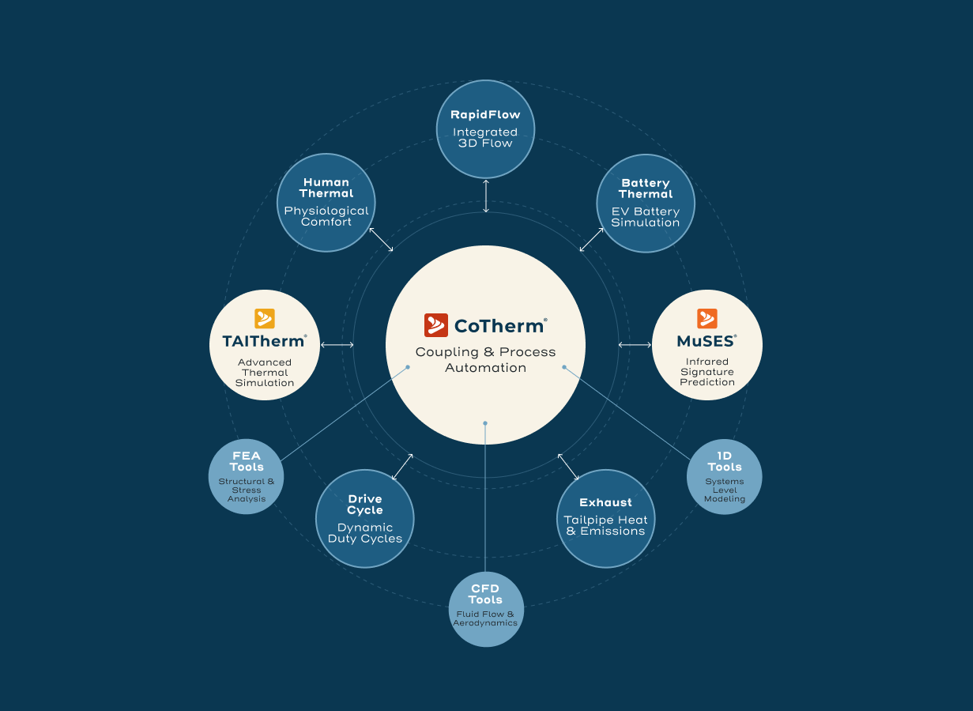
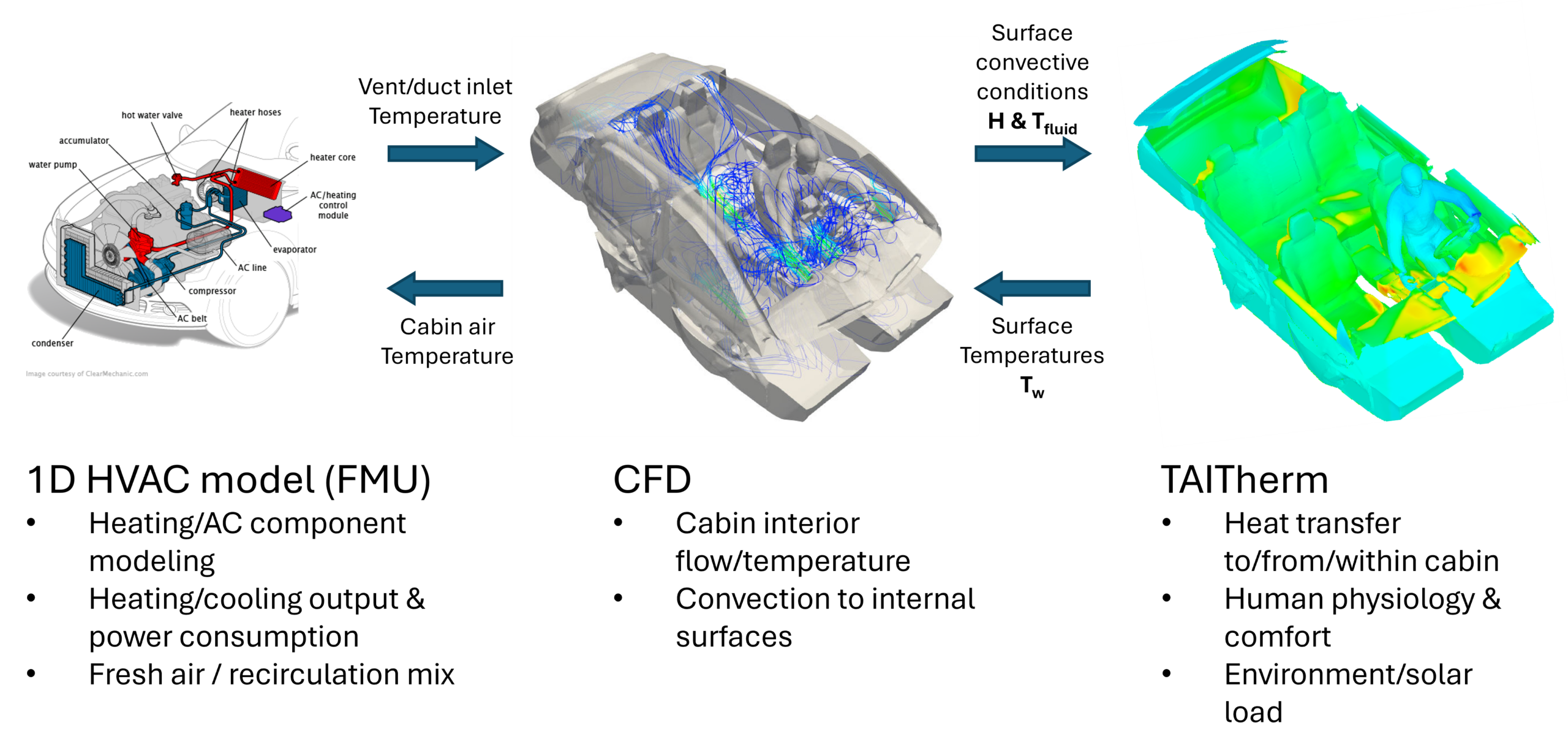
In a TAITherm 3D/1D coupled workflow, the interaction can be managed by a co-simulation middleware (such as ThermoAnalytics’ CoTherm) or via direct coupling using GT-SUITE or the FMI/FMU coupling standard. The process relies on a “mapping” strategy where 1D components are associated with specific 3D geometric surfaces.
During the transient solve loop:
Engineering Without Compromise
By integrating ThermoAnalytics into your design workflow, you transform thermal management from a reactive fix into a competitive advantage.
Vehicle Thermal Management
Effective underhood thermal management requires balancing dynamic heat sources and cooling systems with complex radiative environments. By coupling 1D system models for engine coolant and control logic with TAITherm’s 3D solver, engineers can accurately predict component temperatures during critical transient events like hill climbs and “key-off” soak. This approach captures the spatial reality of exhaust radiation and multi-mode heat transfer that 1D models miss, allowing for the precise sizing of heat shields and the prevention of thermal failure in sensitive components, all while validating control strategies under realistic drive cycles.

xEV Battery Thermal Management
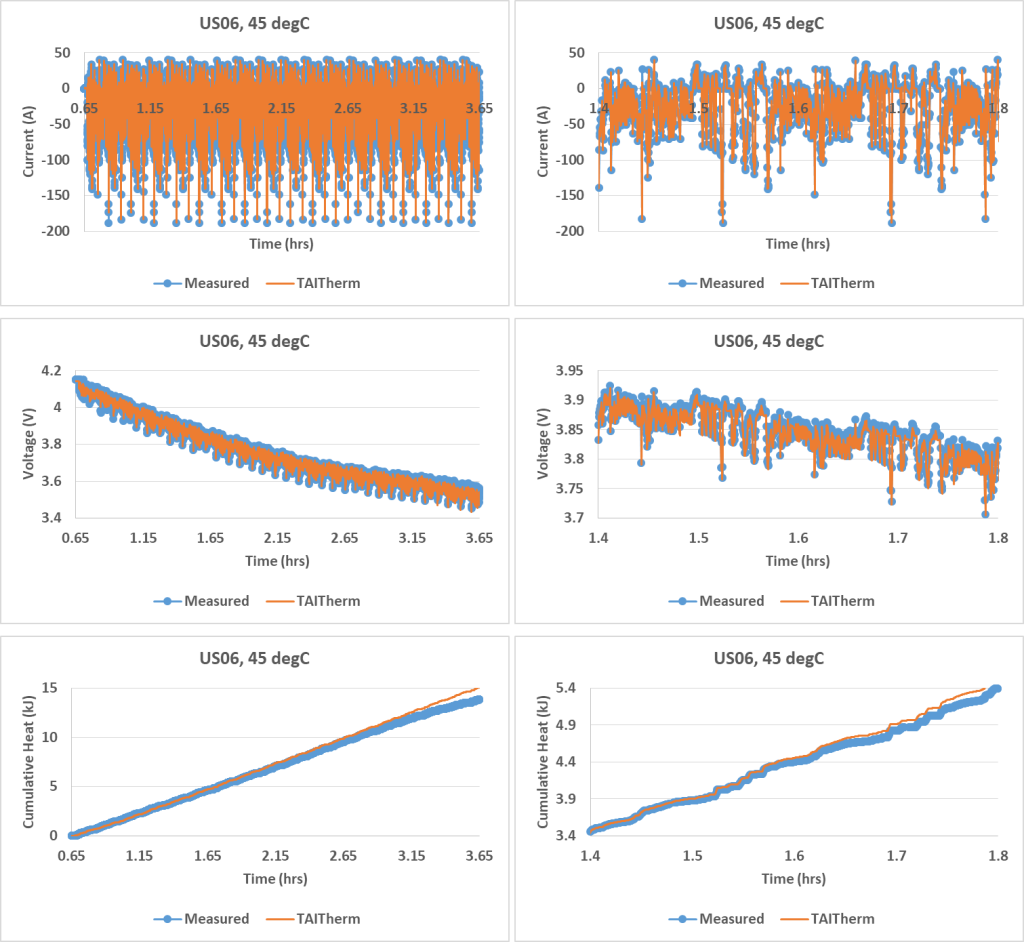
Ensuring the safety and longevity of electric vehicle battery packs demands visibility into thermal gradients that simple system models cannot provide. 3D/1D coupling bridges the gap between the coolant loop’s performance and the detailed conduction paths within the battery pack. This allows analysts to simulate aggressive charge/discharge cycles and immediately identify cell-to-cell temperature variations or potential runaway risks. By resolving these spatial hotspots alongside the 1D system logic, engineers can optimize cooling strategies to maintain uniform cell temperatures without over-engineering the thermal management system.

Cabin Comfort & HVAC Control
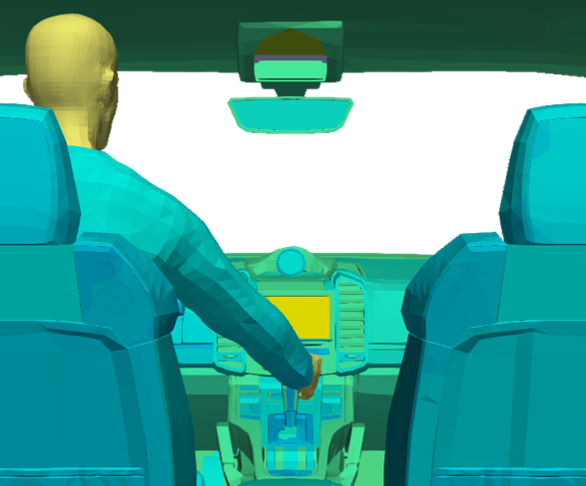
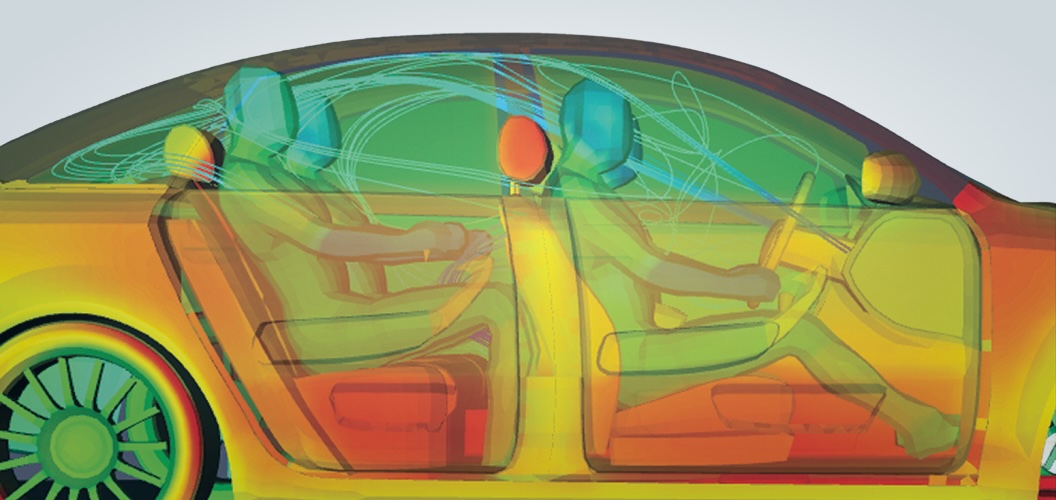
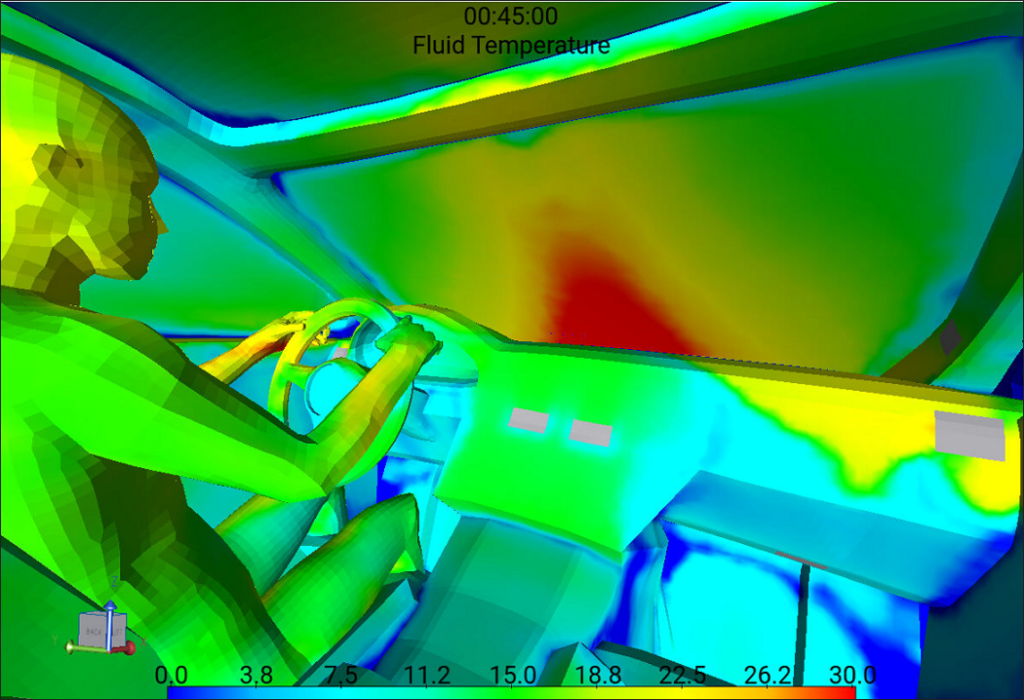
True passenger comfort is determined by more than just air temperature; it is the result of complex interactions between solar loading, surface radiation, humidity, contact with passive or active surfaces, and human physiology. Coupling a 1D HVAC model with TAITherm’s Human Thermal Extension allows for a holistic analysis of the cabin environment. The 1D model handles the dynamic response of the A/C compressor, heat exchangers, and other HVAC components, while the 3D solver calculates local skin temperatures and comfort indices. This integration enables the tuning of climate control logic to react effectively to changing environmental conditions, ensuring passenger satisfaction while minimizing energy consumption.