

High-Fidelity Transient Thermal Analysis Software for Real-World Environments
Fast, accurate 3D thermal simulation for dynamic operating environments. Predict steady-state and transient heat transfer to eliminate design risks early.
Predict Real-World Thermal Performance with Confidence
TAITherm is the premier professional 3D thermal simulation tool designed to solve the most complex heat transfer challenges in both steady-state and dynamic transient environments. Engineered for physics-based accuracy, the software utilizes a robust implicit, multi-mode solver architecture that allows engineering teams to capture true, time-dependent system behavior. By simultaneously solving conduction, convection, and radiation, TAITherm empowers engineers to identify thermal limits early, move beyond idealized assumptions, and confidently optimize designs for real-world performance.
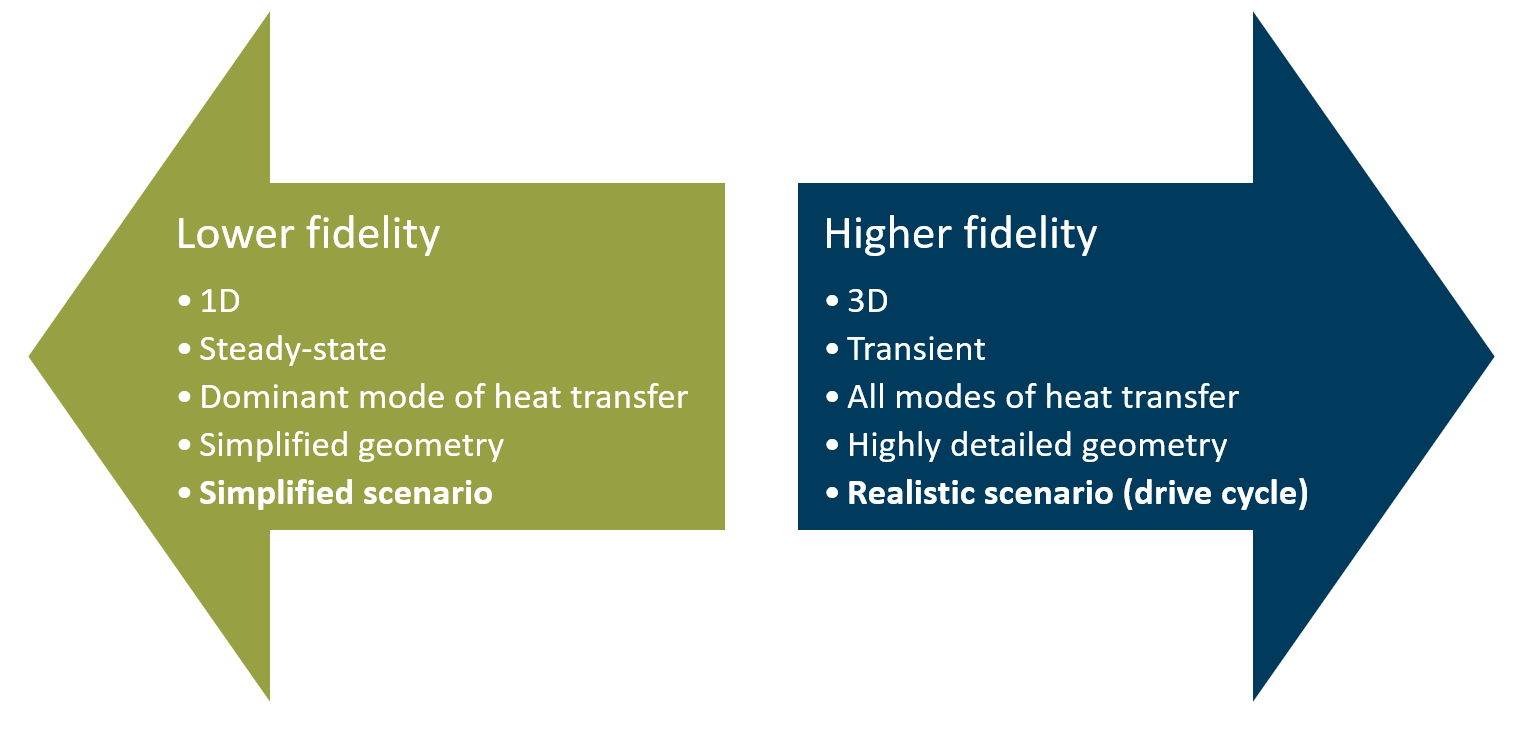
TAITherm serves as a critical bridge in the CAE workflow, solving the pervasive engineering struggle of balancing high-fidelity predictive modeling with computational efficiency. Its unique value lies in its ability to solve the full thermal energy equation for millions of interactions, providing results validated against real-world test data in hours rather than days. Whether managing thermal battery runaway, optimizing cabin comfort, or analyzing complex transient duty cycles, TAITherm provides the predictive confidence required for safety-critical product development.

Accelerate Your Go-to-Market Timeline
TAITherm’s highly optimized solver allows you to run transient simulations in a fraction of the time required by traditional CFD.

Reduce Prototyping Costs
With industry-leading accuracy in predicting “hot spots” and thermal gradients, TAITherm enables you to move toward a “zero-prototype” strategy.

Optimize for Peak Energy Efficiency
TAITherm allows you to fine-tune cooling strategies and material selections to minimize energy parasitic losses.

Design for Human-Centric Comfort
Instead of just meeting a temperature target, you can design for human sensation and comfort.
Powerful Capabilities for Complex Thermal Systems
Implicit Solver & Solver Architecture
TAITherm employs a robust implicit finite difference/finite volume solver architecture designed for maximum stability and accuracy. Unlike decoupled legacy tools, this system processes the thermal energy equation at each time step by considering conditions at the end of the step, ensuring greater numerical stability for complex models. This foundation allows for the simultaneous calculation of non-linear heat transfer mechanisms in a single iteration.
Implicit Solution Method
Processes heat transfer by considering conditions at the end of each time step for superior stability.
Simultaneous Multi-Mode Solving
Solves conduction, convection, and radiation together to capture true physical feedback loops.
Governing Energy Equation
Built to solve the full, time-dependent thermal energy equation based on decades of research.
Numerical Stability
Delivers predictive confidence for mission-critical designs through a robust, physics-based foundation.

Multi-Mode Mastery & Radiation Modeling
The software is purpose-built to handle the highly non-linear nature of radiation, making it essential for transient or vacuum environments. TAITherm utilizes advanced view factor calculation algorithms and supports both gray-body and non-gray-body models to precisely predict surface temperatures. This capability ensures that radiative exchange, often the dominant mode in aerospace and high-temperature automotive studies, is captured with high fidelity.
Advanced View Factor Algorithms
Efficiently manages complex radiative exchange between millions of surfaces.
Non-Gray-Body Modeling
Supports wavelength-dependent surface properties for precise spectral radiance predictions.
Vacuum Environment Accuracy
Excels at radiation-dominant heat transfer where convection is absent, such as in space.
Implicit Radiation Coupling
Captures how minor temperature changes feed back into the total heat radiated across the system.
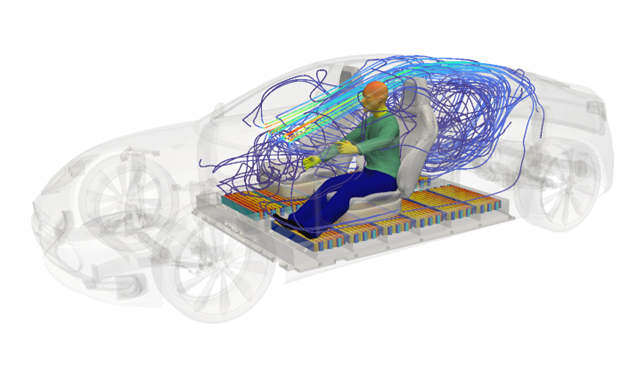
Integrated Thermal-Fluid Coupling
TAITherm facilitates seamless interaction between 3D conduction and fluid flow environments through advanced coupling methodologies. While the core solver manages solid heat transfer, specialized extensions like RapidFlow or 1D/3D CFD coupling allow for the calculation of convective heat transfer coefficients. This ensures that the influence of air velocity, fluid temperature, and boundary layer physics is fully captured in the final temperature distribution.
1D/3D Co-Simulation
Couples with system-level 1D codes to integrate controls and fluid loops.
Automated CFD Interfacing
Streamlines the import of convective data from CFD solvers.
RapidFlow Extension
Uses an integrated 3D flow solver for fast convective analysis without the overhead of full CFD.
Dynamic Environmental Coupling
Synchronizes time-varying ambient temperatures, solar flux, and weather data with the 3D surface model to simulate realistic outdoor duty cycle.
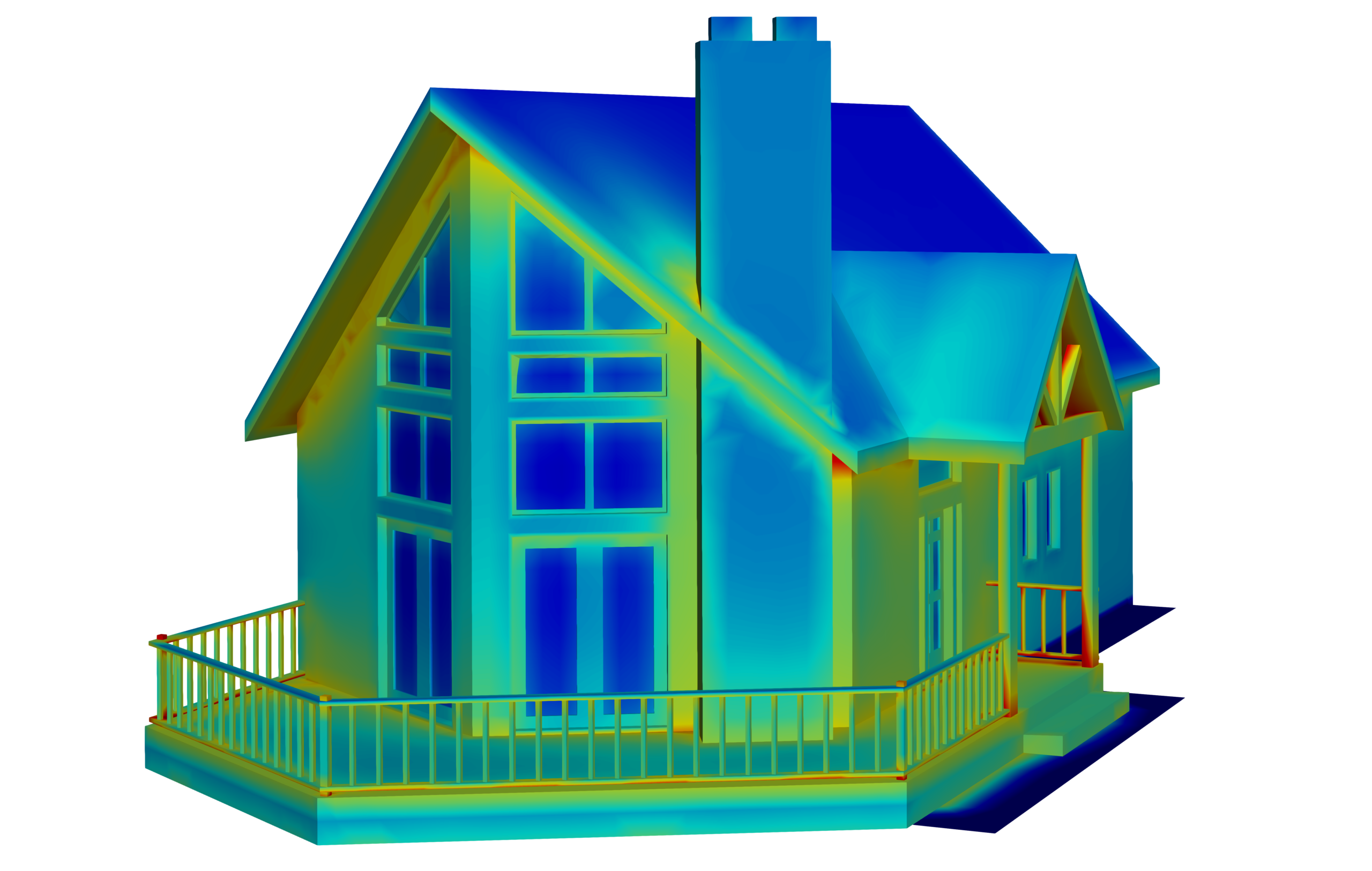
Specialized Material & Transient Logic
TAITherm’s material database handles the non-linear complexity required for real-world engineering, including temperature-dependent properties and anisotropy. This ensures heat flows correctly through directional structures like carbon fiber composites or complex phase change materials (PCMs). Furthermore, TAITherm enables the use of virtual thermal probes to mimic physical thermocouple placement, facilitating direct validation against test data.
Temperature-Dependent Properties
Models non-linear conductivity, specific heat, and emissivity that change as materials heat up.
Anisotropic Conductivity
Accurately models directional heat flow in complex composite or wood structures.
Virtual Thermal Probes
Allows engineers to define probes at any depth to correlate simulation results with physical test data.
Moisture Transport Modeling
Simulates moisture movement and its effect on thermal resistance for textiles and insulation.
Engineered for
Real-World Applications
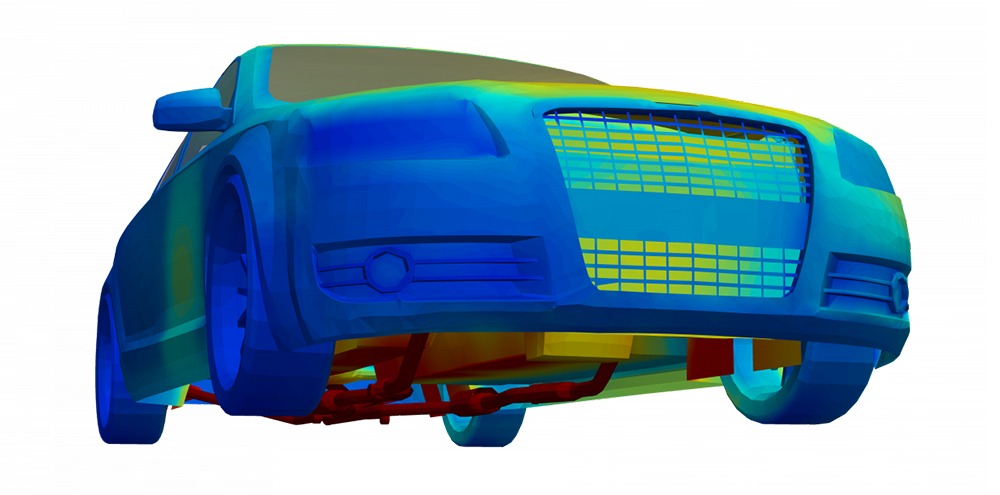
Automotive Underhood & Underbody Management
Managing the extreme thermal loads from internal combustion engines or power electronics requires a detailed understanding of transient heat soak and airflow. TAITherm allows engineers to optimize the placement of heat shields and components to prevent damage during “key-off” scenarios.
Transient Hot Soak Analysis
Predicts peak component temperatures after the engine stops and airflow ceases.
Exhaust System Optimization
Models high-temperature exhaust radiation and its impact on sensitive surrounding parts.
Brake Thermal Performance
Simulates frictional heat generation and cooling cycles to prevent brake fade.
Component Durability Testing
Identifies thermal fatigue risks in plastics and electronics near high-heat sources.
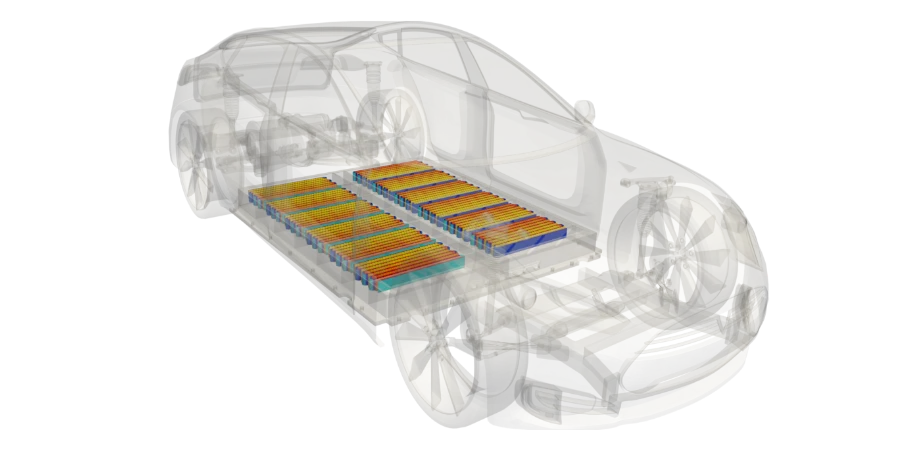
EV Battery Thermal Management
The Battery Extension provides a coupled thermal-electrical solver to analyze cell and pack-level performance. It is essential for predicting battery lifetime, safety, and the onset of thermal runaway during fast-charging or high-load cycles.
Coupled Electro-Thermal Solving
Simultaneously calculates electrical loads and the resulting heat generation.
Thermal Runaway Prediction
Simulates heat propagation between cells to validate safety containment designs.
BMS Integration
Couples with Battery Management Systems to test cooling strategies under realistic drive cycles.
Aging & Durability Studies
Predicts how thermal gradients within the pack affect long-term battery health.
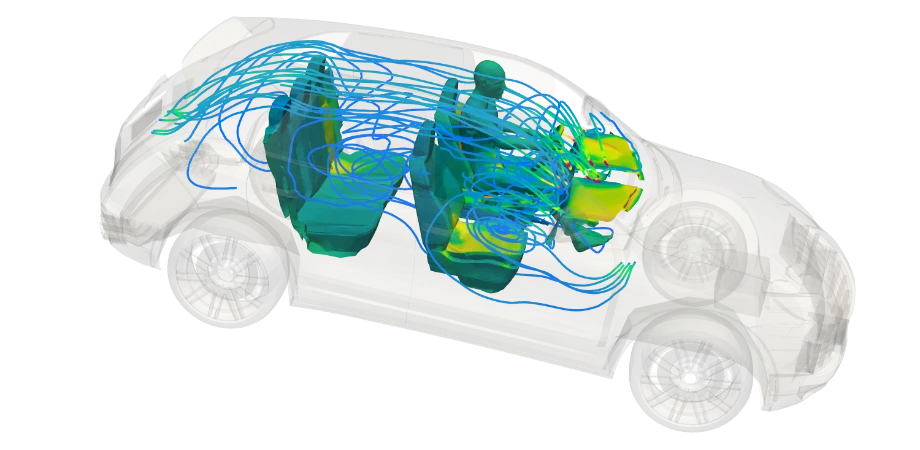
Cabin Comfort & HVAC
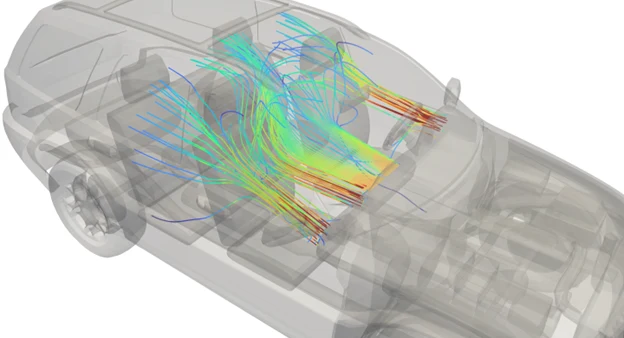
Using the Human Thermal Extension, engineers can simulate human thermoregulation, including sweating, shivering, and blood flow. This allows for the prediction of localized comfort and skin burn risk in automotive, aerospace, or architectural environments.
Localized Sensation
Predicts specific thermal sensations on the skin due to solar heating or vent placement.
Skin Safety Analysis
Models heat transfer through tissue layers to predict time-to-pain or potential burn risk.
Standardized Metrics
Supports Berkeley thermal sensation scales for regulatory comfort standards.
HVAC Efficiency
Optimizes climate control systems for occupant satisfaction while reducing energy consumption.
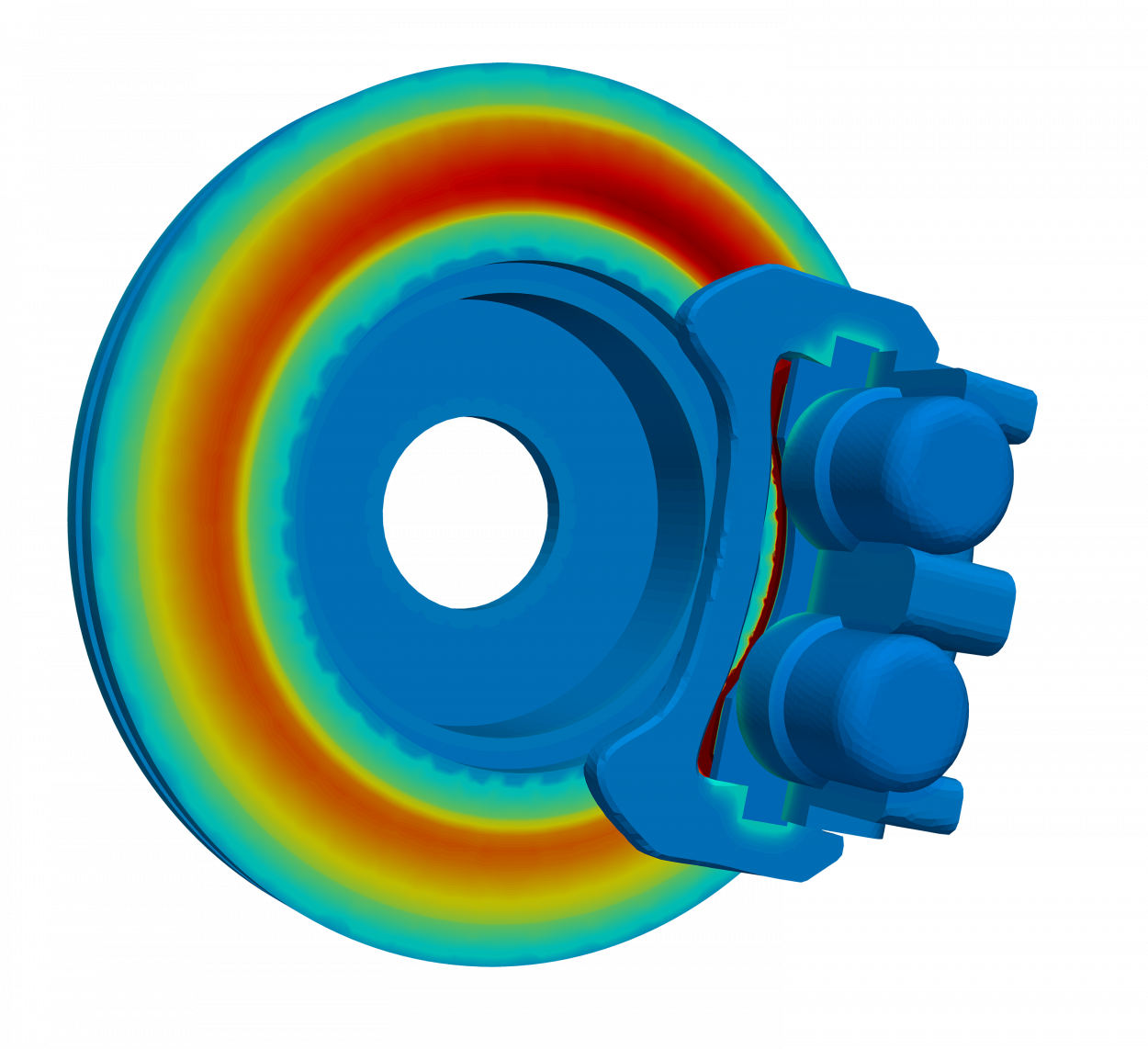
Brake System Thermal Analysis
TAITherm provides a specialized framework for predicting the thermal response of braking components during repetitive or extreme deceleration events. By modeling the frictional heat generation at the pad-rotor interface and the subsequent dissipation through convection and radiation, engineers can mitigate the risks of brake fade and component warping.
Frictional Heat Generation
Simulates the conversion of kinetic energy into thermal energy at the rotor interface across transient duty cycles.
Brake Fade Mitigation
Predicts when fluid or pad temperatures exceed operational limits, ensuring consistent stopping performance.
Convective Cooling Optimization
Evaluates rotor vane designs and ducting efficiency to maximize airflow-driven heat rejection.
Thermo-Elastic Distortion
Analyzes temperature gradients that lead to rotor “coning” or uneven wear under high thermal stress.
Rigorously Validated for Real-World Accuracy
TAITherm provides the specialized depth that generic multiphysics solvers lack, delivering a thermal-centric environment that prioritizes speed, accuracy, and workflow automation.
By moving beyond simplified steady-state approximations to high-fidelity transient simulations, organizations can significantly reduce their reliance on expensive physical prototypes and accelerate time-to-market. The software’s ability to integrate into existing CAE ecosystems ensures that thermal insights are available early in the design cycle, where they have the greatest impact on ROI and system reliability.
Rapid Transient Solving
Achieve high-fidelity thermal results in a fraction of the time required by traditional CFD, enabling the simulation of full drive cycles and long-duration “hot soak” events.
Human-Centric Design
Leverage the world’s most advanced human physiology models to design products, from vehicle cabins to buildings, based on actual passenger comfort and sensation.
Unmatched Scalability
Effortlessly manage massive assemblies with millions of elements, allowing for detailed system-level analysis without compromising on geometric complexity.

EV Efficiency
Optimize battery life and thermal safety with specialized electrification tools that predict cell-to-cell gradients and thermal runaway risks.
Enhance TAITherm with
Powerful Extensions
ThermoAnalytics product extensions are designed to integrate seamlessly with core solvers to provide high-fidelity, specialized analysis without leaving the primary simulation environment.
RapidFlow
Fast, lightweight airflow and convection modeling for quick early-stage thermal decisions.
Human Thermal
Physiology-based human comfort prediction for realistic cabin, room, and wearable evaluations.
Battery Thermal
Advanced battery and power electronics thermal modeling for EV and hybrid system development.
Exhaust
Simulate exhaust heat flow, aftertreatment behavior, and thermal impact on surrounding systems.
Drive Cycle
Evaluate thermal performance across real-world and standardized drive cycles with transient accuracy.