


Master the Thermal Complexity of Exhaust Systems With High-Fidelity Transient Simulation
Accelerate your design cycle with specialized 1D/3D coupling that delivers spectral accuracy and automated stream generation for total system heat protection.
Protect Components From Exhaust Heat
The Exhaust Extension for TAITherm and MuSES provides a specialized simulation environment designed to address the intense thermal challenges of exhaust assemblies and their impact on surrounding vehicle architecture. By integrating advanced 1D fluid dynamics with 3D conduction and radiation, the extension enables engineers to move beyond steady-state approximations. It delivers high-fidelity transient analysis that captures the thermal lag and heat soak phenomena critical to protecting sensitive electronics, hoses, and structural composite materials in tightly packaged environments.
The unique value proposition of the Exhaust Extension lies in its holistic approach to thermal integration. While traditional CFD can be computationally prohibitive for long-duration drive cycles, this extension utilizes a streamlined 1D/3D coupling that significantly reduces solver time without sacrificing spectral accuracy. It solves the fundamental engineering dilemma of balancing engine performance with component longevity, allowing for the rapid optimization of heat shields and insulation strategies early in the design phase.
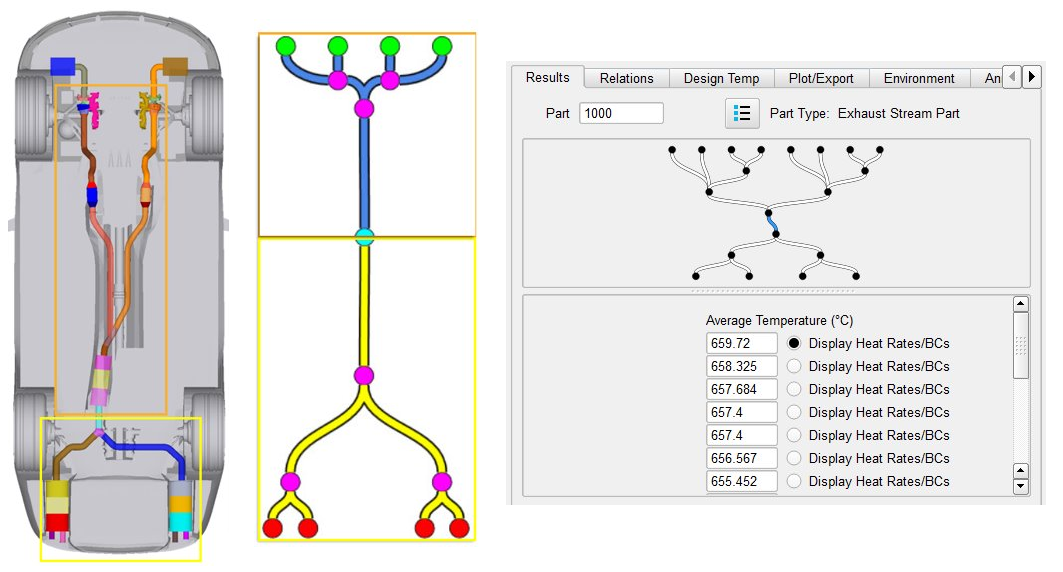

Drastically Reduce Prototyping
By accurately predicting thermal failures or “hot spots” in a virtual environment, engineers can eliminate multiple rounds of expensive physical builds and destructive testing.

Enhance Component Durability
The extension provides precise surface temperature data, allowing teams to select the right materials and heat shields to prevent the melting or degradation of nearby sensitive components.

Accelerate Simulation Turnaround
It simplifies the complex coupling of exhaust gas flow and solid-body heat transfer, enabling rapid “what-if” design iterations without the massive overhead of a full 3D CFD run.

Improve Transient Accuracy
The tool excels at modeling “soak” periods and variable drive cycles, ensuring that temperatures are realistic during both peak operation and immediately after the engine is turned off.
Advanced Capabilities for
Complex Thermal Systems
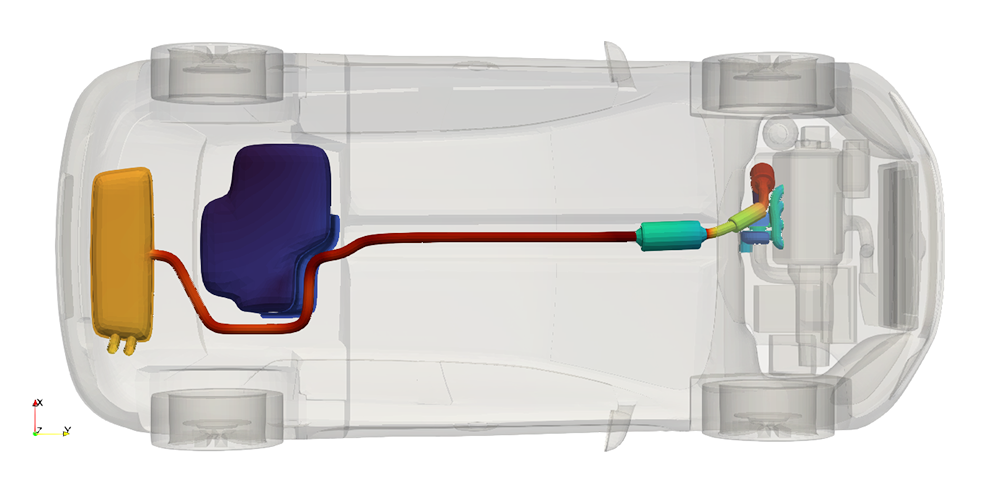
Automated Exhaust Stream Generation
The Exhaust Stream feature automates the creation of 1D convection paths directly from 3D CAD geometry. By utilizing an intelligent internal logic, the software predicts flow characteristics and applies appropriate heat transfer coefficients across the inner surfaces of the exhaust system. This eliminates the manual labor of segmenting complex pipe networks and ensures that energy conservation is maintained throughout the fluid path, from the manifold to the tailpipe.
Geometric Mapping
Automatically identifies flow centerline and cross-sectional area changes from 3D surfaces.
Convection Coupling
Links 1D fluid temperature nodes to 3D surface meshes for real-time heat exchange calculation.
Rapid Initialization
Enables full exhaust stream setup in under 10 minutes, reducing human error in boundary condition assignment.
Mass Flow Conservation
Ensures accurate tracking of thermal energy across varying pipe diameters and junctions.
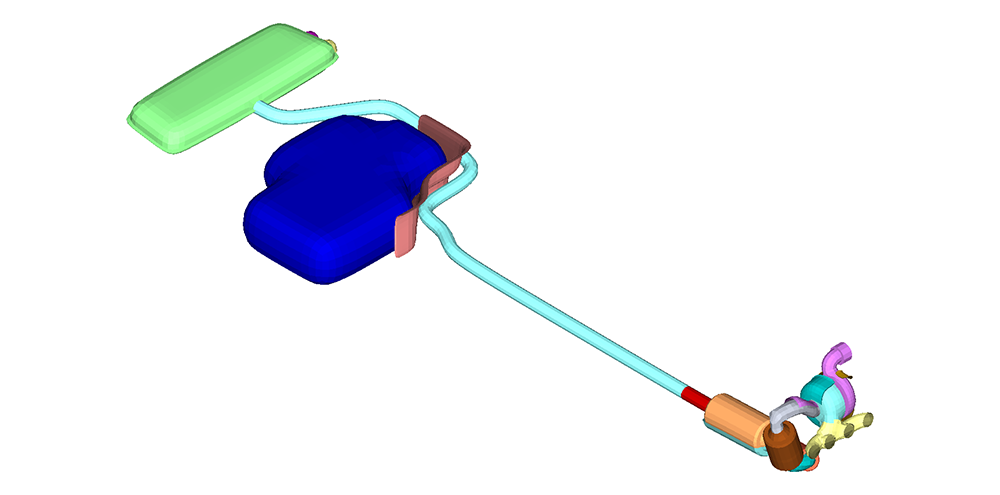
Multi-Component Physics Library
The extension includes a library of pre-defined components—including turbochargers, catalytic converters, and mufflers—with embedded physics specific to their thermal behavior. These components account for internal heat generation, thermal mass effects, and complex internal surface areas. This analysis allows for the simulation of “light-off” temperatures in catalysts and the significant thermal inertia found in heavy-duty mufflers.
Catalytic Light-Off Logic
Simulates the exothermic reactions and thermal rise within emissions control devices.
Turbocharger Thermal Mass
Accounts for the significant heat retention and radiation of high-mass turbine housings.
Muffler Internal Geometry
Models the complex internal baffles and packing material to accurately reflect exterior surface temperatures.
Variable Material Properties
Supports temperature-dependent conductivity and specific heat for specialized alloys and ceramics.
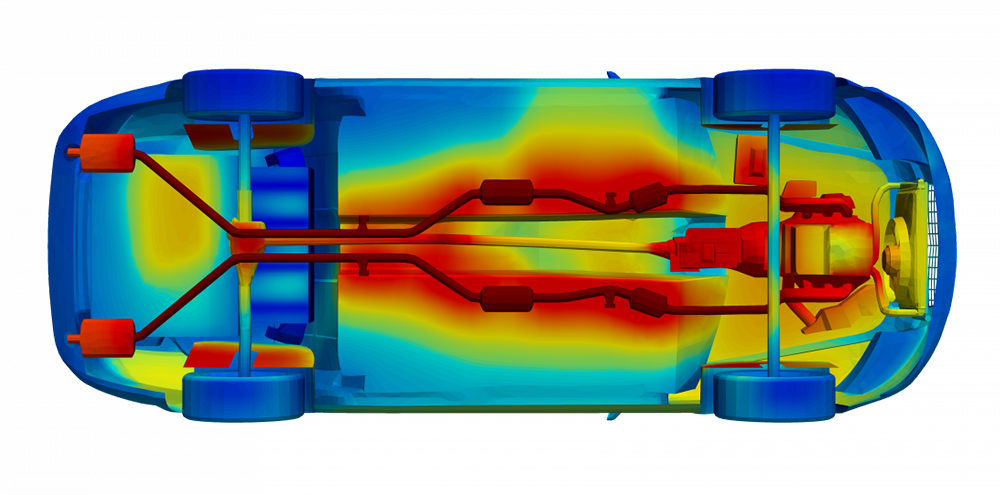
Transient Thermal Analysis & Hot Soak
Engineers can simulate complete drive cycles and the critical “hot soak” period following engine shutdown. Unlike steady-state solvers, the Exhaust Extension tracks the migration of heat when airflow ceases, which is often when peak temperatures are reached for surrounding plastic and rubber components. This capability allows for the design of passive cooling strategies that remain effective even when active cooling systems are inactive.
Time-Varying Boundary Conditions
Imports complex velocity and temperature profiles from external drive cycle data.
Post-Shutdown Migration
Captures buoyant convective plumes and stagnant air heating during engine-off scenarios.
Thermal Lag Capture
Accurately predicts the delay between peak engine load and peak component temperature.

High-Fidelity Radiation Modeling
The Exhaust Extension leverages the core TAITherm multi-bounce radiation solver to manage the extreme infrared signatures of exhaust components. It accurately calculates the View Factors and energy exchange between the exhaust surfaces and adjacent heat shields or chassis components. This ensures that the effectiveness of reflective coatings and multi-layer insulation is captured with high precision, preventing localized melting or structural degradation.
Multi-Bounce Ray Tracing
Simulates complex energy reflections within heat shield gaps and underbody cavities.
Spectral Surface Properties
Supports wavelength-dependent emissivity and reflectivity for advanced shielding materials.
Inter-Component View Factors
Computes the precise geometric relationship between the heat source and sensitive targets.
Partial Transparency
Models the thermal behavior of perforated shields and porous insulation wraps.
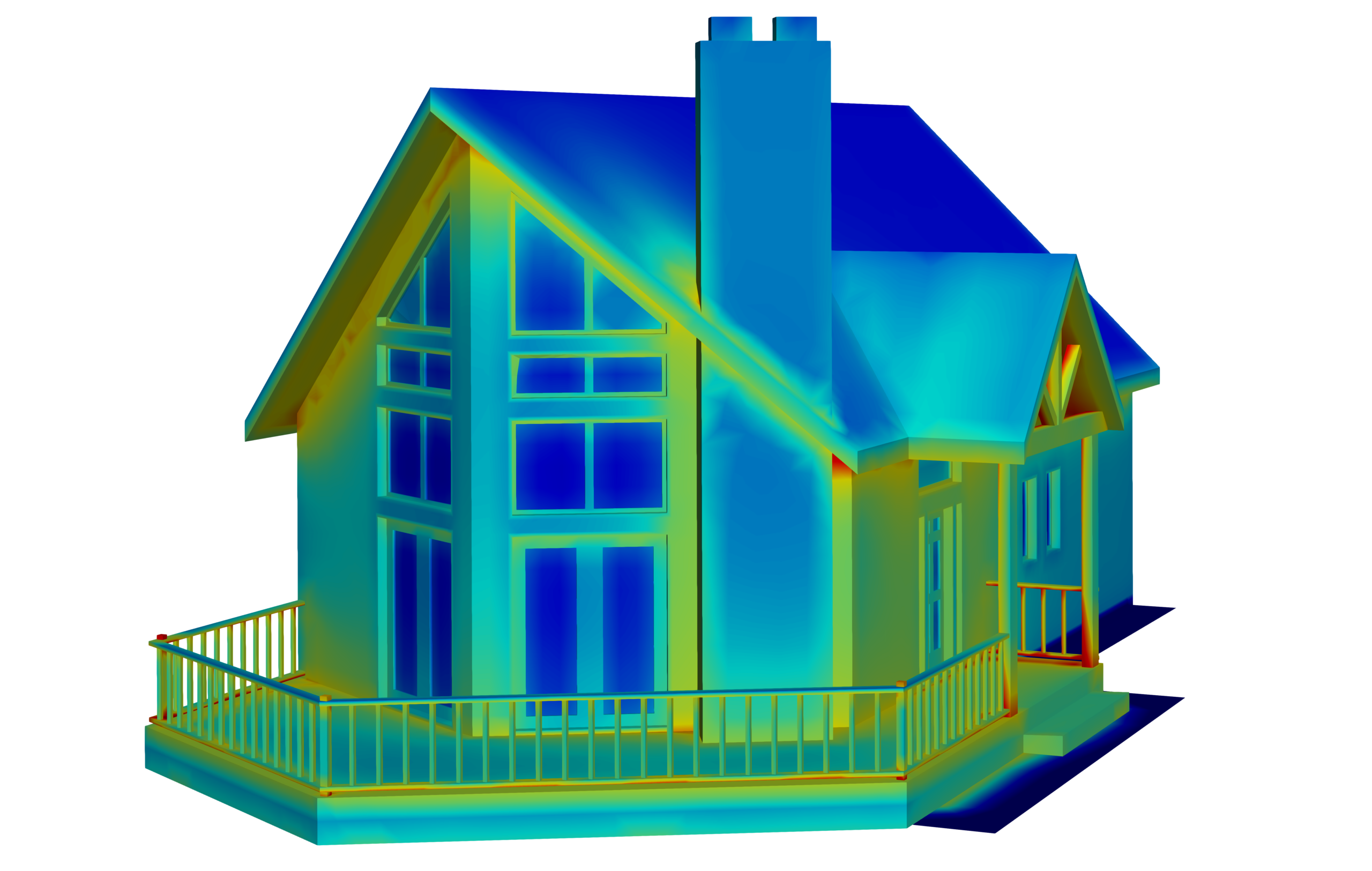
Electronics Thermal Analysis
For high-performance computing, automotive auxiliary electronics, and telecommunications, CoTherm manages the coupling between thermal, fluid, and power-draw models.
Dynamic Workload Analysis
Coordinates realistic duty cycles, such as how a CPU/GPU “burst” of activity creates transient heat that the cooling system must mitigate.
Material Stack-Up Study
CoTherm’s automation of design sweeps pairs with TAITherm’s powerful multilayer modeling and thermal linking capabilities to easily study the thermal impact of different chip layout, cooling device, or TIM (Thermal Interface Material) choices across a design space.
Environmental Influence Considerations
Automated workflows enable comprehensive studies of how external ambient changes affect the internal operating temperature of electronics enclosures.
Engineered for
Real-World Applications
Automotive Underbody Heat Protection
The modern automotive underbody is a congested environment where high-temperature exhaust components reside near temperature-sensitive fuel lines, brake fluid, and electronic sensors. As vehicles become more aerodynamic, reduced airflow under the chassis creates extreme thermal pockets, especially during “hot soak” after the engine is turned off. The Exhaust Extension allows engineers to virtually prototype various heat shield geometries and material compositions, using 1D/3D coupling to accurately predict surface temperatures across the entire underbody assembly without the computational overhead of full CFD.
Shield Efficiency Mapping
Identify the precise zones where reflective shielding is required, reducing overall vehicle weight.
Boiling Point Protection
Ensure brake and fuel line temperatures remain within safety margins during peak load and post-shutdown.
Material Optimization
Validate the use of lower-cost plastics or composites in areas previously reserved for metal.
Transient Cycle Analysis
Simulate real-world driving behaviors to find thermal peaks that steady-state analysis would miss.

Commercial Vehicle Emissions Systems
Heavy-duty diesel engines rely on complex Aftertreatment Systems (ATS), including Diesel Particulate Filters (DPF) and Selective Catalytic Reduction (SCR), which must maintain specific, elevated temperature windows to function efficiently. The engineering challenge lies in managing the massive thermal inertia of these large components while ensuring that the heat generated during DPF regeneration does not damage the truck’s chassis or auxiliary equipment. The software provides specialized physics to model the internal heat generation and chemical light-off signatures of these emissions devices.
ATS Thermal Uniformity
Predict gas temperature distribution across the catalyst face to maximize NOx conversion efficiency.
Regeneration Safety
Model the extreme temperature spikes during soot burnout to protect surrounding air tanks and wiring.
Lagging & Insulation Design
Calculate the necessary insulation thickness to maintain exhaust gas heat over long pipe runs.
Cold-Start Acceleration
Optimize system layout to reach operational “light-off” temperatures faster, reducing idle emissions.
Aerospace Auxiliary Power Units (APU)
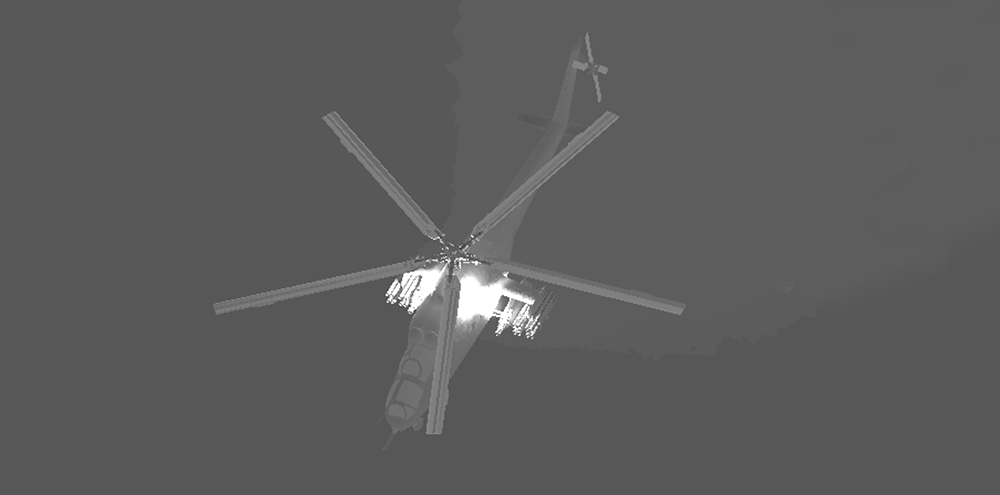
APUs are essentially small gas turbines located in the tail cone or cramped compartments of an aircraft, where thermal rejection is a critical safety and structural concern. The primary challenge is managing the exhaust plume impingement on the aircraft skin and ensuring the thermal isolation of the surrounding airframe bulkheads. Using the Exhaust Extension, aerospace engineers can model the high-velocity, high-temperature exhaust streams and their radiant impact on carbon-fiber or aluminum structures, ensuring firewalls and cooling ducts are sized correctly for ground and flight operations.
Plume Impingement Analysis
Predict temperatures where the exhaust gases exit the airframe to prevent structural fatigue.
Firewall Integrity
Validate the thermal gradient across bulkheads to ensure sensitive avionics in adjacent bays remain cool.
Compartment Ventilation
Determine the required mass flow for cooling air to prevent heat buildup in enclosed APU spaces.
Signature Management
Assess the infrared (IR) signature of the exhaust ducting for defense-related platform survivability.
Performance & Racing Engineering
In motorsports, exhaust temperatures can exceed 1000°C, threatening the integrity of thin-wall Inconel headers and causing “heat soak” that reduces engine volumetric efficiency by heating the intake air. Engineers must balance the need for lightweight components with extreme thermal durability. The Exhaust Extension enables racing teams to simulate the effects of ceramic coatings and thermal wraps on heat rejection. By modeling the transient nature of a qualifying lap or endurance stint, teams can optimize cooling duct placement and shield designs to protect carbon-fiber bodywork and suspension dampers.
Coating Performance Validation
Quantify the reduction in radiant heat transfer provided by different ceramic or gold-foil barrier treatments.
Intake Charge Protection
Model the thermal boundary layer to minimize “heat soak” into the intake manifold and maintain horsepower.
Thin-Wall Durability
Predict the thermal stress and expansion of lightweight alloy headers under rapid cycling.
Brake/Exhaust Synergy
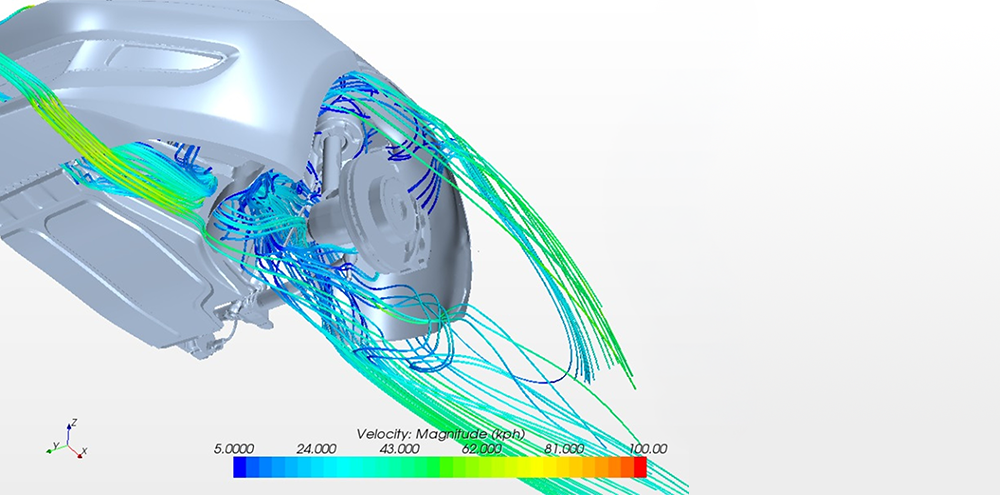
Analyze how exhaust heat interacts with brake cooling airflows within the wheel wells and under-tray.
Rigorously Validated for
Real-World Accuracy
The Exhaust Extension provides the specialized depth that many CFD tools lack, bridging the gap between raw fluid dynamics and practical thermal systems engineering. By delivering rapid, transient-capable results, the software allows organizations to shift their thermal validation earlier in the design cycle, significantly reducing the reliance on expensive physical testing and late-stage design changes. This efficiency directly translates to improved business ROI through shorter development timelines and reduced material costs.

Accelerated Time-to-Market
Rapid 1D/3D coupling allows for hundreds of design iterations in the time it takes to run a single full-car CFD simulation.

Enhanced Component Longevity
Precise transient modeling prevents over-engineering or under-protecting, ensuring high-temperature components meet their service life targets.

Improved Energy Efficiency
Accurate thermal management of emissions components ensures they reach operating temperatures faster, reducing cold-start emissions.

System-Level Risk Mitigation
Comprehensive physics-based simulation to ensure all modes of heat transfer are accurately represented in every scenario and give confidence when validating against physical test data.
Tools for Thermal Modeling
ThermoAnalytics product extensions are designed to integrate seamlessly with core solvers to provide high-fidelity, specialized analysis without leaving the primary simulation environment.
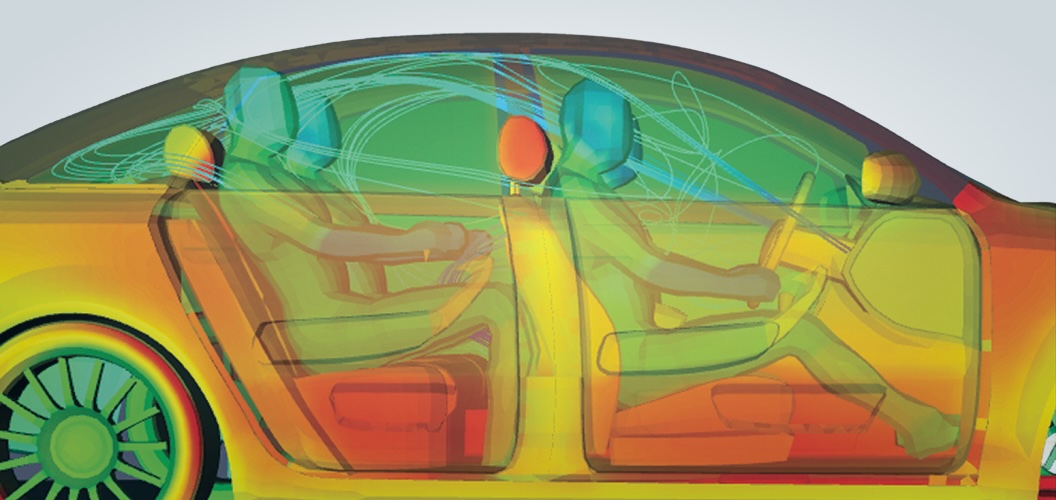

Simulate real-world thermal behavior across complete systems with validated, multiphysics accuracy.
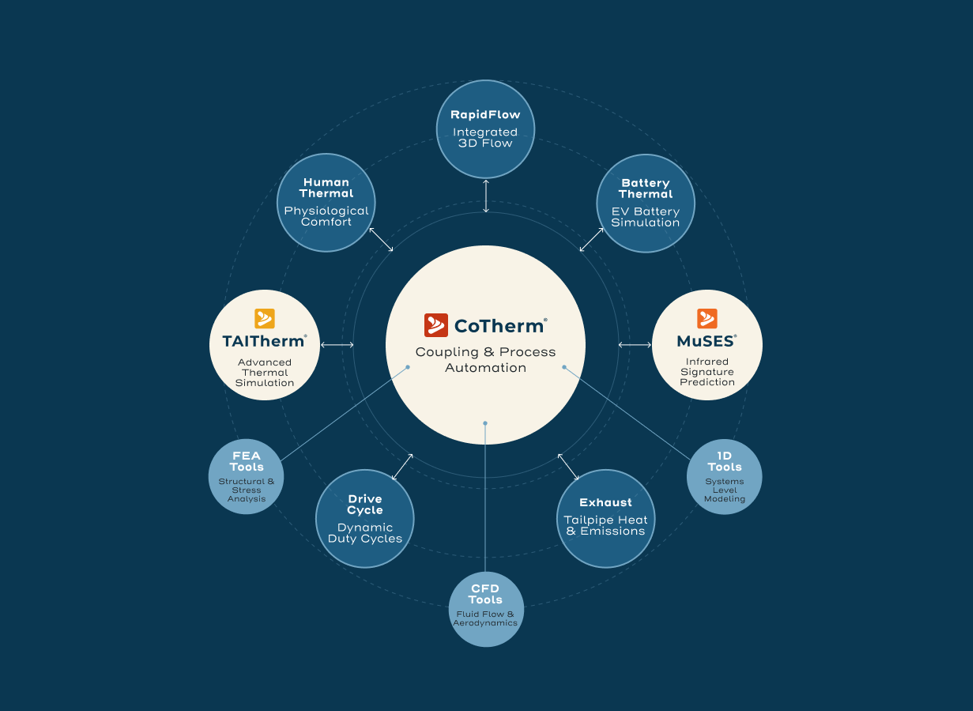

Automate, orchestrate, and streamline multiphysics simulation workflows across tools and teams.


Predict EO/IR signatures in real environments for mission-critical visibility and survivability analysis operations.