
Automotive & Ground Transportation
Physics-Based Thermal Simulation Software for Automotive Engineers
Optimize Vehicle Thermal Performance Across Systems
In the modern automotive industry, achieving a balance between extended range, fast-charging performance, and cabin comfort requires more than just standard calculations. ThermoAnalytics provides the professional-grade simulation ecosystem necessary to predict complex transient heat transfer, fluid-structure interaction, and human physiological response across interconnected vehicle platforms.
How ThermoAnalytics Can
Help Automotive Engineering
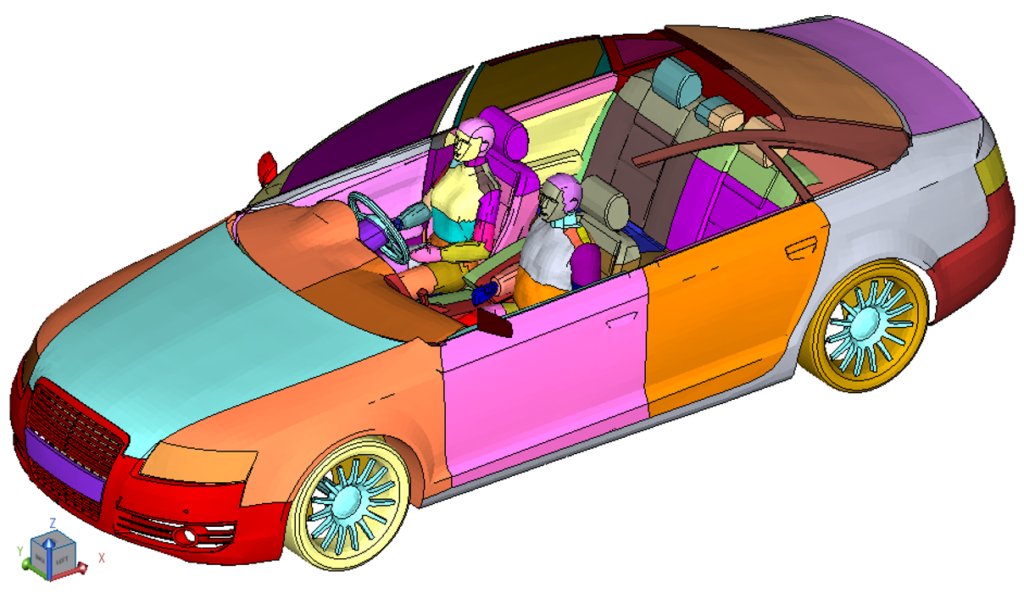
Thermal challenges in modern vehicles are interconnected – battery systems influence cabin loads, electronics affect comfort, airflow shapes efficiency, and every component interacts across the full vehicle environment. ThermoAnalytics helps you untangle this complexity by simulating real-world thermal behavior early in development, giving teams the clarity they need to design smarter, launch faster, and reduce costly surprises in testing.
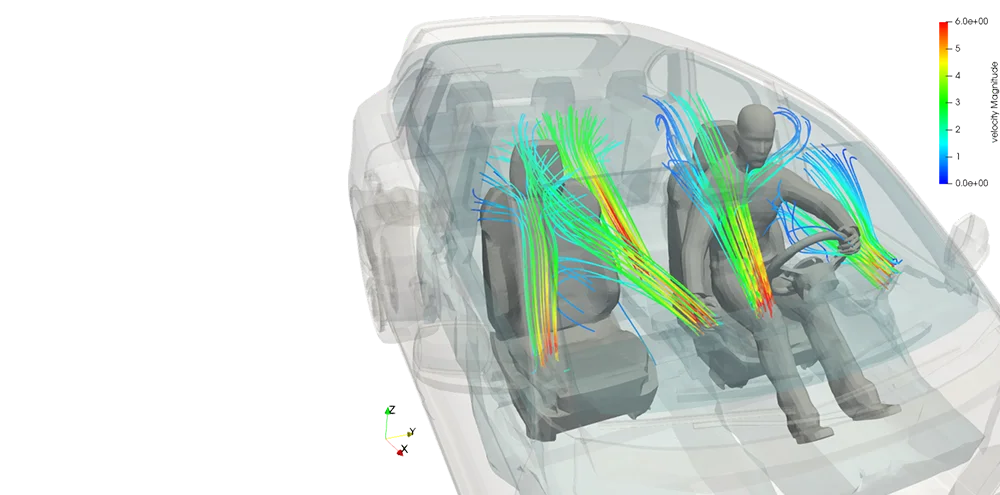
Cabin Comfort & HVAC
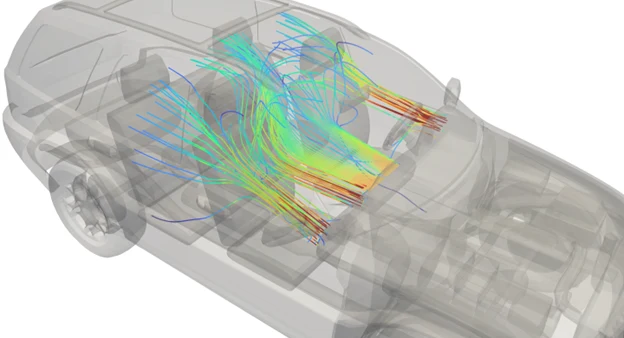
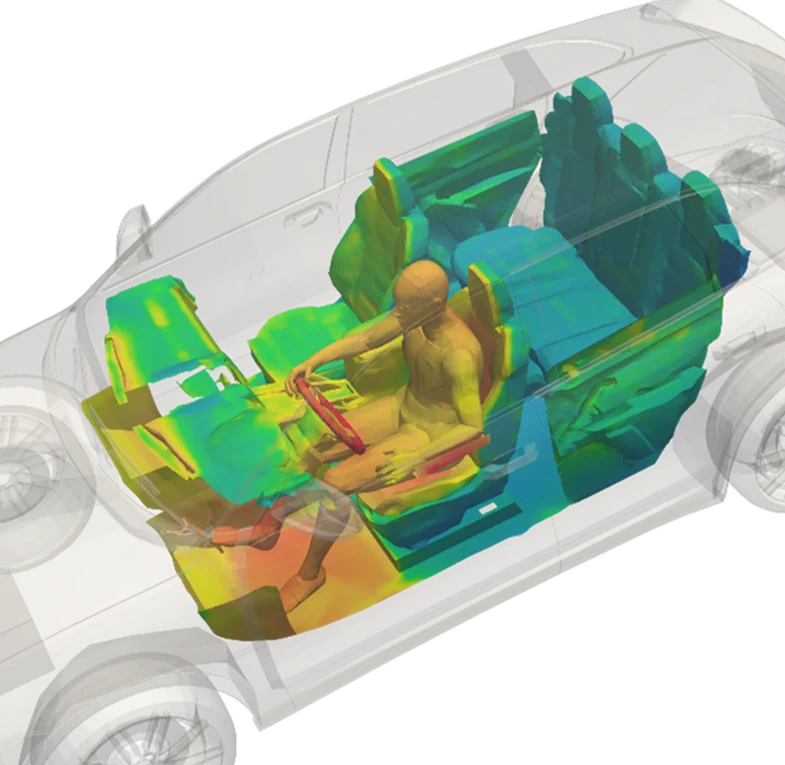
Using the Human Thermal Extension, engineers can simulate human thermoregulation, including sweating, shivering, and blood flow. This allows for the prediction of localized comfort and skin burn risk in automotive, aerospace, or architectural environments.
Localized Sensation
Predicts specific thermal sensations on the skin due to solar heating or vent placement.
Skin Safety Analysis
Models heat transfer through tissue layers to predict time-to-pain or potential burn risk.
Standardized Metrics
Supports Berkeley thermal sensation scales for regulatory comfort standards.
HVAC Efficiency
Optimizes climate control systems for occupant satisfaction while reducing energy consumption.

EV Battery Thermal Management
The Battery Extension provides a coupled thermal-electrical solver to analyze cell and pack-level performance. It is essential for predicting battery lifetime, safety, and the onset of thermal runaway during fast-charging or high-load cycles.
Coupled Electro-Thermal Solving
Simultaneously calculates electrical loads and the resulting heat generation.
Thermal Runaway Prediction
Simulates heat propagation between cells to validate safety containment designs.
BMS Integration
Couples with Battery Management Systems to test cooling strategies under realistic drive cycles.
Aging & Durability Studies
Predicts how thermal gradients within the pack affect long-term battery health.

Brake System Thermal Analysis
TAITherm provides a specialized framework for predicting the thermal response of braking components during repetitive or extreme deceleration events. By modeling the frictional heat generation at the pad-rotor interface and the subsequent dissipation through convection and radiation, engineers can mitigate the risks of brake fade and component warping.
Frictional Heat Generation
Simulates the conversion of kinetic energy into thermal energy at the rotor interface across transient duty cycles.
Brake Fade Mitigation
Predicts when fluid or pad temperatures exceed operational limits, ensuring consistent stopping performance.
Convective Cooling Optimization
Evaluates rotor vane designs and ducting efficiency to maximize airflow-driven heat rejection.
Thermo-Elastic Distortion
Analyzes temperature gradients that lead to rotor “coning” or uneven wear under high thermal stress.
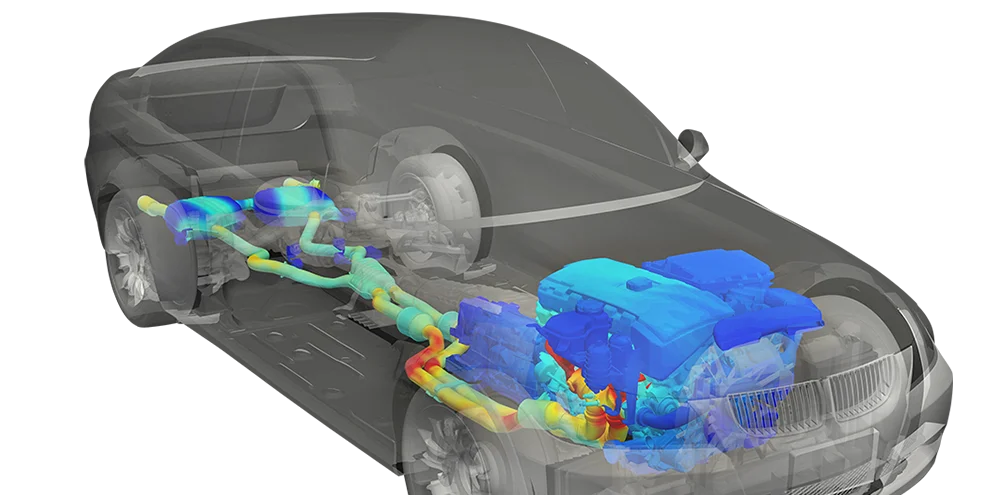
Exhaust System Thermal Analysis
Accurately predict the intense thermal signatures of exhaust components to protect sensitive underbody and engine bay systems. Our high-fidelity radiation and conduction modeling ensure that heat shields and insulation are placed with surgical precision to avoid material failure.
Component Shielding
Predicts heat soak from exhaust manifolds and catalytic converters to keep electronics within safe operating limits.
Material Degradation
Analyzes long-term thermal exposure to prevent the premature failure of nearby plastic or rubber components.
Radiation Modeling
Accounts for high-temperature surface-to-surface radiation in dense engine packaging and underbody environments.
Thermal Transient Response
Simulates the rapid temperature fluctuations during start-stop cycles to assess the durability of the entire exhaust assembly.

Electric Heating Elements (Heated & Cooled Seats)
Optimize the performance and energy draw of active heating and cooling elements, such as heated seats, steering wheels, and radiant panels. By modeling the direct interface between the heating element and the occupant, we help ensure rapid comfort without exceeding safe temperature thresholds.
Surface Heating Optimization
Analyzes the efficiency of resistive heating elements to ensure uniform warming without localized hot spots.
Time-to-Comfort Analysis
Models how quickly a heated seat reaches steady-state comfort during extreme cold-start scenarios.
Energy Budgeting
Evaluates the power draw of auxiliary heating elements versus the overall vehicle energy strategy to preserve driving range.
Human-Device Interaction
Predicts the physiological response of the occupant to conductive heating, ensuring a premium user experience without skin irritation.
Automotive Tools for
Thermal Modeling
Different teams use our tools in different ways. These are the products most commonly used across applications and industries.
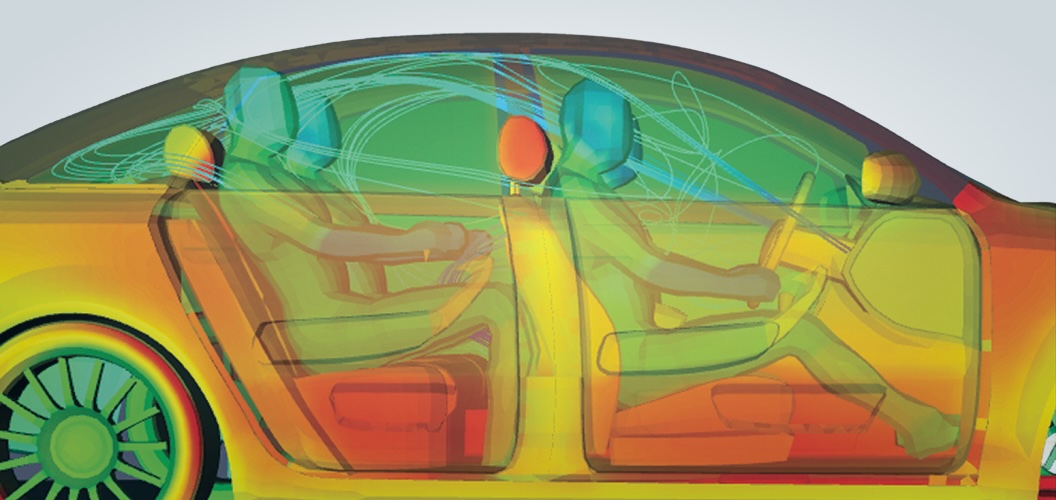

Simulate real-world thermal behavior across complete systems with validated, multiphysics accuracy.
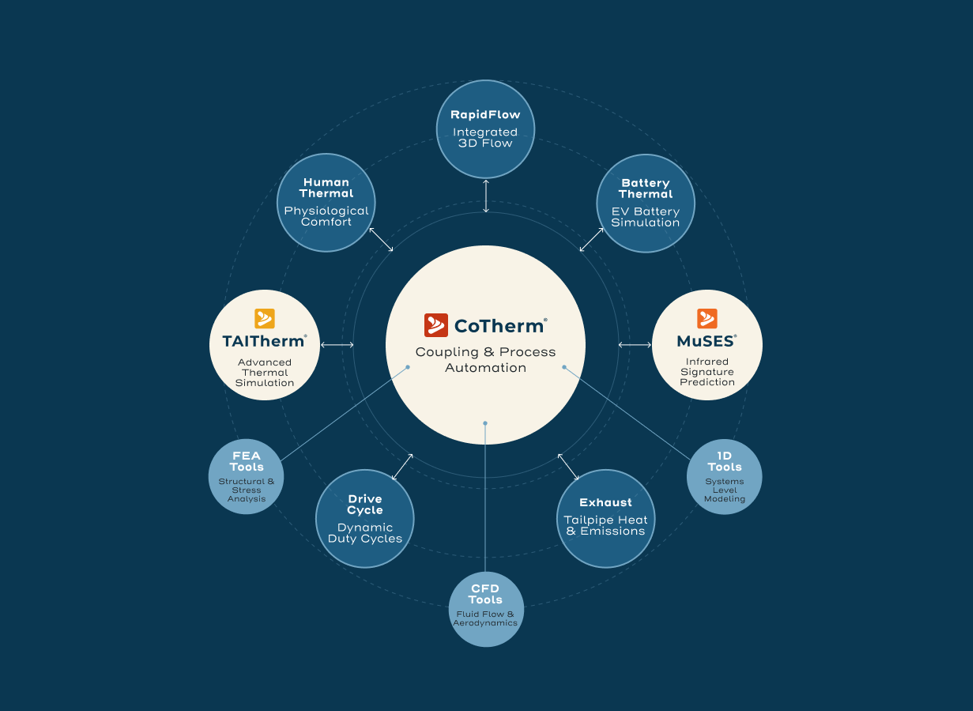

Automate, orchestrate, and streamline multiphysics simulation workflows across tools and teams.
Product Extensions
Human Thermal Extension
Predict real human comfort and physiology—not just PMV.
discover Human Thermal