

Accelerate Your Transient Thermal Validation With Surrogate-Model Accuracy
Bridge the gap between 3D high-fidelity physics and real-world mission profiles. The Drive Cycle Extension for CoTherm delivers exhaustive transient analysis for EV range, battery life, and heat protection.
Model Thermal Behavior Across Full Drive Cycles
The Drive Cycle Extension for CoTherm enables engineers to bridge the gap between steady-state precision and real-world transient dynamics. By leveraging a sophisticated surrogate-modeling methodology, the software allows for the simulation of exhaustive driving profiles without the prohibitive computational cost of traditional 3D CFD transient runs. This creates a high-performance environment where complex thermal interactions are captured over long-duration cycles, ensuring that thermal soak, component degradation, and energy management are validated against realistic operating conditions.
This extension integrates disparate data sources into a unified, automated workflow. Rather than analyzing components in isolation under static loads, engineers can now evaluate the interdependencies of the powertrain, battery, and cabin thermal management systems throughout an entire profile. The result is a dramatic reduction in simulation time that empowers design teams to identify thermal bottlenecks early, optimize cooling strategies, and ensure vehicle reliability under the most demanding transient loads.

Predict Transient Temperatures
Calculate how temperatures fluctuate over a full mission profile, capturing critical “heat soak” events.

Reduce Simulation Time
Skip redundant calculations during steady states, allowing for the simulation of hours of real-world activity in a fraction of the time.

Optimize Thermal Management
Test control strategies against a variable drive cycle, to minimize energy consumption while ensuring components stay within safe limits.

Analyze Component Fatigue
Predict material expansion and contraction, helping to identify potential structural failures caused by repeated heating and cooling.
Advanced Capabilities for
Complex Thermal Systems
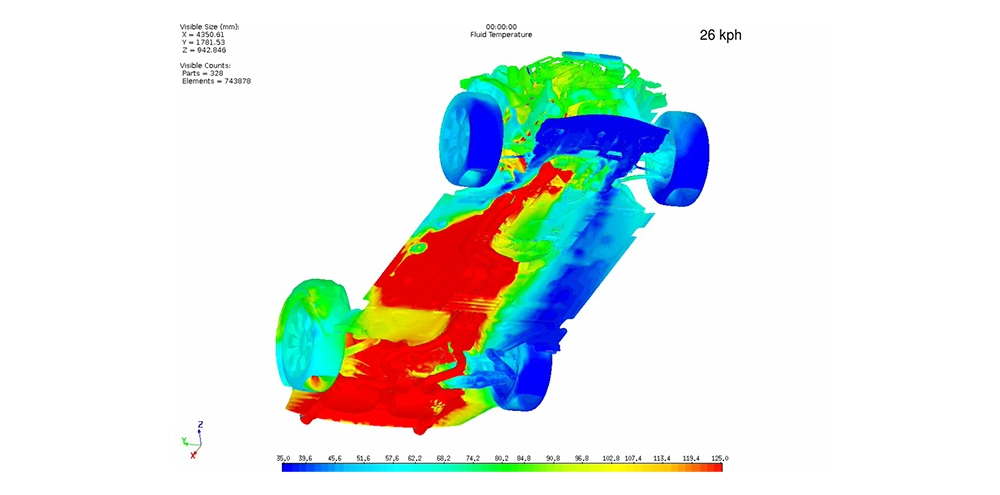
Automated Surrogate Model Generation
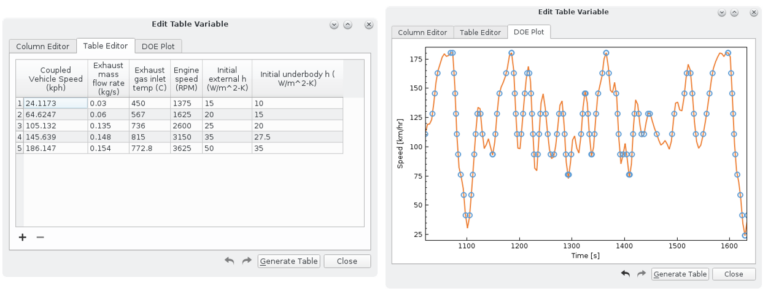
The core logic of the Drive Cycle Extension relies on the intelligent interpolation of steady-state coupling points to build a high-fidelity surrogate model. By running a strategic matrix of 3D thermal and CFD points across varying speeds and loads, the software generates a continuous response surface. This physics-based approximation allows the solver to calculate transient responses across hours of drive-cycle data in a fraction of the time required for full transient CFD.
State-Space Mapping
Maps complex aerodynamic and thermal dependencies into a multi-dimensional lookup space.
Coupled 3D Visualization
Maintains full 3D geometric context for visual identification of hot spots during transient playback.
Dynamic Boundary Conditions
Automatically updates convection coefficients and ambient conditions based on vehicle velocity.
High-Speed Interpolation
Utilizes advanced mathematical kernels to ensure smooth transitions between discrete coupling points.
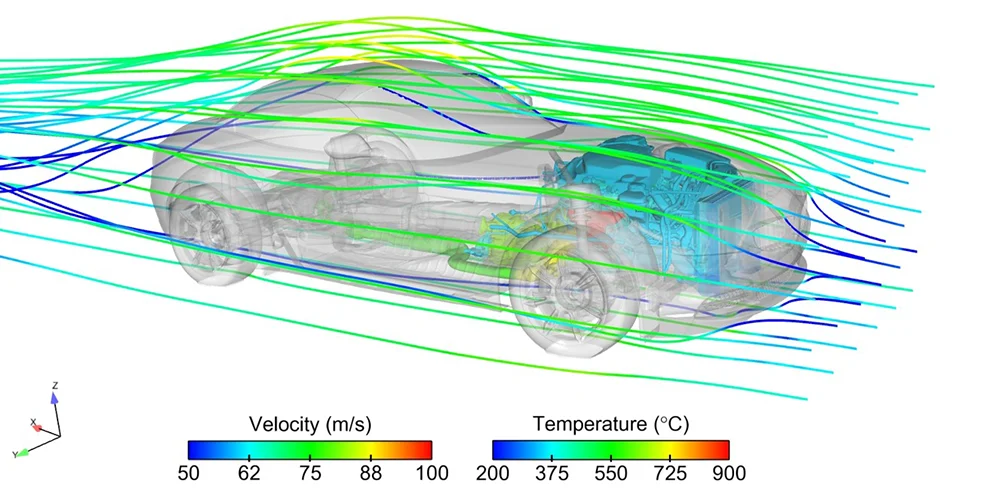
Seamless Multi-Physics Integration
The extension functions as a specialized module within the CoTherm ecosystem, facilitating the “handshake” between different simulation codes. It orchestrates the exchange of data between 3D conduction solvers (TAITherm) and various CFD or 1D system tools. This capability ensures that as the drive cycle progresses, the physics of radiation, convection, and conduction are updated synchronously to reflect the changing environment.
Bi-Directional Data Exchange
Synchronizes heat transfer coefficients and surface temperatures between solvers in real-time.
1D/3D Coupling
Integrates 1D coolant loop models with 3D underhood or battery geometries for system-level accuracy.
Variable Time-Stepping
Adjusts temporal resolution to capture rapid thermal spikes without slowing down stable periods.
Unified Workflow Automation
Minimizes manual intervention by scripting the transition from CFD initialization to surrogate execution.
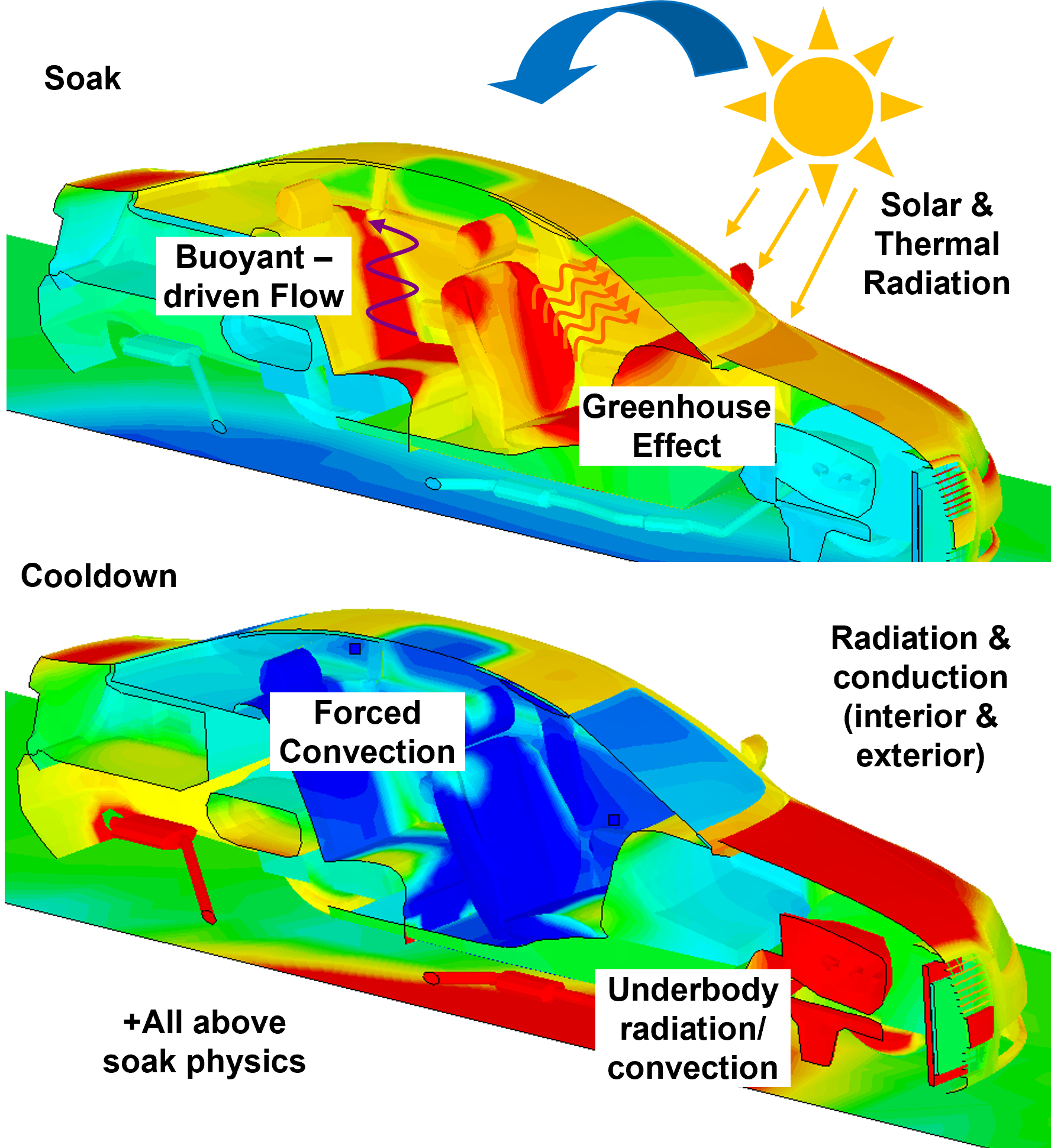
Versatile Environmental & Load Inputting
To achieve spectral accuracy in thermal modeling, the Drive Cycle Extension allows for the ingestion of high-resolution mission data. This includes not only velocity profiles but also varying solar loads, ambient temperatures, and grade-based power demands. The physics engine processes these inputs to simulate how external environmental factors exacerbate internal component heating during transient maneuvers.
Standardized Cycle Support
Native compatibility with industry-standard profiles including WLTP, NEDC, and US06.
Physical Test Correlation
Ingests CSV or Excel-based data from track testing to validate virtual models against real-world telemetry.
Solar Loading Integration
Account for transient sun position and intensity changes over the duration of a long-haul drive.
Custom Heat Source Scripting
Define time-varying heat generation for motors, inverters, and batteries based on instantaneous torque or current.

Advanced Thermal Soak & Cooling Analysis
Beyond the drive cycle itself, the extension excels at simulating “Hot Soak” and cool-down periods. By managing the transition from active airflow to stagnant conditions, it captures the critical physics of buoyancy-driven flow and radiant heat transfer that occur when a vehicle stops. This is essential for preventing component failure due to post-operational heat migration.
Quasi-Static Transition
Switches solver logic to handle the physics of zero-velocity thermal migration efficiently.
Delayed Cooling Strategy Validation
Tests the efficacy of electric fans and coolant pumps that remain active after key-off.
Component Sensitivity Mapping
Identifies which parts are most susceptible to damage during the peak of a thermal soak.
Long-Duration Stability
Maintains numerical stability over hours of simulated “soak” time to ensure accurate equilibrium results.
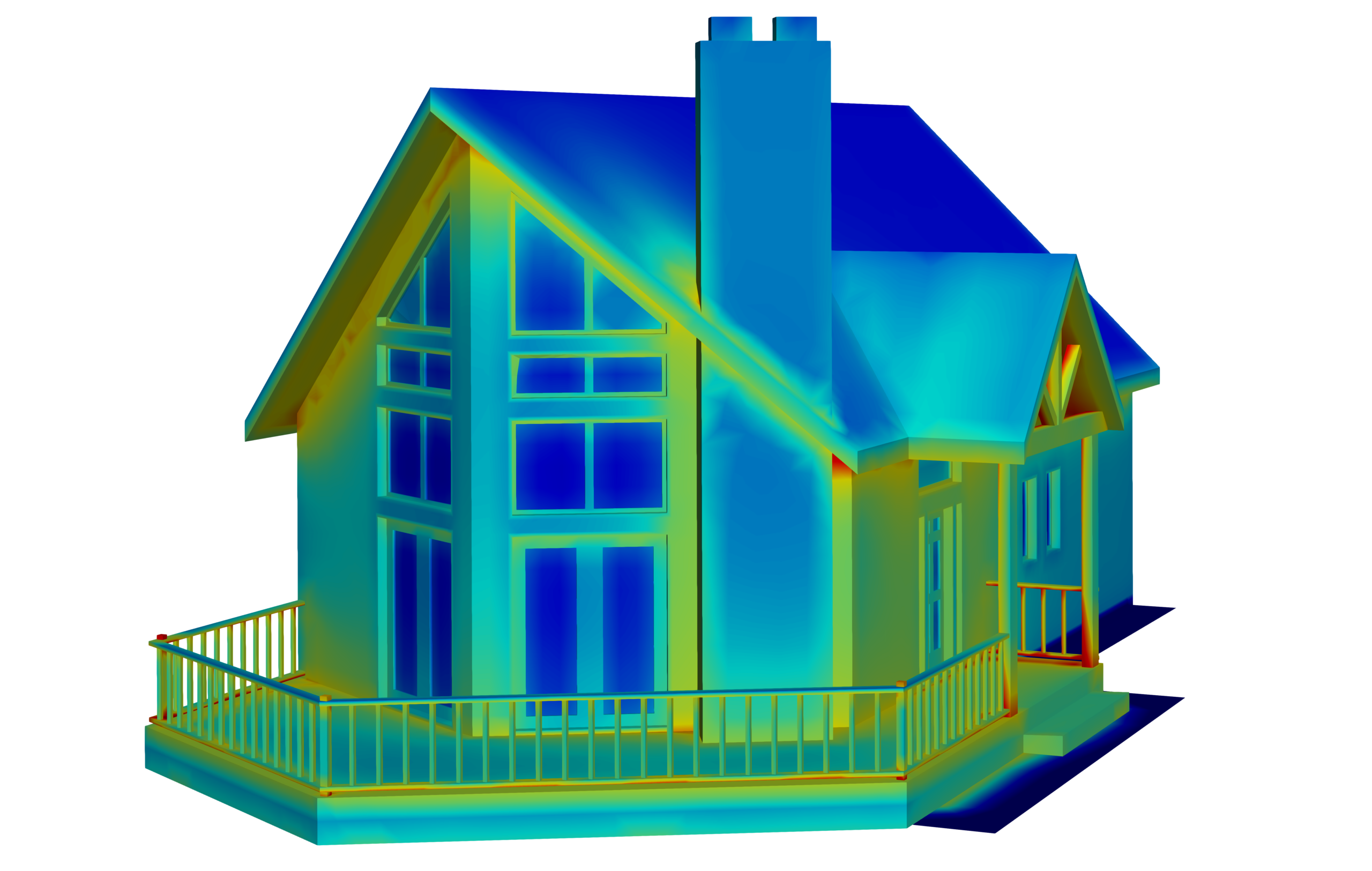
Electronics Thermal Analysis
For high-performance computing, automotive auxiliary electronics, and telecommunications, CoTherm manages the coupling between thermal, fluid, and power-draw models.
Dynamic Workload Analysis
Coordinates realistic duty cycles, such as how a CPU/GPU “burst” of activity creates transient heat that the cooling system must mitigate.
Material Stack-Up Study
CoTherm’s automation of design sweeps pairs with TAITherm’s powerful multilayer modeling and thermal linking capabilities to easily study the thermal impact of different chip layout, cooling device, or TIM (Thermal Interface Material) choices across a design space.
Environmental Influence Considerations
Automated workflows enable comprehensive studies of how external ambient changes affect the internal operating temperature of electronics enclosures.
Engineered for
Real-World Applications

Electric Vehicle Range & Battery Thermal Management
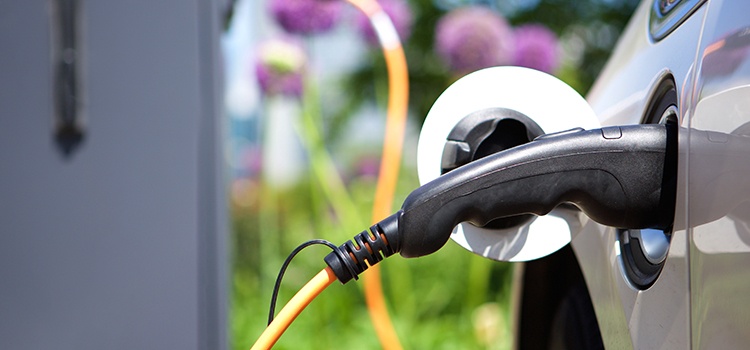
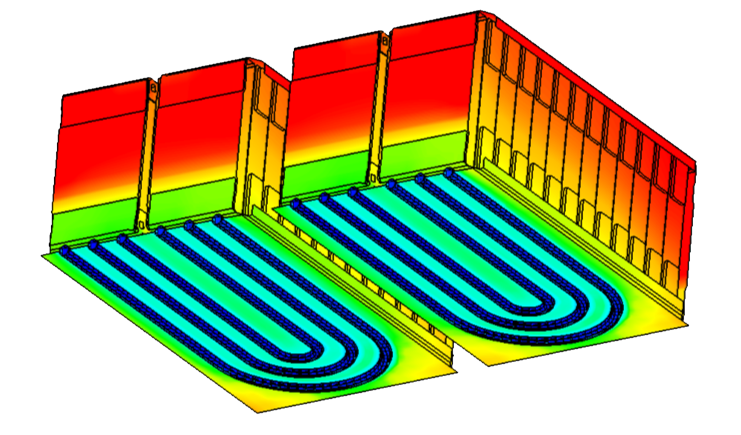
In the EV sector, temperature directly dictates range and battery longevity. The Drive Cycle Extension simulates battery discharge and recharge cycles over varying terrains to predict cell temperature distribution. This allows engineers to size cooling plates and manage thermal runaway risks under peak acceleration and fast-charging scenarios.
Cell-to-Pack Gradient Analysis
Evaluate temperature uniformity across large battery modules during high-current draws.
TMS Optimization
Refine Thermal Management System (TMS) control logic to balance cabin comfort with battery cooling.
Range Degradation Modeling
Predict how extreme ambient temperatures and drive cycles impact total vehicle range.
Regenerative Braking Thermal Spikes
Capture the sudden heat flux into the battery during aggressive energy recovery.
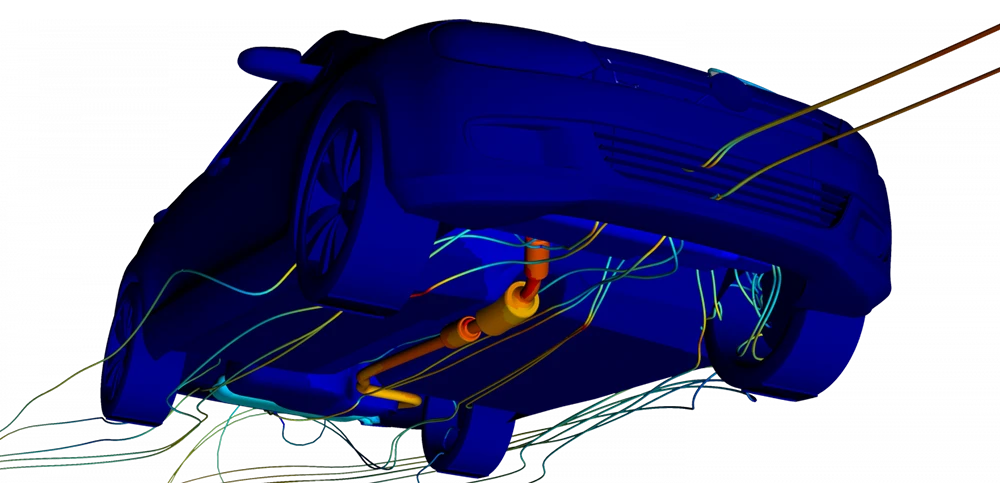
Underhood Heat Protection & Component Durability
Modern ICE and Hybrid underhood environments are increasingly crowded, leading to severe thermal management challenges. The software simulates a full “climb followed by soak” cycle to ensure that sensitive plastic and electronic components do not exceed their glass transition or melting temperatures.
Heat Shield Effectiveness
Validate the placement and material properties of shields under transient exhaust loads.
Airflow Recirculation Detection
Identify regions where hot air traps occur at low vehicle speeds or during idling.
Exhaust System Transient Analysis
Model the rapid heating of catalytic converters and manifolds during heavy acceleration.
Material Fatigue Prediction
Provide high-fidelity temperature histories for downstream structural and fatigue analysis.

Brake System Thermal Performance
Brake fade is a critical safety concern that can only be accurately modeled through transient analysis. The Drive Cycle Extension simulates repeated braking events (e.g., a mountain descent) to track the thermal energy accumulation in rotors, pads, and fluid.
Convective Cooling Optimization
Analyze how wheel design and ducting influence rotor cooling between braking events.
Brake Fluid Boil Prevention
Predict the temperature rise in calipers to ensure fluid remains within safe operating limits.
Rotor Warp Mitigation
Identify non-uniform heating patterns that could lead to structural deformation.
CusFriction Coefficient Monitoringtom Heat Source Scripting
Model how varying temperatures affect the pad-to-rotor friction interface.
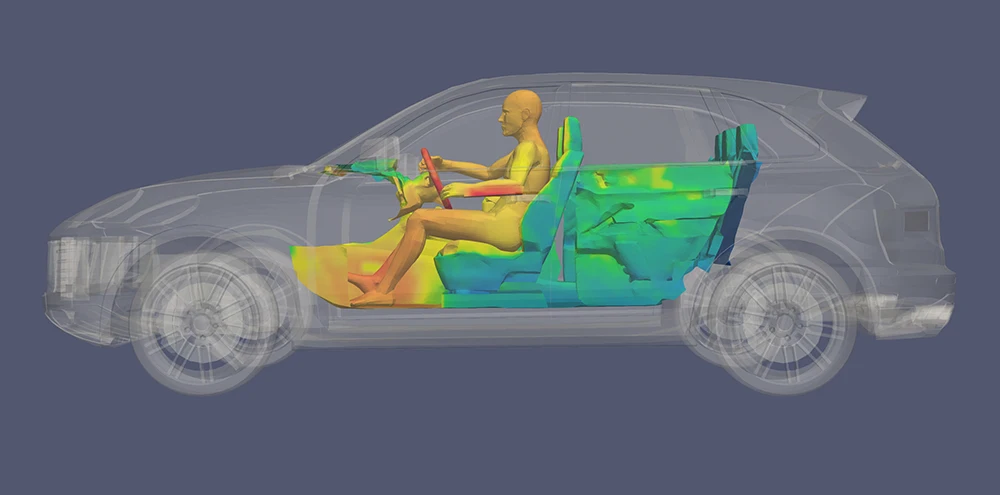
Cabin Comfort & HVAC Efficiency
For both passenger and commercial vehicles, maintaining cabin comfort while minimizing energy consumption is a primary goal. The extension allows for the simulation of a “pull-down” or “warm-up” cycle, accounting for occupant metabolic heat, solar gain through glass, and HVAC vent performance.
Human Thermal Comfort (Manikin Integration)
Couple with our Human Thermal Extension to assess physiological comfort metrics (e.g., Berkeley Comfort Scale).
Defrost & Demist Validation
Simulate the transient clearing of windshields under various environmental conditions.
HVAC Control Strategy Testing
Evaluate how different fan speeds and air-mix settings impact passenger-level temperatures.
Insulation & Glazing Analysis
Compare the thermal performance of different cabin materials and glass coatings.
Rigorously Validated for
Real-World Accuracy
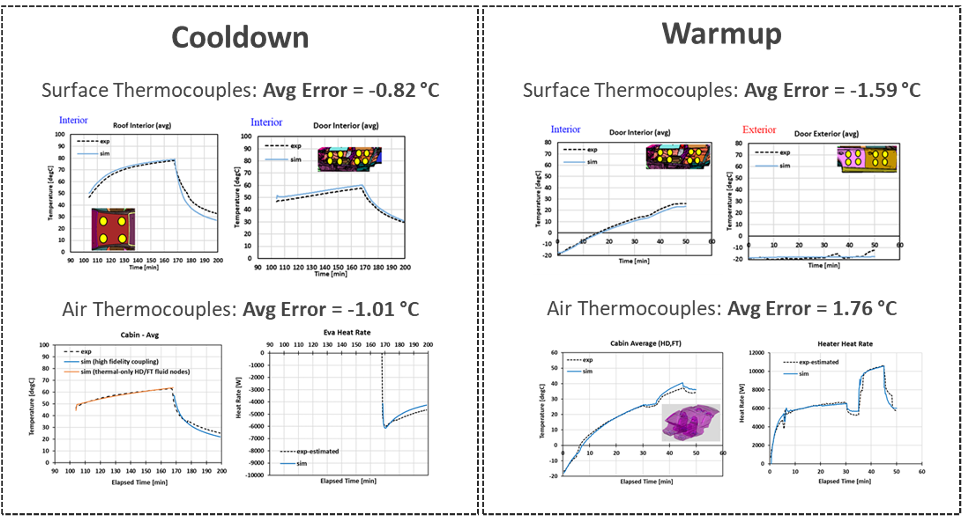
The Drive Cycle Extension provides the specialized depth that generic simulation tools lack, transforming thermal analysis from a “point-in-time” check to a comprehensive lifecycle validation. By moving beyond conservative steady-state assumptions, organizations can reduce over-engineering, minimize material costs, and significantly compress the time between the design phase and physical prototyping.

Rapid Transient Solving
Achieve simulation speeds up to 100x faster than traditional transient CFD by utilizing physics-based surrogate models.

Enhanced EV Efficiency
Maximize battery life and vehicle range through precise thermal control and energy management validation.

Reduced Physical Prototyping
Identify and resolve thermal integration issues in the virtual environment, reducing the need for expensive climate wind tunnel testing.

Process Automation & Consistency
Standardize thermal validation workflows across departments, ensuring repeatable results and faster design iterations.
Tools for Thermal Modeling
ThermoAnalytics product extensions are designed to integrate seamlessly with core solvers to provide high-fidelity, specialized analysis without leaving the primary simulation environment.
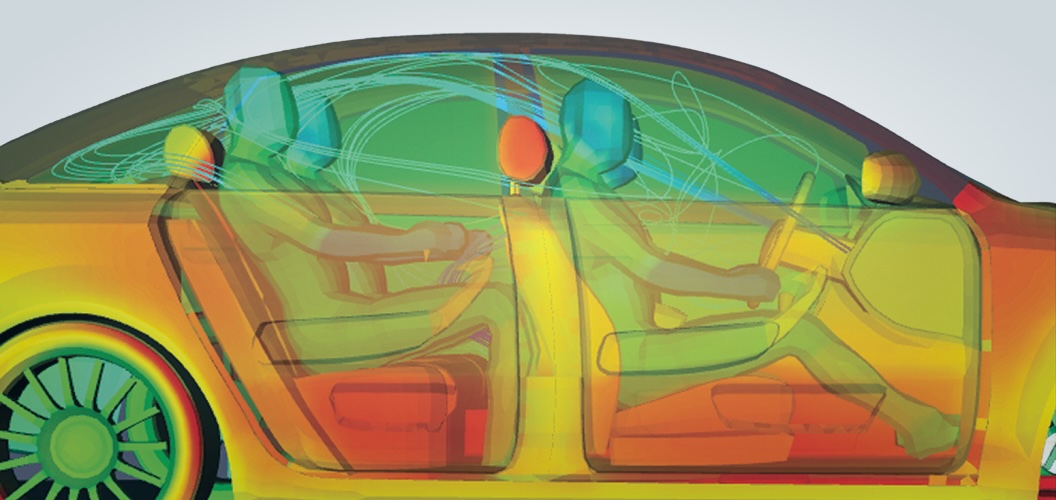

Simulate real-world thermal behavior across complete systems with validated, multiphysics accuracy.
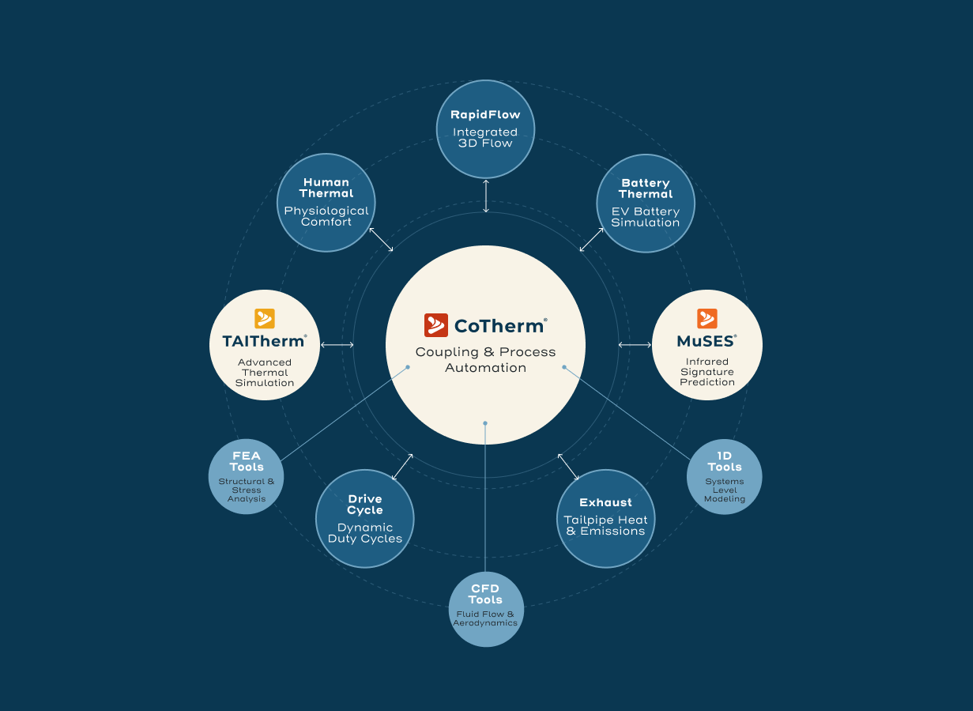

Automate, orchestrate, and streamline multiphysics simulation workflows across tools and teams.


Predict EO/IR signatures in real environments for mission-critical visibility and survivability analysis operations.