
Thermal Management & Heat Transfer
Brake Systems Thermal Analysis
Optimize Brake Performance with High-Fidelity Transient Thermal Simulation
In the world of high-performance automotive engineering, heat is both the byproduct and the enemy. At ThermoAnalytics, we provide the industry’s most advanced thermal simulation solutions, enabling engineers to predict, manage, and optimize the thermal behavior of braking systems long before a physical prototype ever hits the track or the street.
Our software platform, TAITherm, specializes in transient thermal analysis, allowing you to simulate complex braking cycles, from repetitive high-speed stops to prolonged downhill descents, with unparalleled accuracy.
How It Works
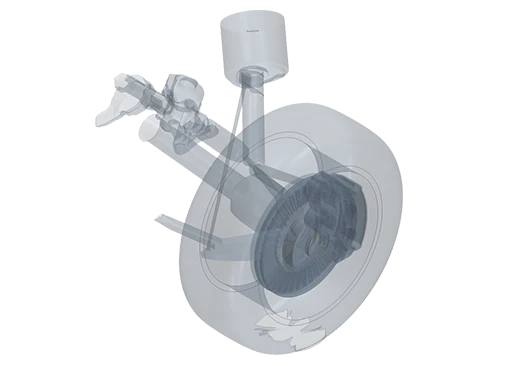
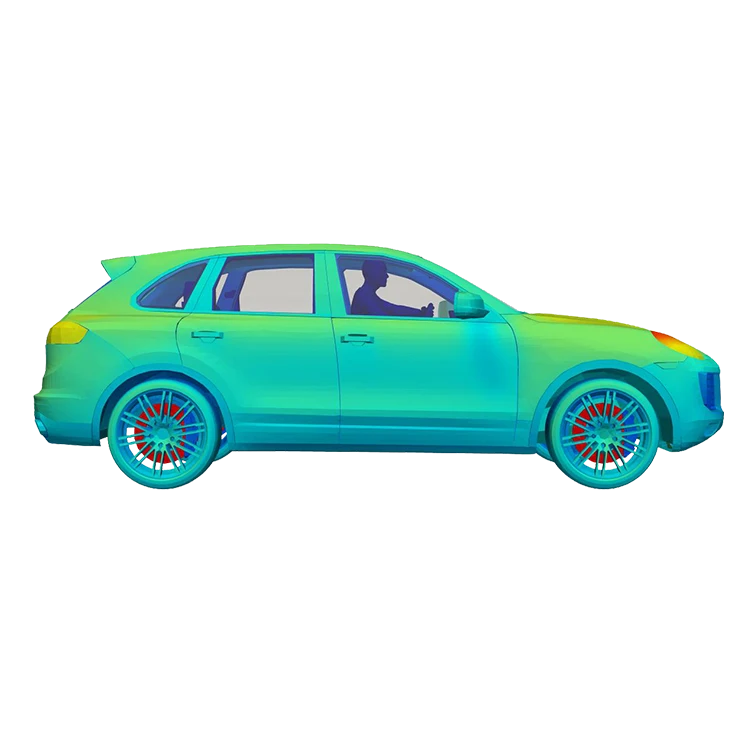
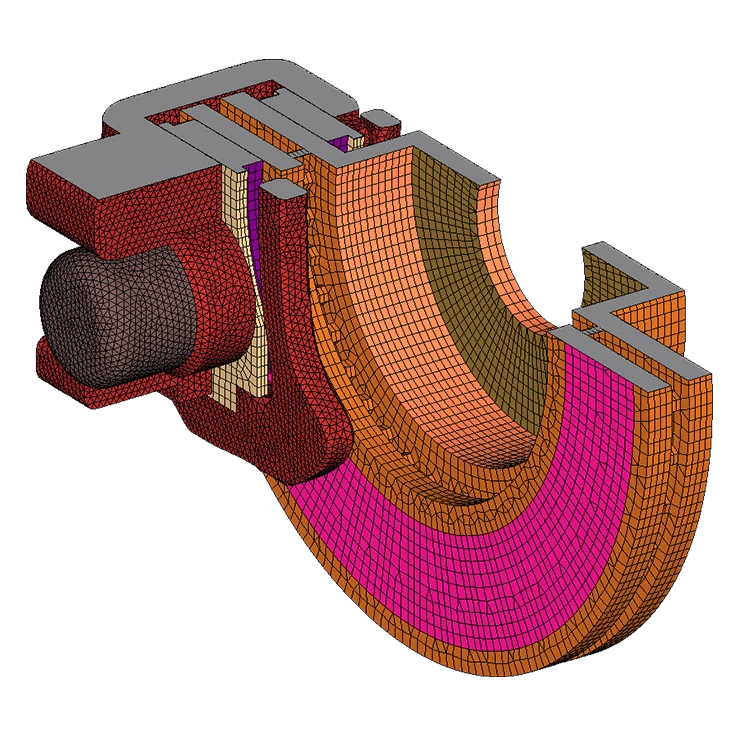
In TAITherm, brake modeling is achieved through a high-fidelity transient approach that accounts for the complex physics of a braking event. The process begins by defining the heat source, typically modeled as a heat flux applied to the rotor surfaces where the pads make contact, based on the vehicle’s kinetic energy, deceleration rate, and braking bias. TAITherm utilizes a multi-layer shell or volume element approach to accurately capture the temperature gradients through the thickness of the rotor.
The software then solves the energy equation across the entire assembly, including the pads, calipers, and surrounding hub. To account for the cooling effects of rotation and ambient airflow, TAITherm integrates spatially-varying convection coefficients. This allows the model to simulate how airflow interacts with rotor vanes and ducting as the vehicle speed changes. By calculating the coupled effects of conduction between components, convection to the air, and radiation to the wheel rim and suspension, TAITherm provides a complete time-history of the system’s thermal soak-back and cooling recovery.
Engineering Without Compromise
By integrating ThermoAnalytics into your design workflow, you transform thermal management from a reactive fix into a competitive advantage.
Transient Simulation
Unlike steady-state analysis, transient simulation tracks temperature changes over a specific period. In braking systems, this allows engineers to model the “stop-and-go” reality of driving, accounting for the rapid heat spikes during friction and the gradual cooling phases. By simulating full duty cycles, you can identify soak-back, where heat migrates into sensitive components like brake fluid or seals after the vehicle has stopped, ensuring safety under all operational conditions.
Design Optimization
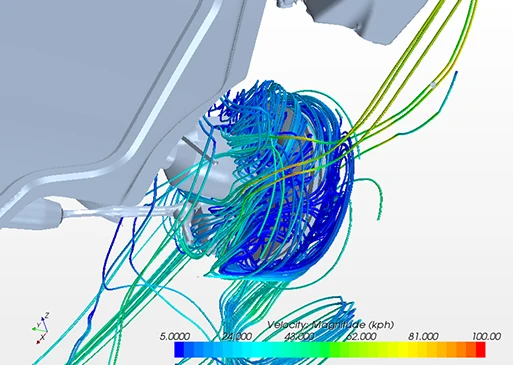
Design optimization leverages automated workflows to test geometric variations, such as rotor vane shapes, cooling duct placements, or caliper venting, without the need for physical prototypes. By coupling thermal data with fluid dynamics, you can maximize airflow efficiency and minimize weight. This process ensures that your final hardware is the most thermally efficient version of itself, striking the perfect balance between performance and mass reduction.
Material Selection
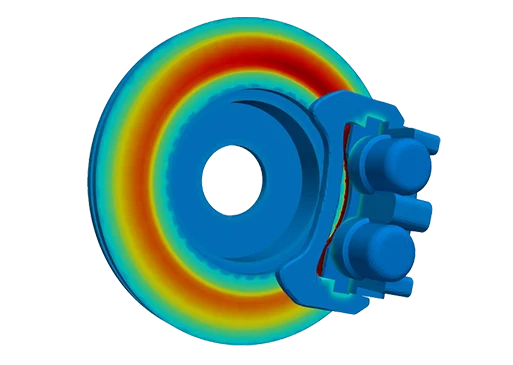
Every material responds differently to thermal loading, from traditional cast iron to high-performance carbon-ceramics. Material selection allows you to simulate different alloys or composites respond to the dynamic thermal environments. This helps engineers quickly test multiple materials to ensure the chosen material can withstand the stresses of the vehicle’s intended environment before production begins.