
Thermal Management & Heat Transfer
Optimizing Windshield Defrost & Defog Performance
Accelerate Regulatory Compliance and EV Efficiency with Transient Multi-Physics Analysis
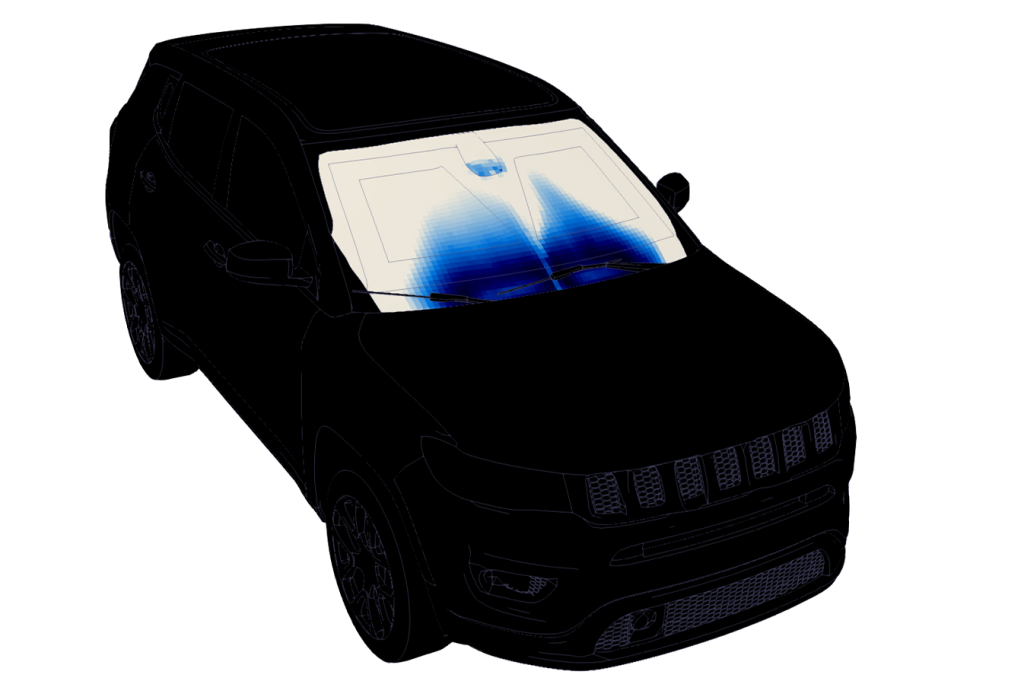
In the automotive and aerospace industries, windshield defrost and defog performance is more than a convenience, it is a critical safety and regulatory requirement. Achieving rapid, uniform clearing of ice and condensation requires a delicate balance of HVAC output, vent geometry, and glass material properties. However, relying solely on physical wind-tunnel testing is costly and occurs too late in the design cycle to allow for meaningful optimization.
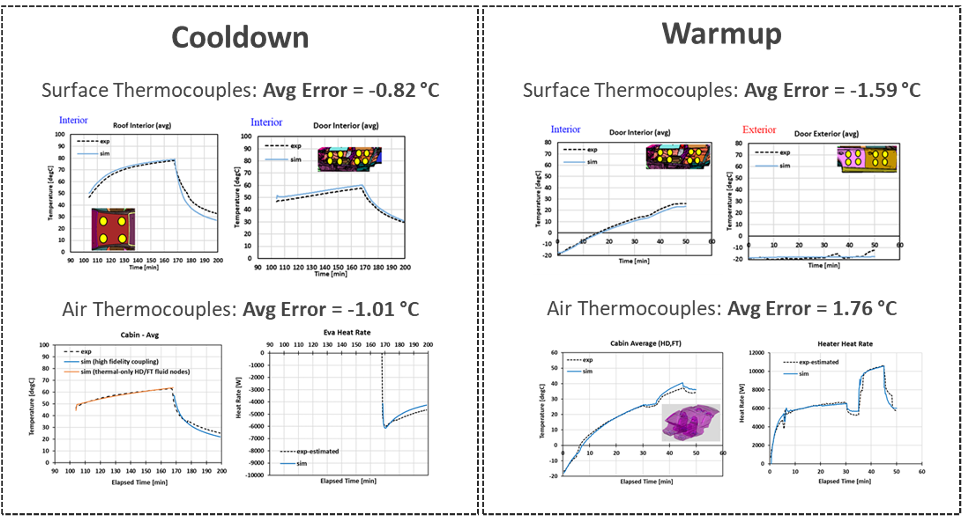
ThermoAnalytics solves these challenges by leveraging TAITherm, RapidFlow or CoTherm to provide high-fidelity, transient thermal analysis. By simulating the complex interaction between the vehicle cabin and the external environment, engineers can predict clearing patterns with precision. Our approach ensures mission success and passenger safety by optimizing thermal delivery systems to meet global standards (such as SAE J902) while maximizing energy efficiency in electric and internal combustion vehicles alike.
How it works
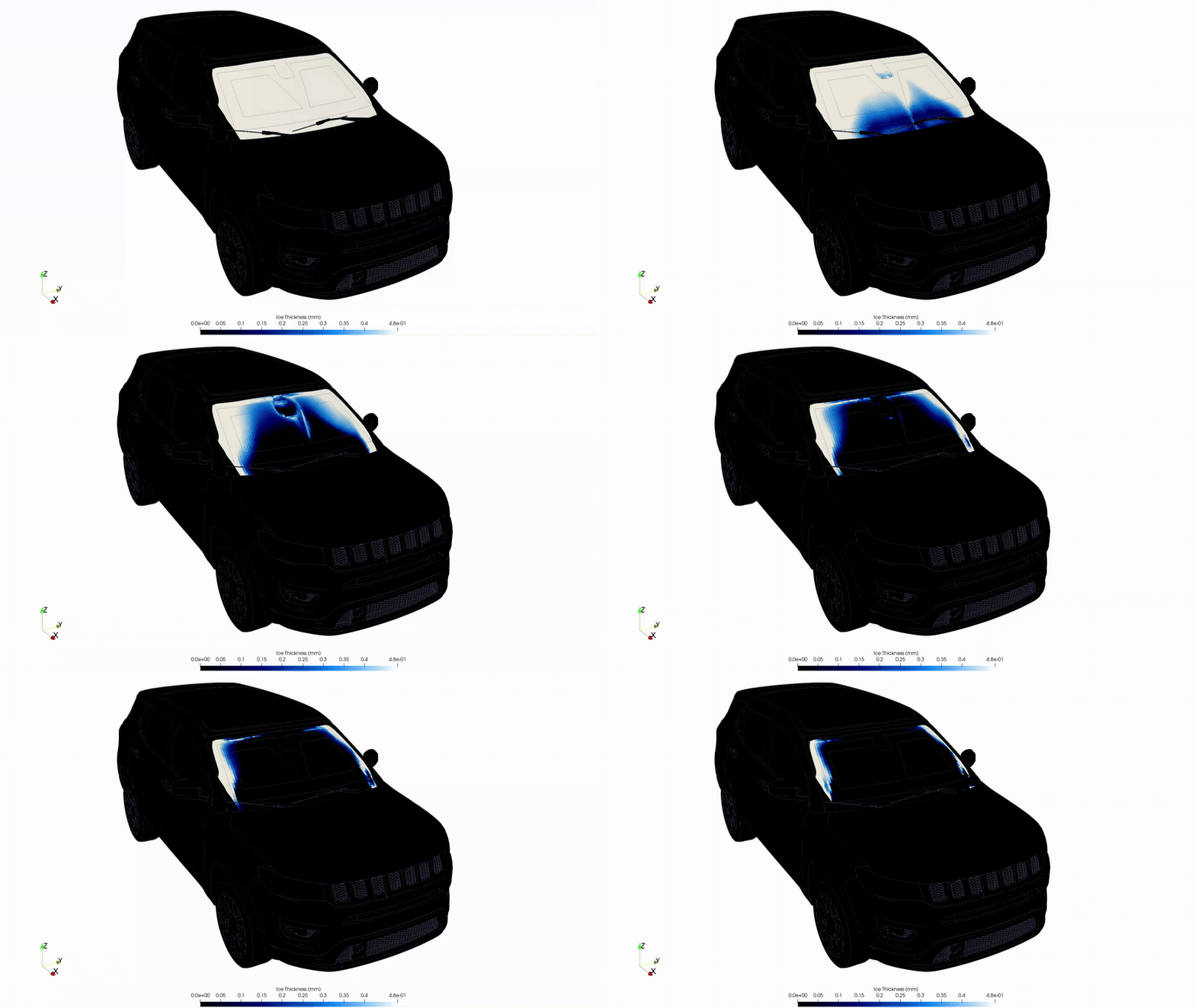
The physics of defrosting a windshield involves a highly transient interplay of convection, conduction, and radiation. As the HVAC system pushes heated air across the interior surface, the simulation must account for the fluid-to-solid heat transfer, the thermal mass of the multi-layered glass, and the latent heat of fusion required to melt exterior ice.
Our methodology distinguishes itself through multiphysics integration:
Transient Heat Transfer
TAITherm excels at capturing the time-varying temperature distribution across the windshield as the vehicle warms up.
schedule a demo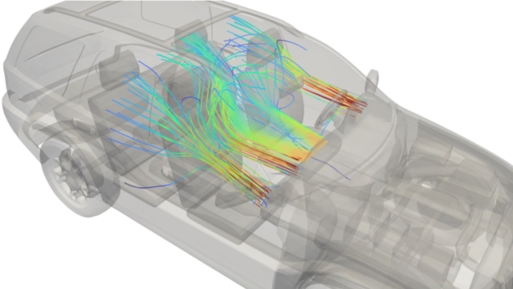
RapidFlow for Convective Coupling
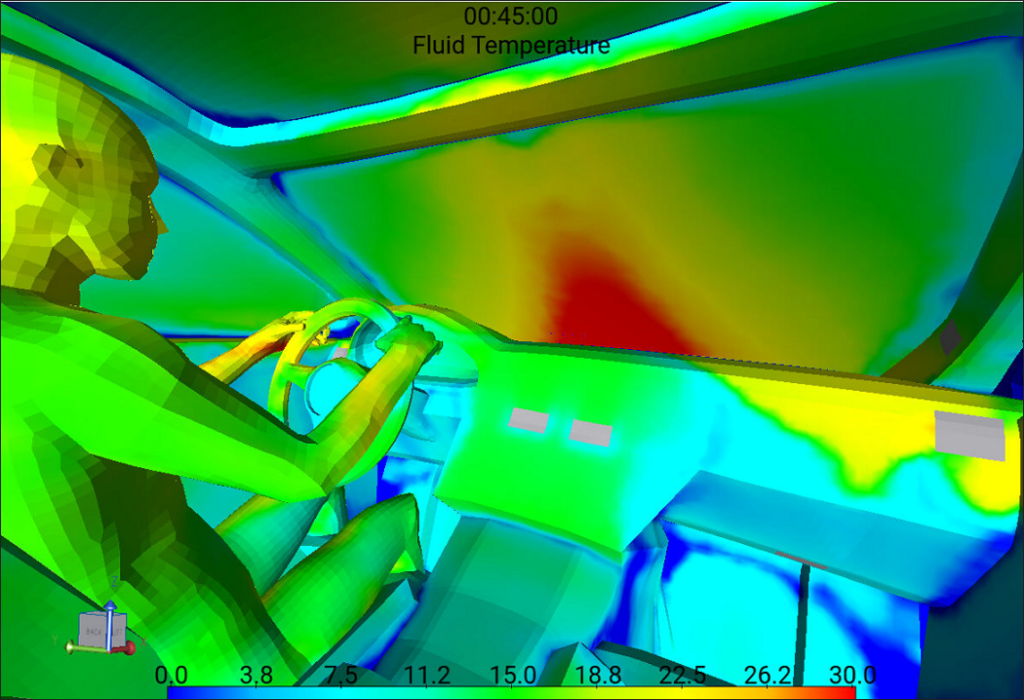
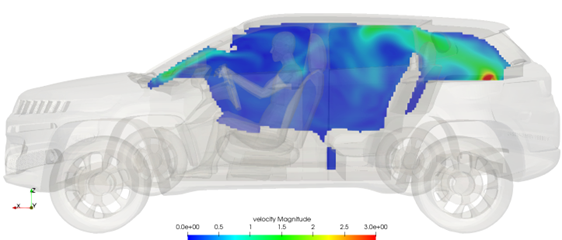
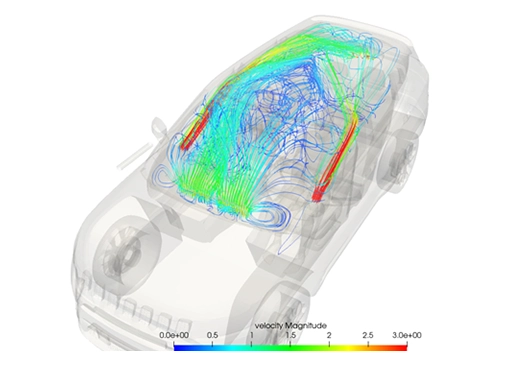
We utilize RapidFlow to provide high-fidelity convection coefficients and fluid temperatures without the computational overhead of solving full 3D CFD for every time step. This specialized solver allows for the rapid iteration of duct designs and nozzle velocities, ensuring that air-side heat transfer is accurately mapped to the glass surface in a fraction of the time.
schedule a demo
Process Automation with CoTherm
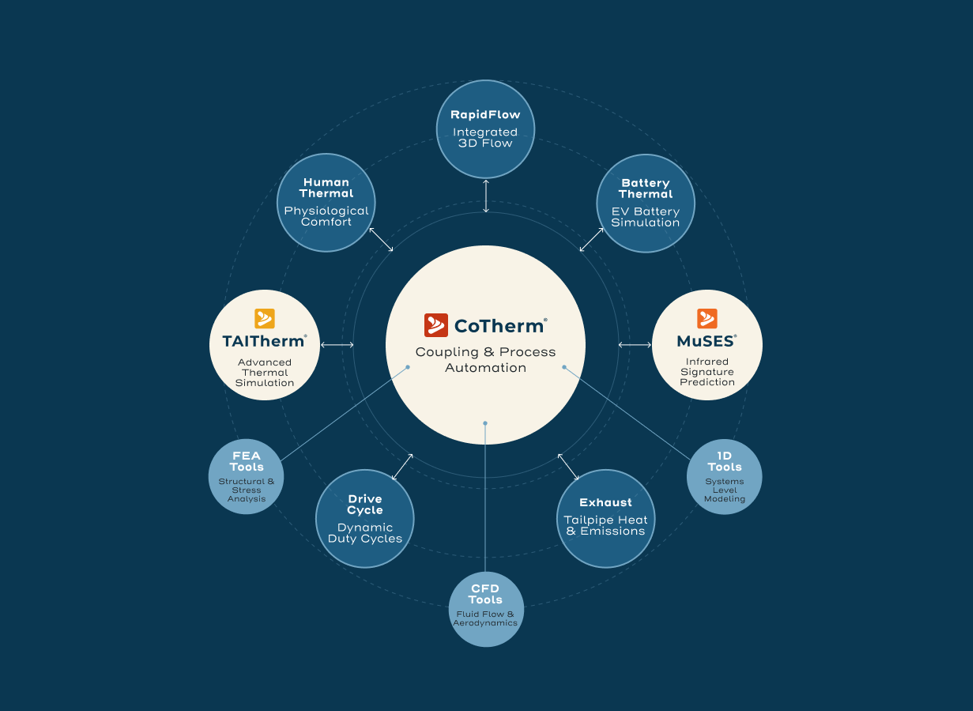
We utilize CoTherm to orchestrate the coupling between TAITherm and 3rd-party CFD solvers. This allows for “coupled” simulations where the air temperature and flow velocity (CFD) evolve alongside the surface temperatures (TAITherm), ensuring the most accurate boundary conditions possible.
schedule a demo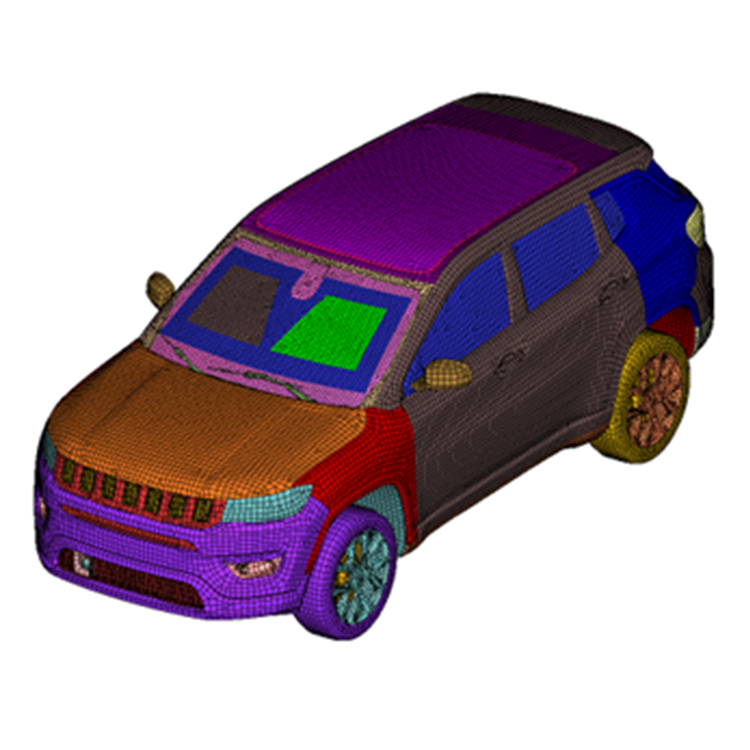
Thermal-Electrical Coupling
For modern EVs, we integrate the electrical load of resistive heating elements (defrost grids) into the thermal model, allowing engineers to analyze battery drain versus defrosting speed.
schedule a demo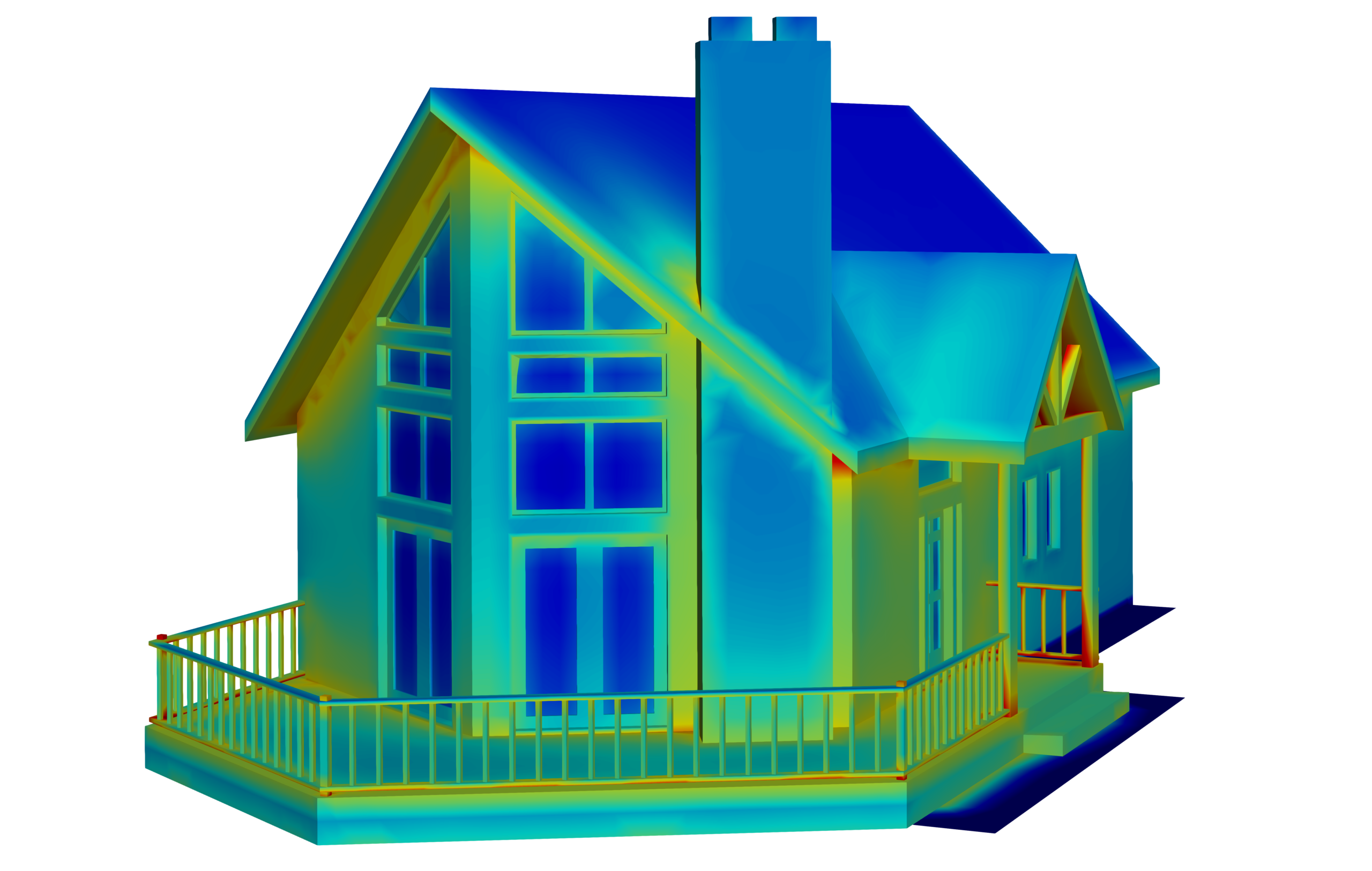
Electronics Thermal Analysis
For high-performance computing, automotive auxiliary electronics, and telecommunications, CoTherm manages the coupling between thermal, fluid, and power-draw models.
Dynamic Workload Analysis
Coordinates realistic duty cycles, such as how a CPU/GPU “burst” of activity creates transient heat that the cooling system must mitigate.
Material Stack-Up Study
CoTherm’s automation of design sweeps pairs with TAITherm’s powerful multilayer modeling and thermal linking capabilities to easily study the thermal impact of different chip layout, cooling device, or TIM (Thermal Interface Material) choices across a design space.
Environmental Influence Considerations
Automated workflows enable comprehensive studies of how external ambient changes affect the internal operating temperature of electronics enclosures.
Engineering Without Compromise
By integrating ThermoAnalytics into your design workflow, you transform thermal management from a reactive fix into a competitive advantage.
EV Range Extension & HVAC Optimization
In Electric Vehicles, the absence of waste heat from an internal combustion engine makes defrosting a significant drain on the battery. Using simulation, engineers can perform a sensitivity analysis on vent placement and air-mixing strategies. By optimizing the air-side heat transfer coefficient, manufacturers can achieve regulatory clearing times while minimizing the power draw from the PTC heater or heat pump, directly resulting in increased vehicle range in cold-weather climates.
Sensor & ADAS Camera Integration
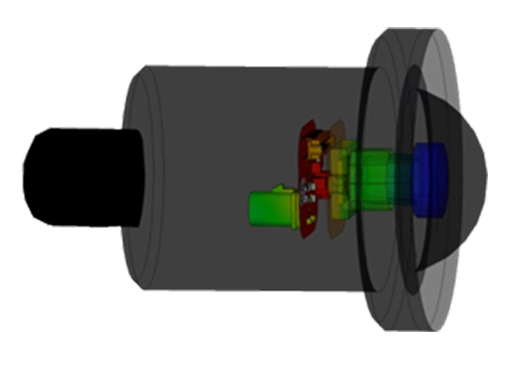
Modern safety systems rely on cameras and LiDAR sensors mounted behind the windshield. If these “eyes” are obscured by fog or ice, the vehicle’s autonomous features may disengage. We apply TAITherm to analyze the local thermal environment of these sensors. Simulation provides a solution by determining if secondary heating elements or specific airflow redirects are necessary to maintain sensor uptime and ADAS reliability during inclement weather.
Transient Cabin Comfort & Thermal Sensation
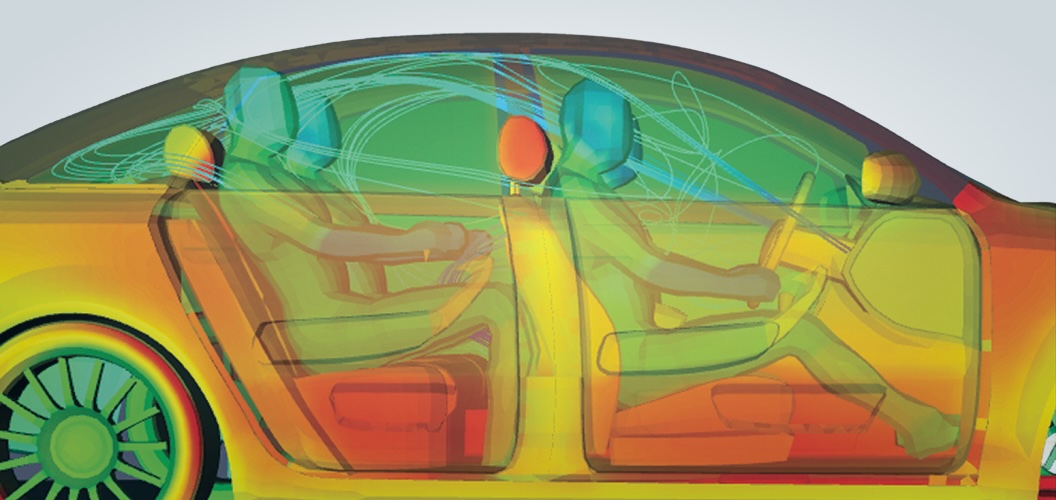
Defrosting is rarely an isolated event; it happens while the cabin is transitioning from a cold-soak state to a comfortable environment for passengers. We use a human physiology-based approach to ensure that the high-velocity air required for defrosting does not negatively impact passenger thermal comfort. By simulating the human response within the cabin, engineers can balance the airflow requirements for visibility with the localized comfort of the occupants.