
EO/IR Sensor Simulation
High-Fidelity EO/IR Scene Simulation for AI/ML Training
Train AI Models with Physics-Based EO/IR Scene Simulation
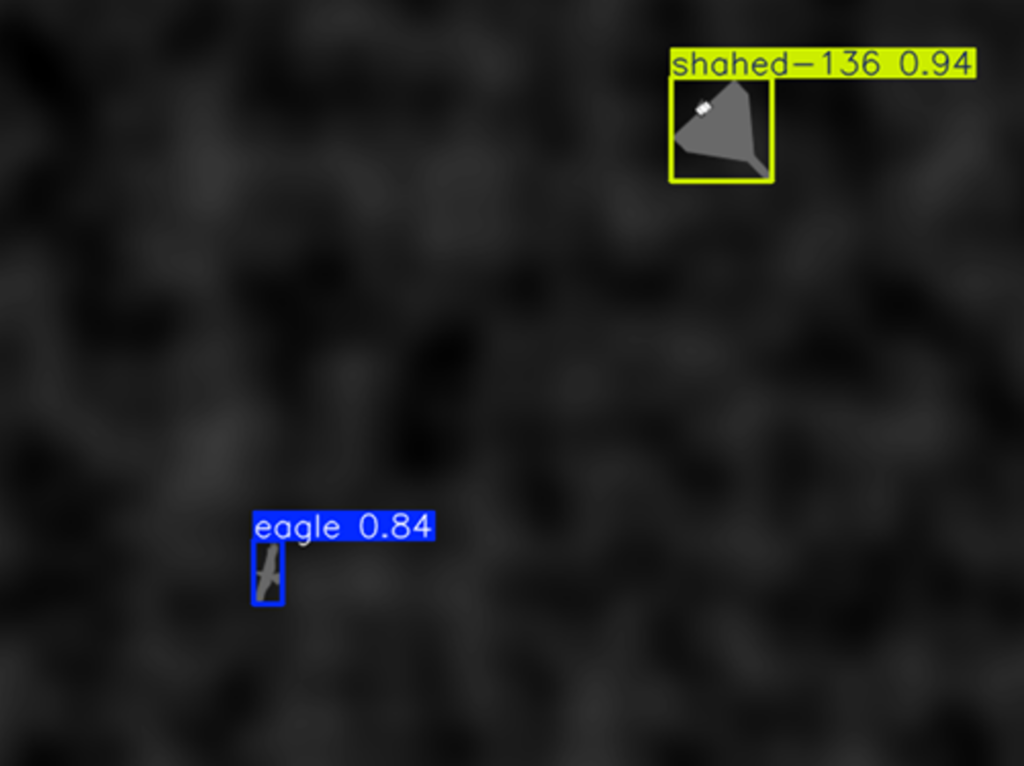
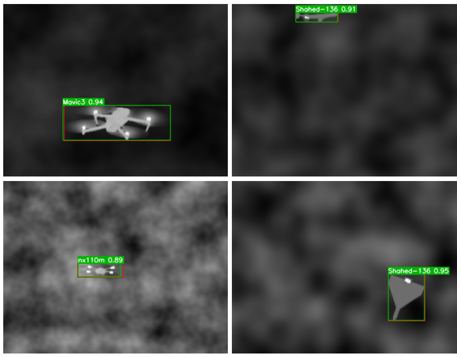
The performance of Artificial Intelligence and Machine Learning (AI/ML) models in the Electro-Optical and Infrared (EO/IR) spectrum depends on realistic EO/IR scene simulation to generate the data used to train them. Traditional data collection—relying on physical field tests—is often prohibitively expensive, difficult to replicate, and limited by weather or seasonal constraints. This creates a “data gap” where models lack the diverse thermal signatures necessary for mission-critical accuracy.
ThermoAnalytics bridges this gap by providing high-fidelity, physics-based synthetic imagery. By utilizing MuSES (Multi-Service Electro-optic Signature) and the automation power of CoTherm, we enable the generation of massive, radiometrically accurate datasets. As a result, AI/ML algorithms train on “ground truth” data that accounts for transient thermal behavior, environmental complexity, and material properties. This ultimately drives higher detection probabilities and mission success.
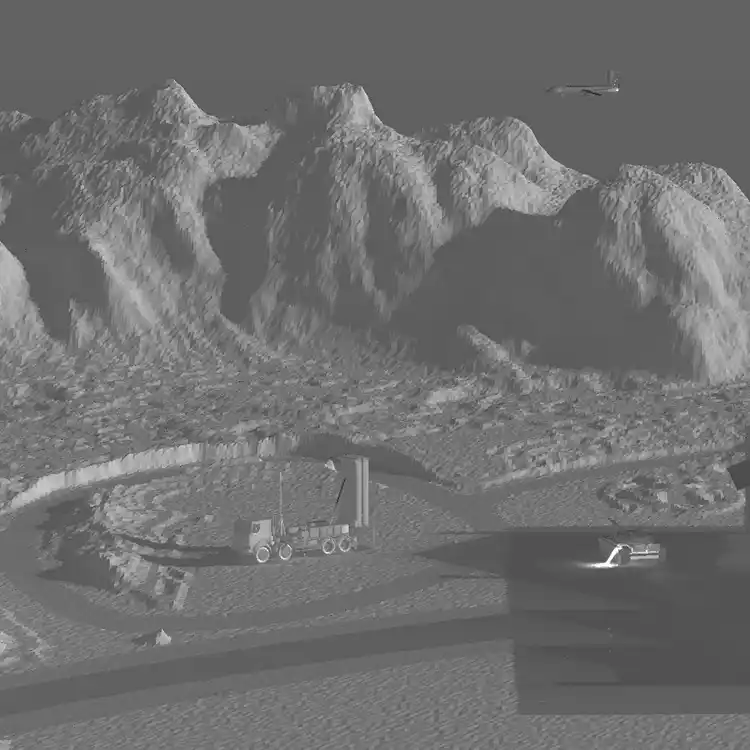
How It Works:
The Physics of Signature Prediction
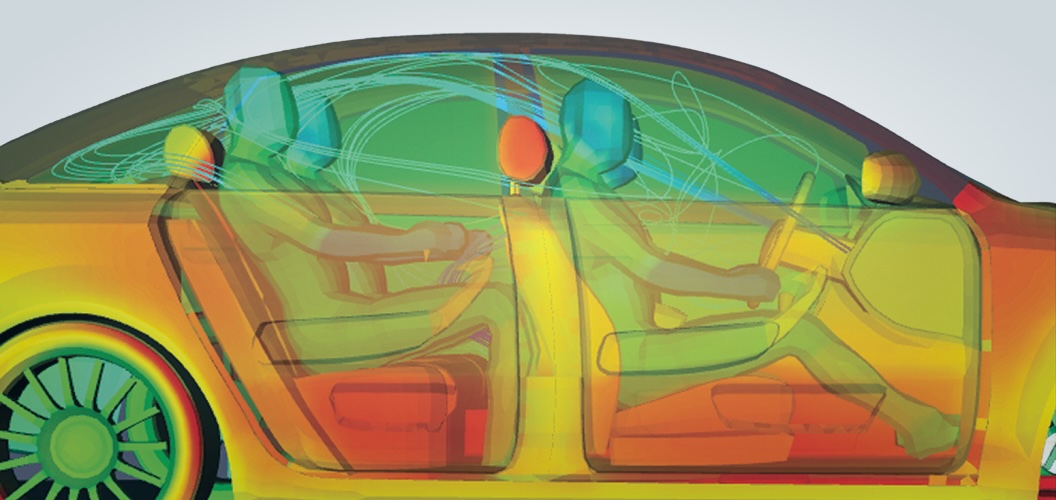
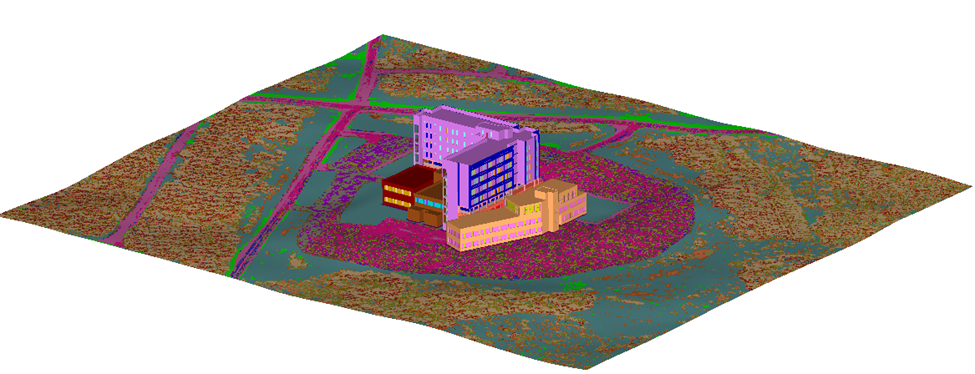
Achieving radiometric accuracy in EO/IR scene simulation requires more than just visual rendering. It also requires a deep understanding of transient heat transfer and multi-physics integration. MuSES calculates the temperature of every facet in a scene by solving the complete heat balance equation, accounting for:

Environmental Effects
Real-world weather data, solar loading (direct and diffuse), and atmospheric transmission.

Internal Heat Sources
High-fidelity modeling of engines, electronics, and exhaust plumes to capture realistic thermal “hot spots.”

Complex Radiation Exchange
Detailed multi-bounce reflections and shadowing between the target, the background, and the sky.
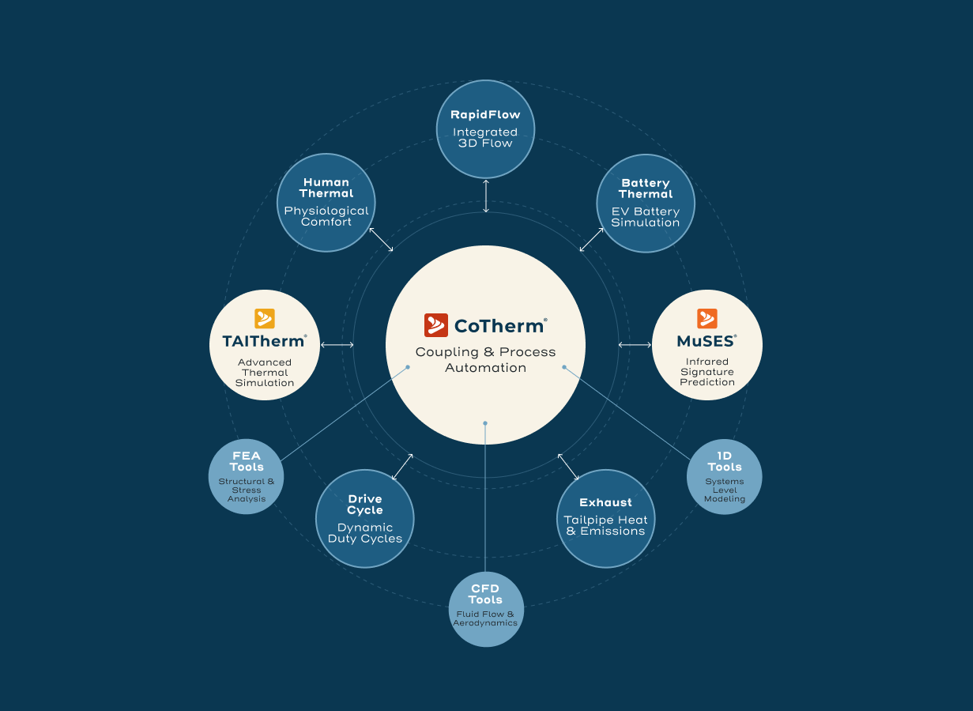
To scale this for AI/ML, CoTherm is used to automate the simulation pipeline. It’s a co-simulation and process automation tool often used to manage the coupling between MuSES and 3rd party solvers, such as CFD for convective cooling or FEA for structural thermal loads. However, it can also automate a repetitive process like MuSES thermal/infrared predictions. This means engineers can vary time of day, slant range, weather condition, and vehicle operating state to produce thousands of unique, labeled training images without manual intervention.
Engineering Without Compromise
By integrating ThermoAnalytics into your design workflow, you transform thermal management from a reactive fix into a competitive advantage.
Robust Target Detection and Classification
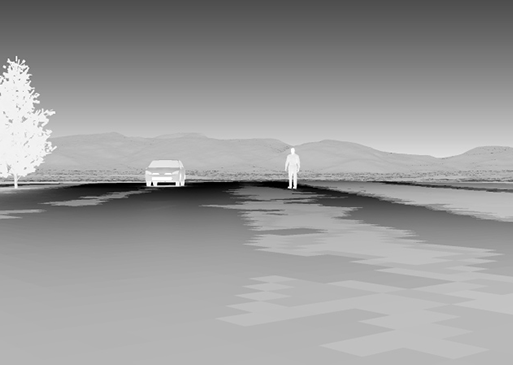
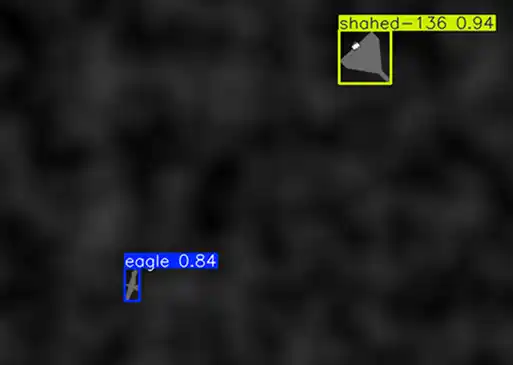
Training an AI to recognize a vehicle at noon in the desert is simple. Training it to recognize that same vehicle at 3:00 AM in a rainy forest, however, is a physics problem. The datasets supplied for training need to be diverse, challenging, and realistic enough to effectively supplement existing large-scale real-world datasets. As a result, they deliver measurable improvements in detection performance. MuSES allows engineers to simulate target-to-background contrast across an infinite array of diurnal cycles and weather patterns. By providing the AI with high-fidelity “thermal crossovers”—periods where target and background temperatures equalize—developers can refine algorithms to maintain high detection rates even in low-contrast, operationally challenging environments.
Signature Management and IR Stealth Optimization
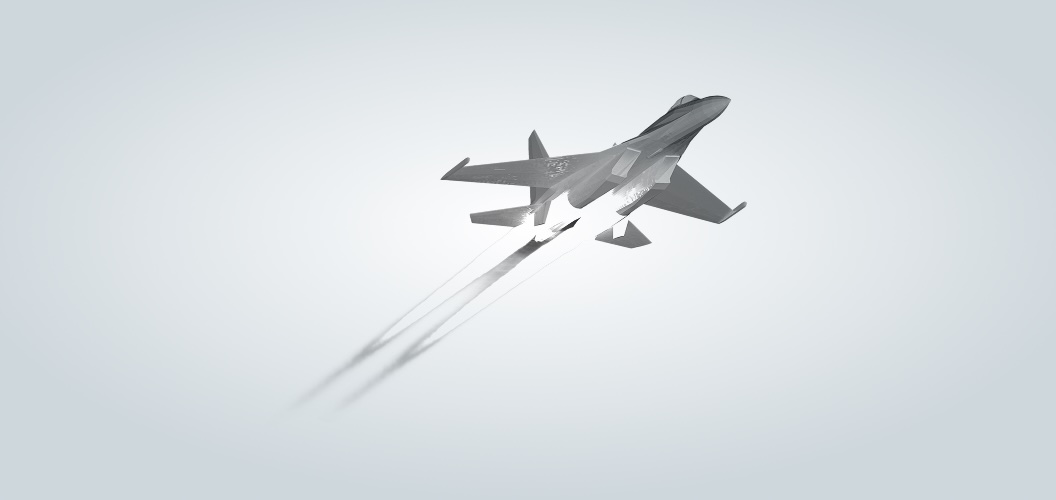
For defense applications, simulation is used to evaluate signature reduction strategies before a prototype is ever built. Engineers use MuSES to test how different coatings, heat shields, or active cooling systems affect an asset’s detectability. Specifically, they evaluate performance against specific EO/IR sensors. This approach allows for the optimization of thermal suppression systems. Consequently, AI-driven adversarial sensors cannot easily lock onto the platform’s thermal footprint.
Sensor Fusion and Autonomous Navigation
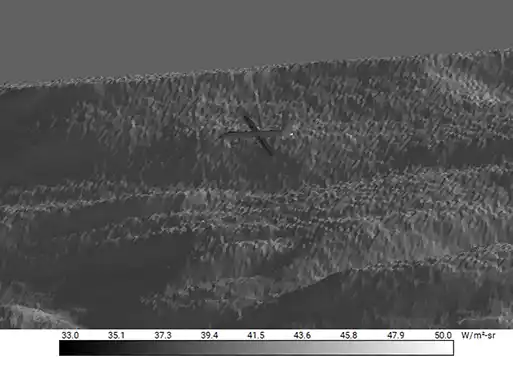
Autonomous systems often rely on a combination of RGB, LiDAR, and IR sensors. ThermoAnalytics provides a unified simulation environment where multi-spectral signatures are generated from a single thermal model. By simulating how thermal gradients appear on roadways, runways, or obstacles under varying atmospheric conditions, we help developers train fusion algorithms that can navigate safely in degraded visual environments (DVE) where standard optical cameras fail.