
Thermal Management & Heat Transfer
Fuel Tank Thermal Analysis
Predict Fuel Temperatures, Vapor Pressure, and Evaporative Emissions
In the automotive and aerospace industries, fuel tank design has evolved beyond volume and geometry; it is now a critical challenge of managing complex thermal environments. ThermoAnalytics provides industry-leading thermal software and services to predict fluid temperatures, pressure changes, and vapor generation, ensuring safety and performance in the most demanding conditions.
As vehicle architecture becomes increasingly compact and heat loads from high-performance engines, exhaust systems, or high-voltage electronics rise, maintaining fuel system integrity is more difficult than ever. Our solutions empower engineers to simulate soak-back effects, sloshing dynamics, and diurnal breathing losses with accurate fidelity.
By integrating 3D thermal radiation, conduction, and convection into a single multiphysics workflow, we help you identify thermal bottlenecks early. This proactive approach significantly reduces physical prototyping costs, accelerates time-to-market, and ensures strict regulatory compliance for evaporative emissions across global markets
How It Works:
Multi-Physics Thermal Coupling
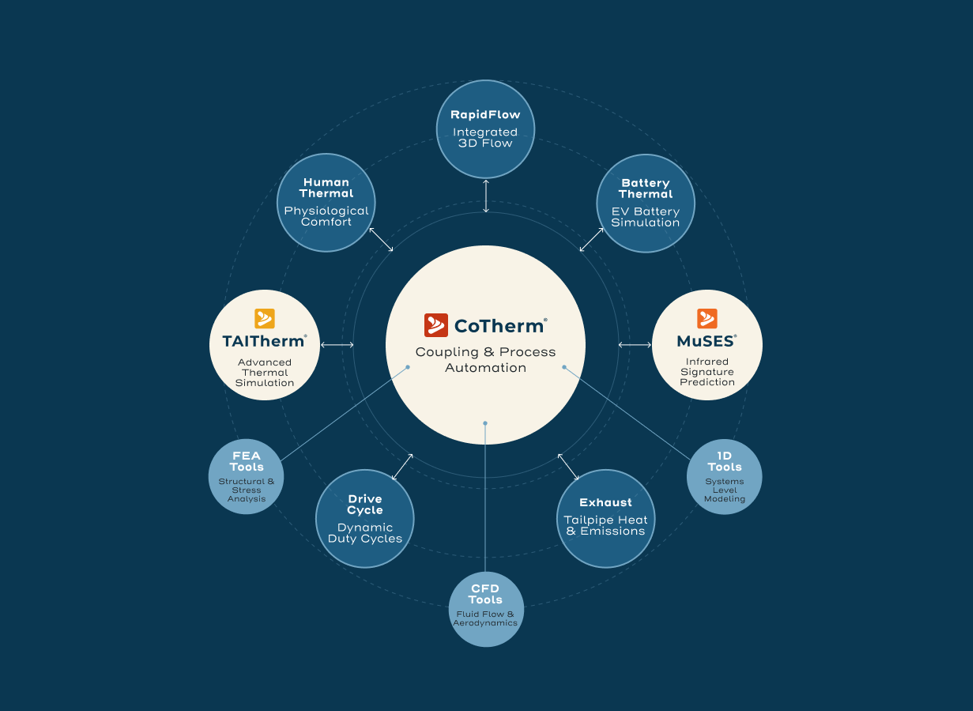
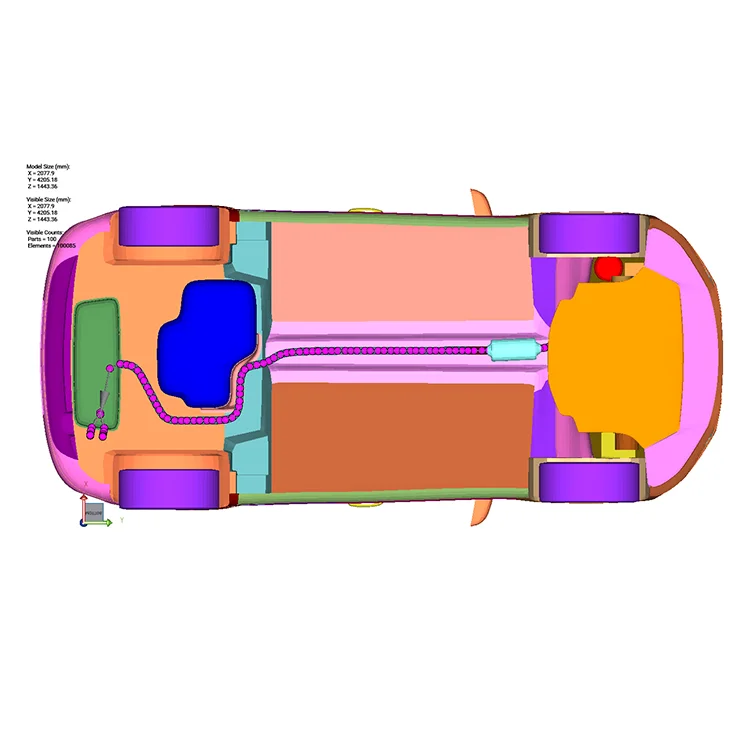
Our approach leverages a sophisticated coupling of 3D transient heat transfer and Computational Fluid Dynamics (CFD). This methodology allows TAITherm to handle the complex 3D heat transfer while CFD solvers handle precise fluid flow, convection and sloshing.
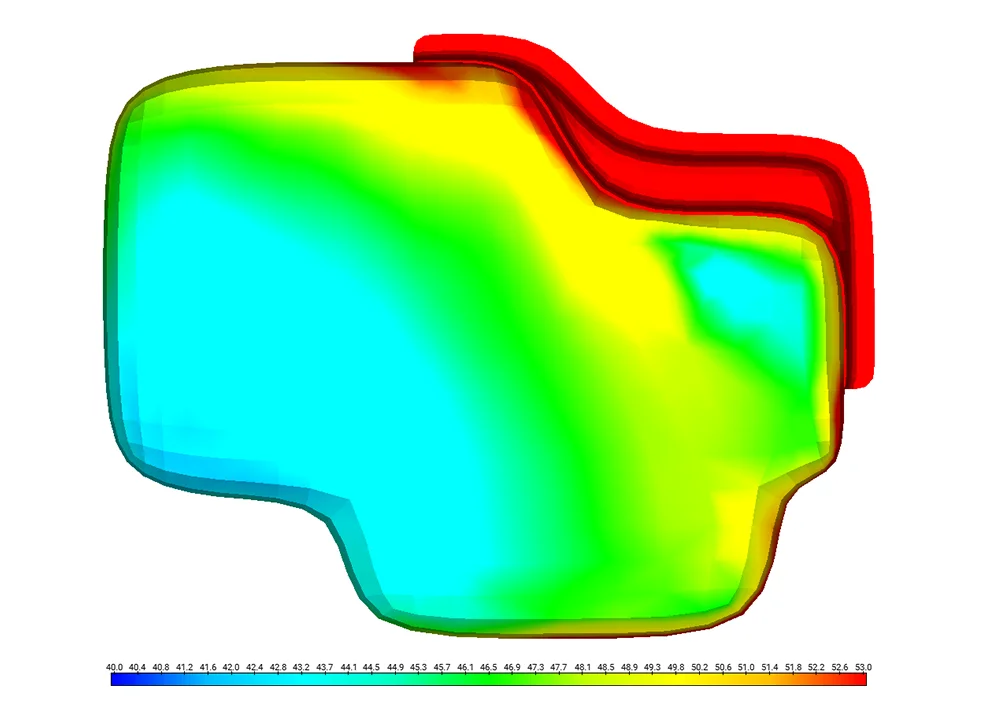
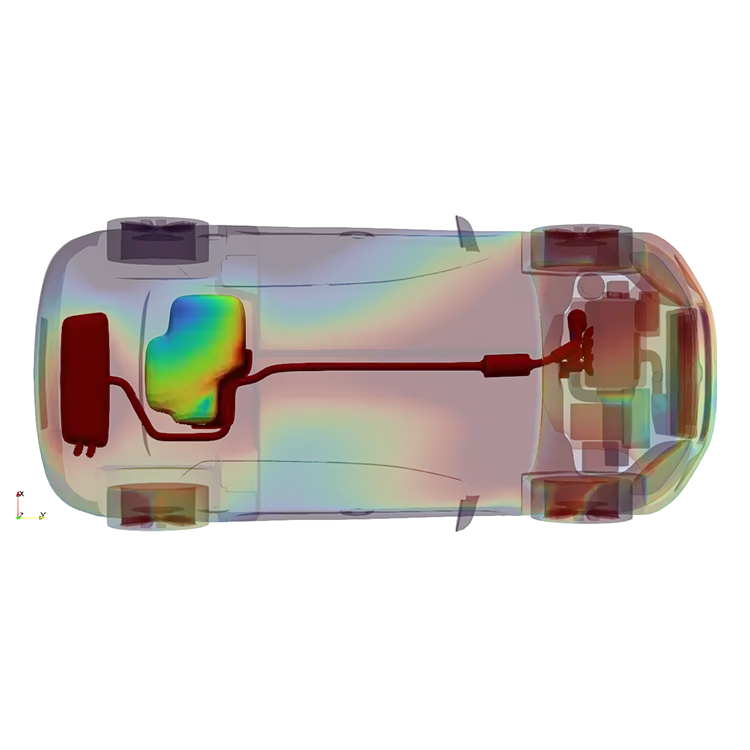
The process begins by modeling the tank’s environment, accounting for radiation from the exhaust manifold, convection from underbody airflow and natural enviornment. Inside the tank, the coupled approach calculates the heat transfer between the fuel (liquid phase) and the ullage (vapor phase). The approach accounts for the phase change and partial pressures of fuel constituents, allowing for the precise prediction of fuel temperature rise and the resulting vapor pressure. This high-fidelity modeling ensures that “hot-start” issues and pressure-relief valve triggers are identified early in the design cycle.
Engineering Without Compromise
By integrating ThermoAnalytics into your design workflow, you transform thermal management from a reactive fix into a competitive advantage.
Evaporative Emissions Analysis
Managing Diurnal Breathing Losses (DBL) is essential for meeting EPA and Euro 7 standards. Our coupled solution simulates the 24-hour heating and cooling cycle of a parked vehicle, predicting how much fuel vapor is generated and pushed into the carbon canister. This analysis allows engineers to optimize canister sizing and vent line placement to minimize environmental impact.
Underbody Heat Shield Optimization
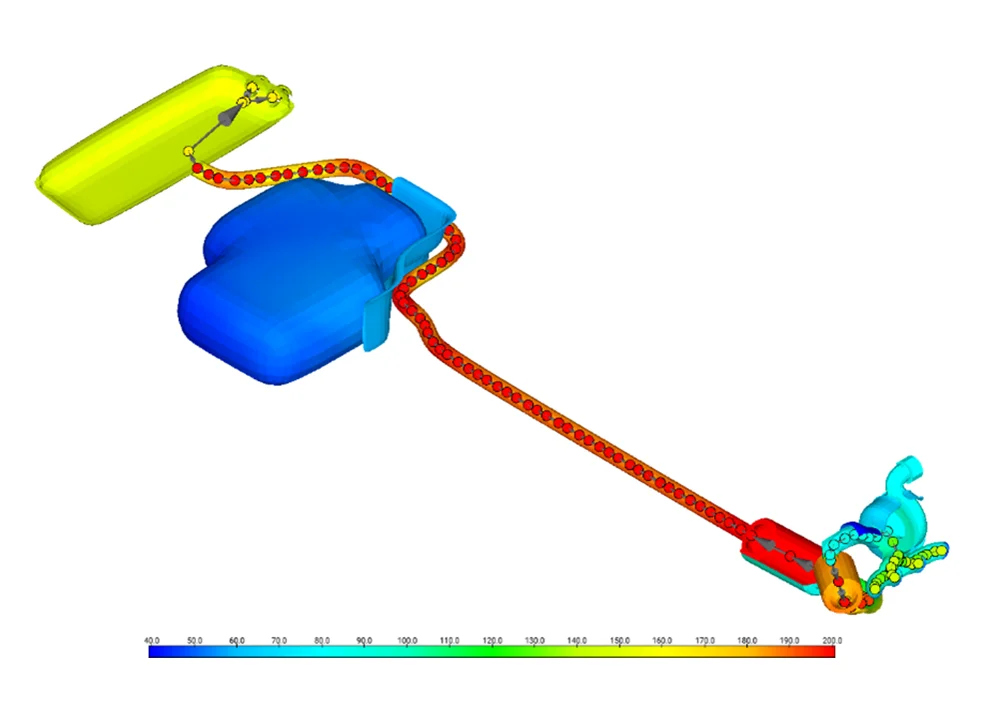
Fuel tanks are often positioned in thermal “hot zones” near exhaust pipes or electric drive units. We perform sensitivity studies on heat shield geometry and materials. By analyzing the view factors and radiative exchange, we determine the minimum shielding required to keep fuel temperatures below critical thresholds, effectively saving weight and reducing material costs.
Slosh and Dynamic Thermal Loading
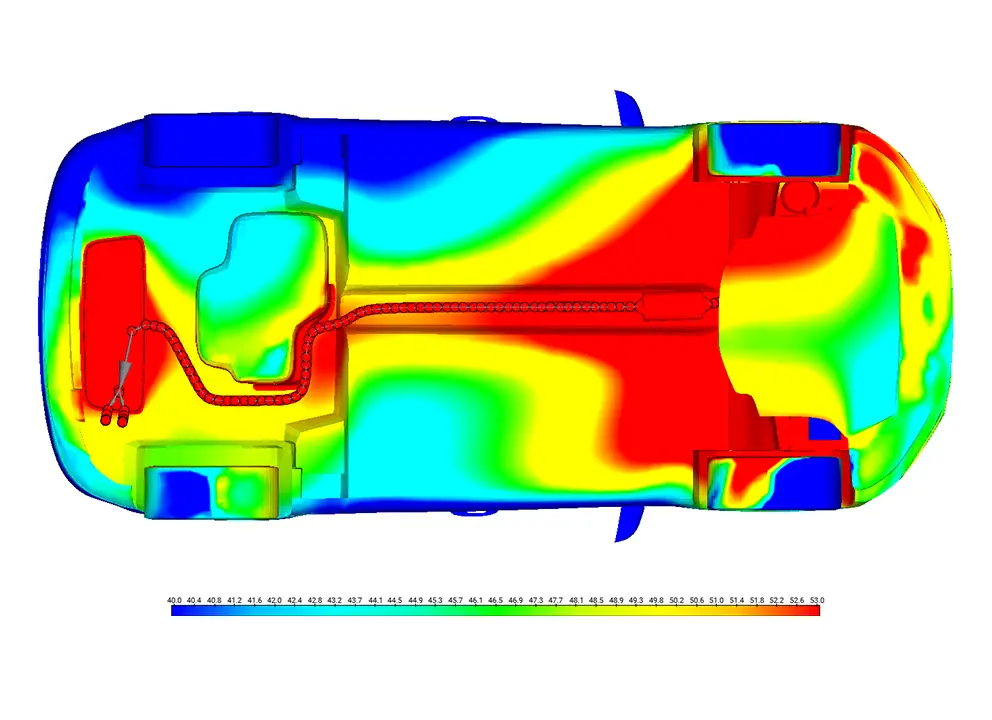
The movement of fuel during cornering or braking significantly impacts internal heat distribution. By simulating fluid slosh, we analyze how the “wetting” of the upper tank walls affects cooling or heating rates. This is vital for high-performance vehicles where fuel is used as a heat sink for other subsystems, requiring a delicate balance of thermal energy.