
Human Centric Design
Human Thermal Modeling & Heat Stress Simulation
Design for Human Performance Under Thermal Stress
ThermoAnalytics’ Human Thermal Extension provides high-fidelity modeling to predict physiological responses to heat stress and the onset of heat stroke. By integrating advanced thermoregulation algorithms with transient environmental data, our software allows engineers and safety professionals to quantify human comfort, performance degradation, and health risks in simulated scenarios. Whether designing military gear, automotive cabins, or high-performance athletic apparel, our tools provide the thermal intelligence needed to improve safety* and optimize human-system integration.
* The Human Thermal Model is not fully validated in extreme scenarios where death may occur. As such, ThermoAnalytics, Inc. is not liable for any harm caused by the suggested guidelines listed.
How It Works
Legacy tools often rely on steady-state assumptions or averaged environmental conditions, missing the critical window where heat stress transitions into a medical emergency. These physiological blind spots represent a significant technical risk; they typically surface during late-stage development or, worse, after a product has reached the field. ThermoAnalytics’ Human Thermal Extension eliminates this uncertainty by modeling the body’s actual biological response under extreme thermal loads.
Core & Skin Temperature Prediction
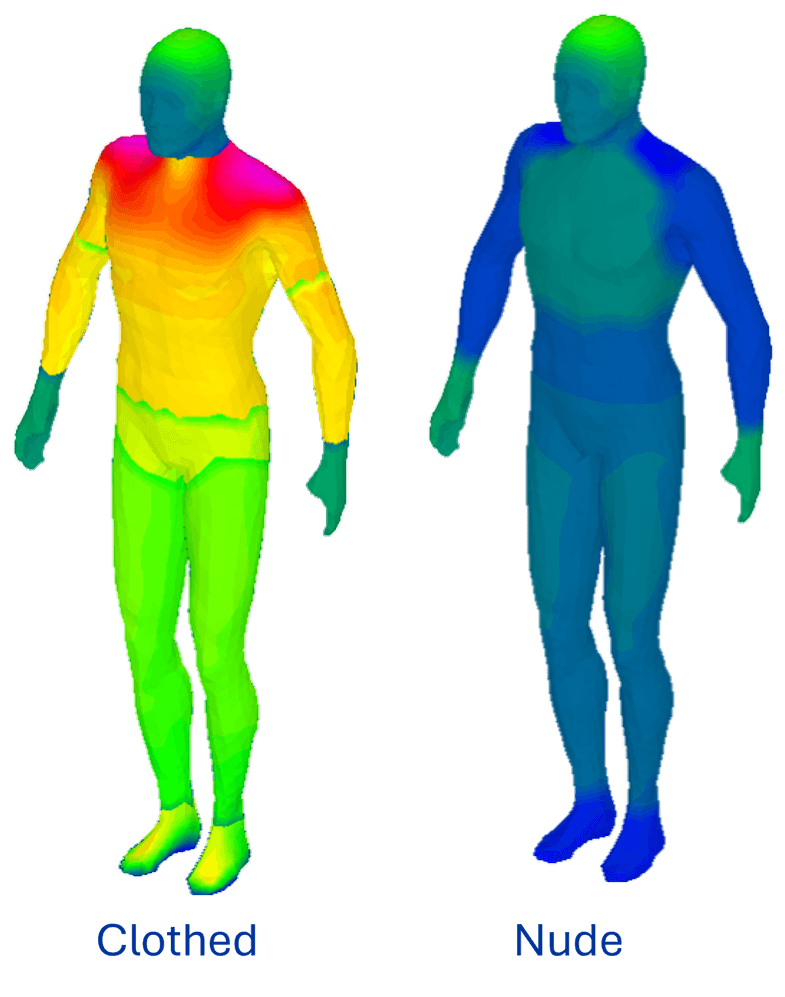
Our solution simulates the human vascular and metabolic systems as a dynamic, multi-node network. Unlike static heat indices, our approach accounts for transient heat transfer between the body and its surroundings via conduction, convection, radiation, and evaporation. The extension solves the bio-heat equation across specialized body segments to calculate:
- Core Temperature: Tracking the internal thermal state to predict the onset of heat exhaustion and heat stroke.
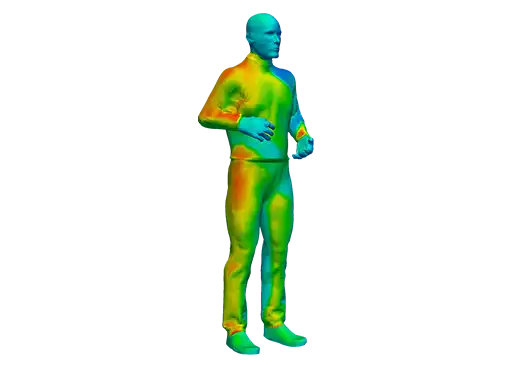
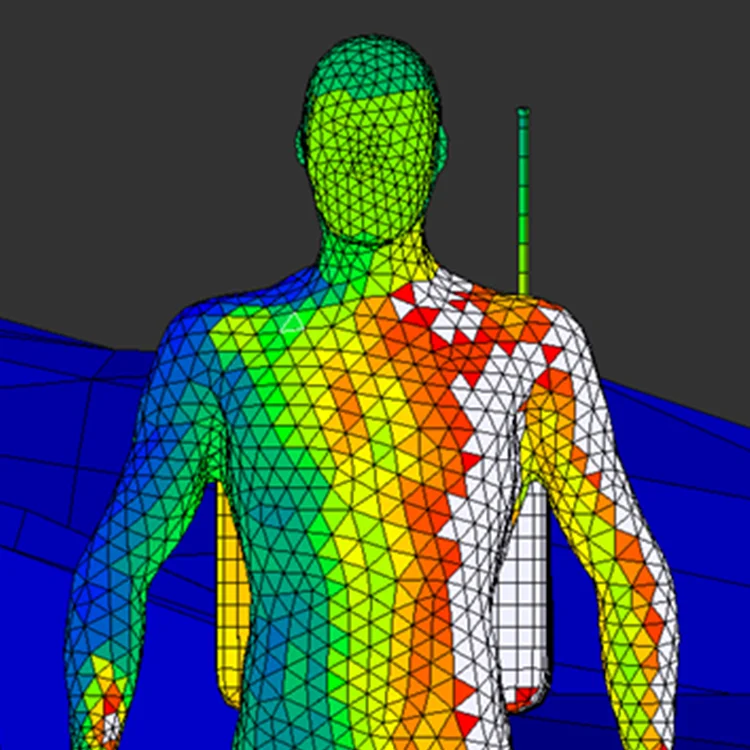
- Localized Skin Temperature: Identifying hotspots and areas of high sweat-rate demand.
- Sudomotor & Vasomotor Response: Modeling active cooling through sweat evaporation and blood flow redistribution (vasodilation) to the skin’s surface.
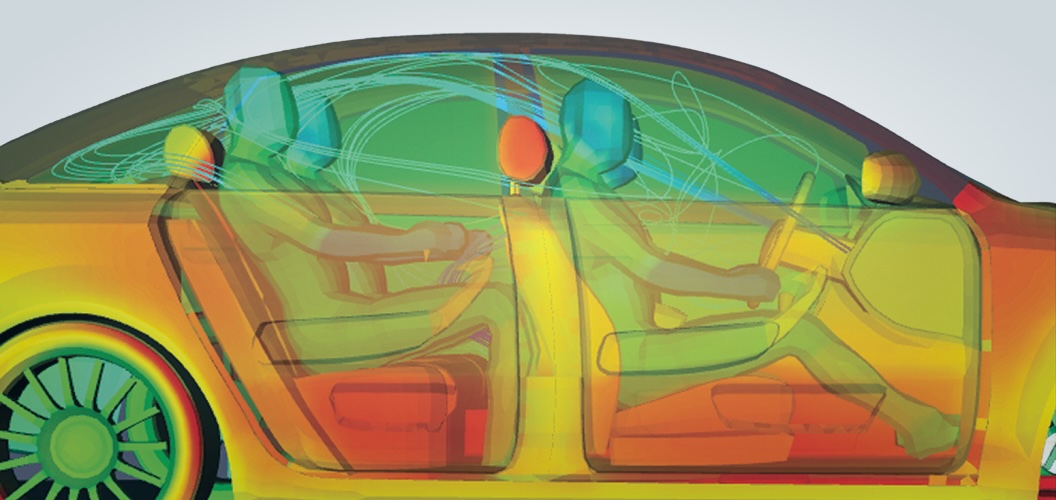
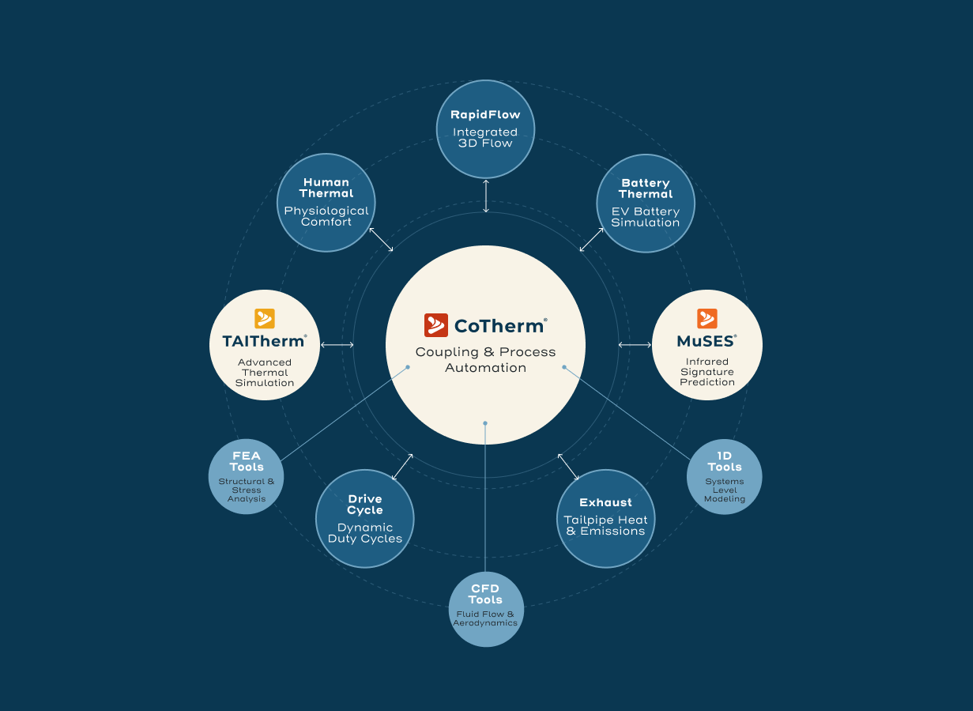
Integrating the Human Thermal Extension creates a high-fidelity virtual prototype where the human is a dynamic sub-system of the total environment. Rather than viewing the occupant in isolation, you can analyze how specific design variables, such as a vehicle’s glass properties in TAITherm, a soldier’s camouflage materials in MuSES, or HVAC control logic in CoTherm, directly dictate the core and skin temperature of the person at the center of the model.
This physics-based approach enables engineers to move beyond environmental snapshots and accurately quantify Time-to-Limit (TTL). By simulating these biological responses, you can establish precise safety margins and ensure survivability even in the most adversarial thermal environments
Engineering Without Compromise
By integrating ThermoAnalytics into your design workflow, you transform thermal management from a reactive fix into a competitive advantage.
Defense & First Responder Survivability
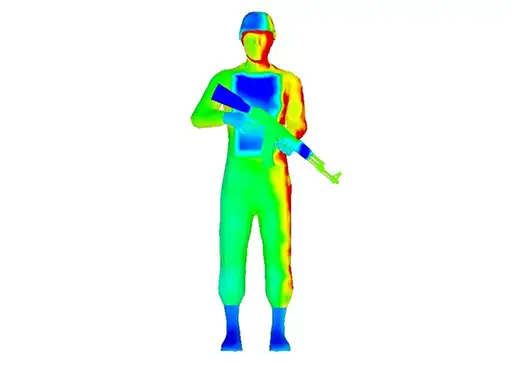
Military personnel and firefighters often operate in high-metabolic states while wearing heavy, semi-permeable Personal Protective Equipment (PPE). Our software analyzes the ” moisture permeability of clothing layers to determine how gear inhibits evaporative cooling. By simulating the thermal “penalty” of body armor or HAZMAT suits, designers can iterate materials that balance ballistic or chemical protection with the necessity of thermal shedding.
High-Exertion Cabin & Cockpit Safety
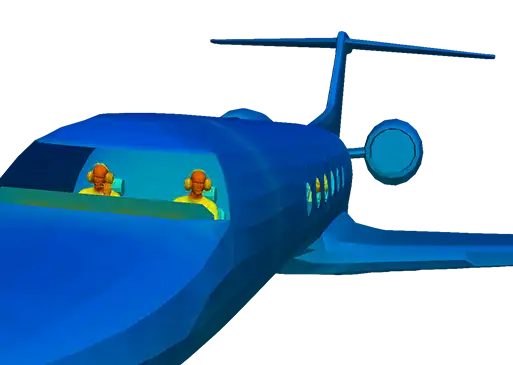
In unconditioned or high-heat-load cockpits and industrial cabs, the human at the controls is a critical system component. Our modeling focuses on the Time-to-Limit (TTL) for operators, identifying the point at which heat strain compromises cognitive function and physical reaction time. By modeling the human as a dynamic sub-system within the cabin’s virtual prototype, you can evaluate how localized cooling, specialized seating materials, or advanced glass properties in TAITherm extend the operational window, ensuring the human remains within safe physiological boundaries throughout the entire mission profile.
Athletic Performance & Apparel Design
For elite athletes, even a small rise in core temperature can lead to a significant drop in power output. We use human thermal modeling to test the effectiveness of performance fabrics and footwear in various climates. By simulating the body’s sweat rate, we help manufacturers create apparel that maximizes latent heat loss, keeping the athlete in the optimal zone of peak physiological efficiency.