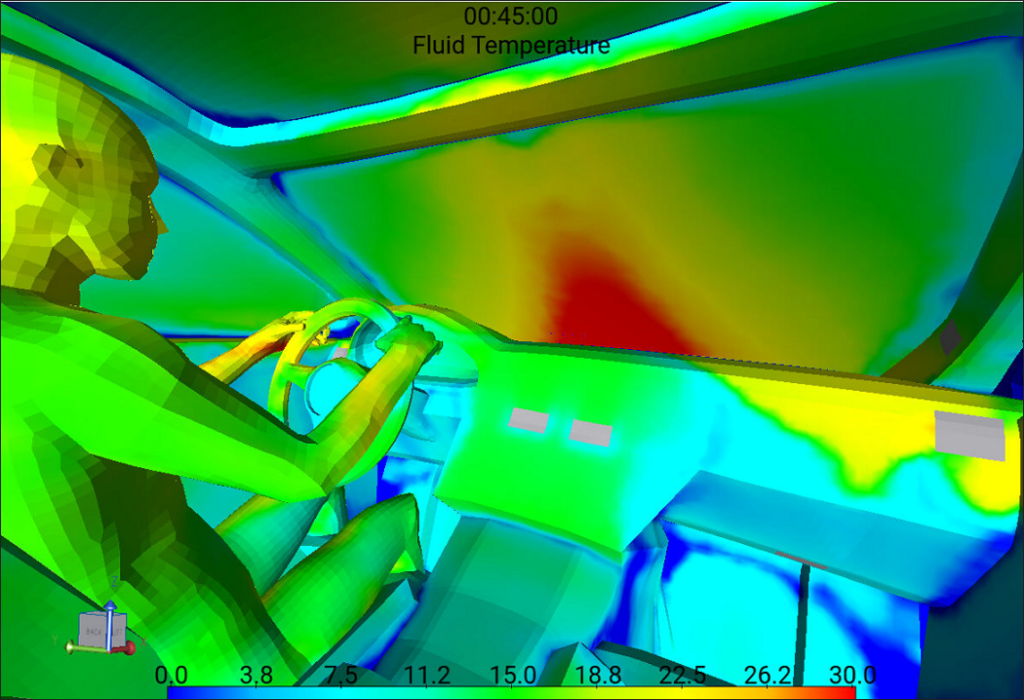

Fluid Dynamics & Airflow
HVAC Control System Design
Optimize Vehicle Range and Occupant Thermal Comfort
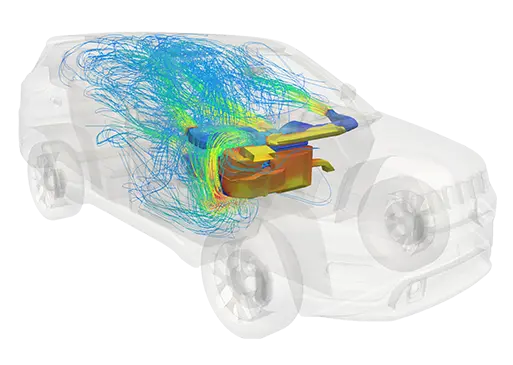
Efficient HVAC control system design is the cornerstone of modern vehicle and building energy management, particularly for electric vehicles (xEVs) where climate control can significantly impact driving range. ThermoAnalytics provides a comprehensive simulation ecosystem that moves beyond traditional thermostat-based logic to create comfort-centric control strategies. By integrating high-fidelity 3D thermal modeling with 1D system controls, engineers can design and validate intelligent HVAC systems that maintain optimal occupant comfort while minimizing power consumption. This virtual prototyping approach allows for the evaluation of complex, transient scenarios such as rapid warm-ups/cool-downs or extreme weather soaks long before physical prototypes are available.
How It Works
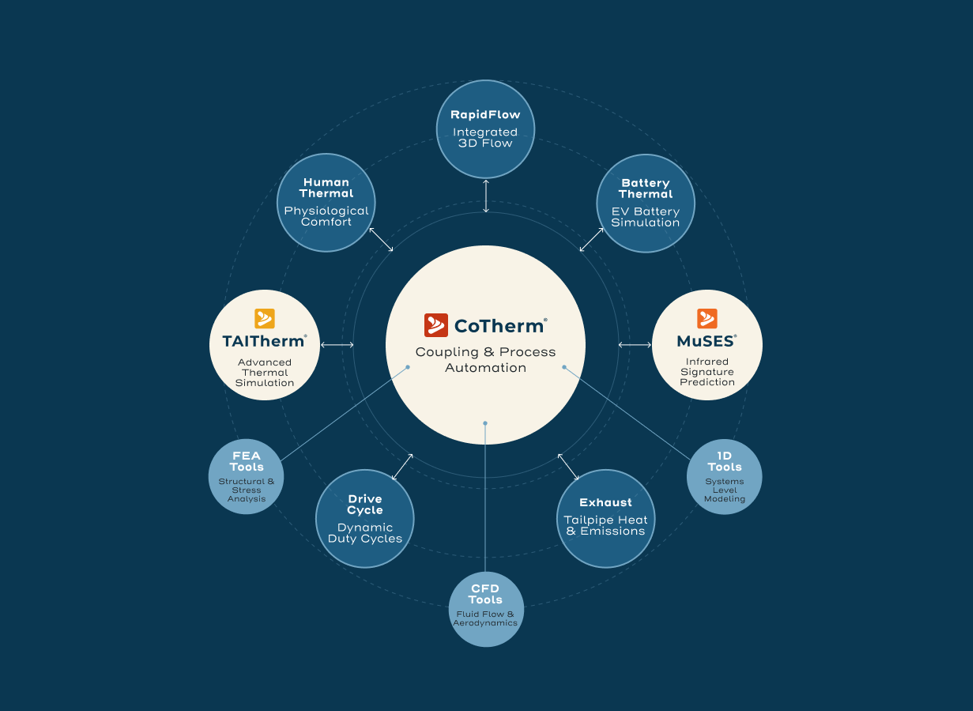
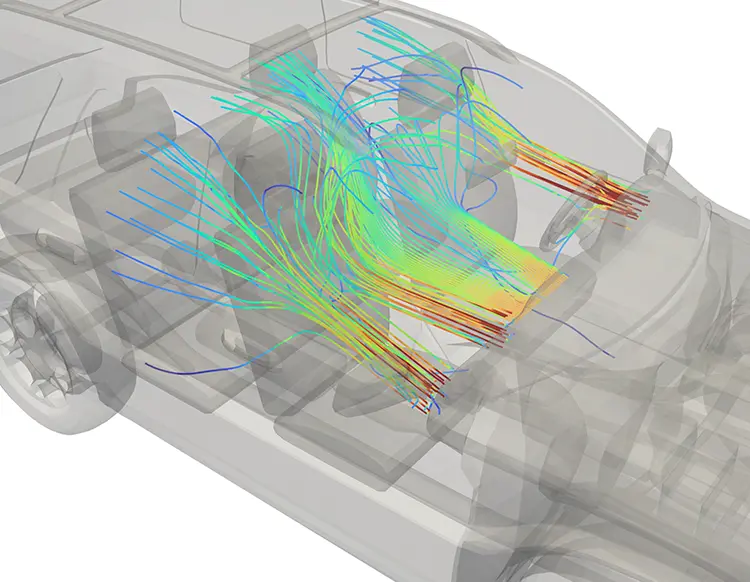
ThermoAnalytics utilizes a multi-physics co-simulation workflow to bridge the gap between 3D environmental modeling and 1D control logic. Using our automation tool, CoTherm, TAITherm’s 3D thermal solver is coupled with system modeling software like MATLAB/Simulink or GT-SUITE via the Functional Mock-up Interface (FMI) standard. In this setup, TAITherm calculates high-fidelity surface and air temperatures, solar loading, and human sensation metrics, which are then passed to the 1D controller. The controller processes these inputs to dynamically adjust HVAC settings such as blower speed, vent temperature, and localized heating elements and feeds those commands back into the 3D environment. This two-way, near real-time exchange enables the development of sophisticated “smart” controllers that respond to localized thermal sensation rather than simple cabin-average air temperatures.
Example
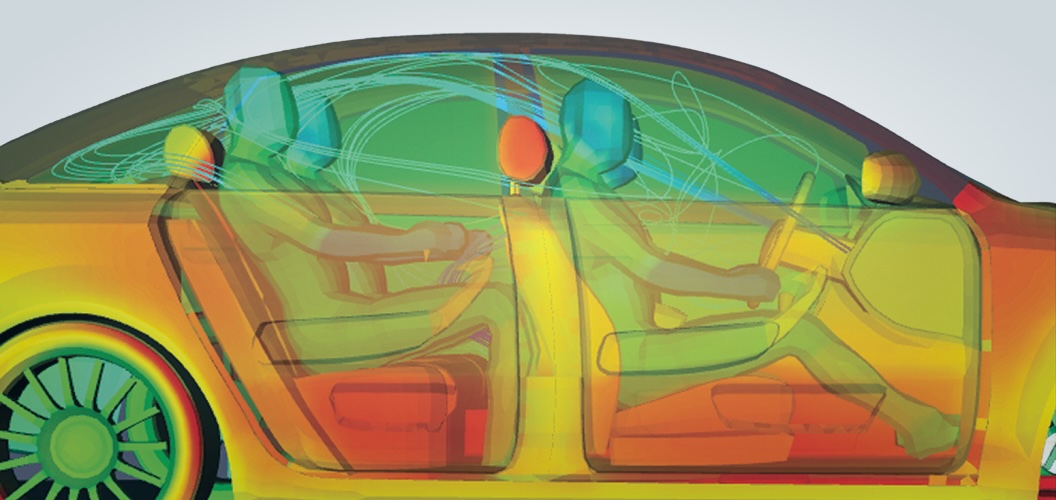
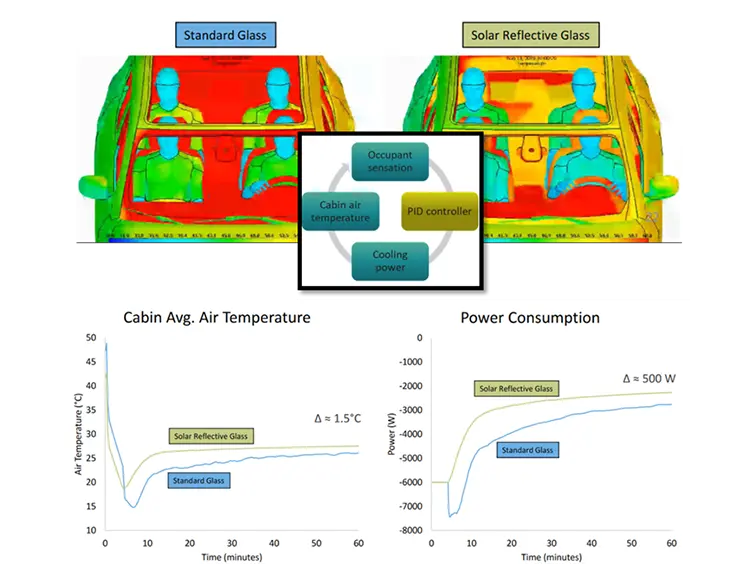
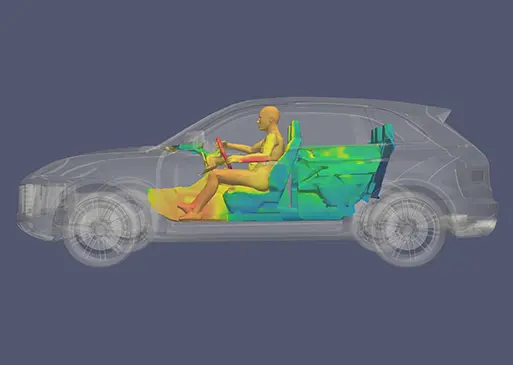
This example compares power consumption and cooling efficiency for solar reflective glass and standard automotive glass. The simulation results show that solar reflective glass significantly decreases cabin cooling power while maintaining the same degree of occupant comfort. Designers can apply these simulation results to optimize xEV cabin, HVAC, and control system designs.
Engineering Without Compromise
By integrating ThermoAnalytics into your design workflow, you transform thermal management from a reactive fix into a competitive advantage.
Next-Generation xEV Vehicle Design
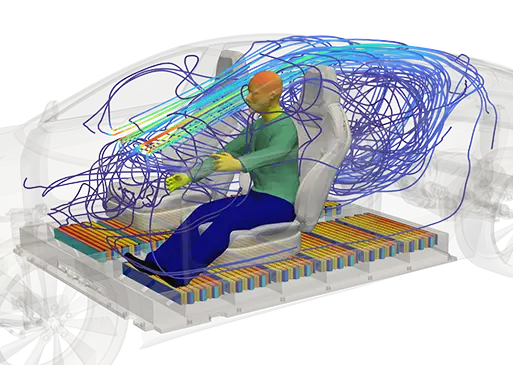
In electric and hybrid vehicles, the HVAC system is one of the largest consumers of battery power, directly impacting driving range. Our simulation workflows allow designers to conduct parametric studies to evaluate how different control strategies such as eco-modes or localized conditioning affect the vehicle’s total energy consumption. By simulating custom drive cycles and “soak and warm-up/cool-down” procedures, engineers can quantify the range-extension benefits of optimized control logic before a single physical prototype is built.
Energy Management and Occupant Comfort
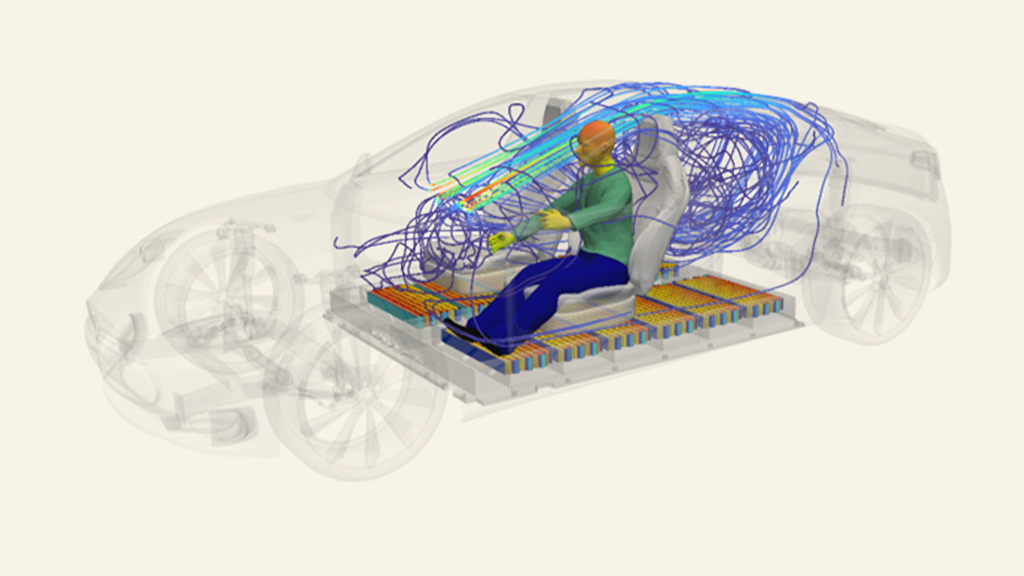
The goal of any HVAC controller is to maintain passenger comfort with minimal energy expenditure. Using the Human Thermal Extension, our analysis shifts from heating and cooling spaces to validating and ensuring human comfort. This application focuses on integrating local comfort effectors, such as heated/cooled seats and radiant panels, into the primary control loop. Analysts can predict Berkeley Sensation and Comfort scores to ensure that energy-saving measures do not compromise the passenger experience, effectively balancing the HVAC load with localized thermal solutions.
Thermal Management System Optimization
A vehicle’s thermal performance is an interconnected web of sub-systems. Our control system design solutions enable the simultaneous optimization of the cabin HVAC and sub-systems. By viewing the vehicle as a unified energy budget, the controller can prioritize heat rejection or retention based on the state of charge, component temperatures, and environmental demands. This system-level analysis ensures that the HVAC system operates in harmony with the powertrain, maximizing both component longevity and cabin climate stability.