
EO/IR Sensor Simulation
Maritime Sea Simulation
High-Fidelity Physics-Based Modeling for Multi-Band IR Signature Reduction
Managing the thermal signature of a vessel in a complex maritime environment is critical to survivability and mission success, as naval engineers must account for high-intensity solar loading, sea-surface reflections, and the dynamic contrast between the hull and a cold ocean background. MuSES addresses these challenges by providing high-fidelity, physics-based transient modeling that captures the intricate radiative exchange between the ship, atmosphere, and sea surface. By replacing reactive physical testing with proactive virtual prototyping, MuSES allows engineers to identify thermal hot spots and optimize signature reduction strategies early in the design phase. This approach ensures superior operational safety and mission effectiveness by delivering a precise, reliable solution for detection avoidance and thermal management across various spectral bands, including MWIR, LWIR, and VIS-NIR.
How It Works:
The Physics of Signature Prediction
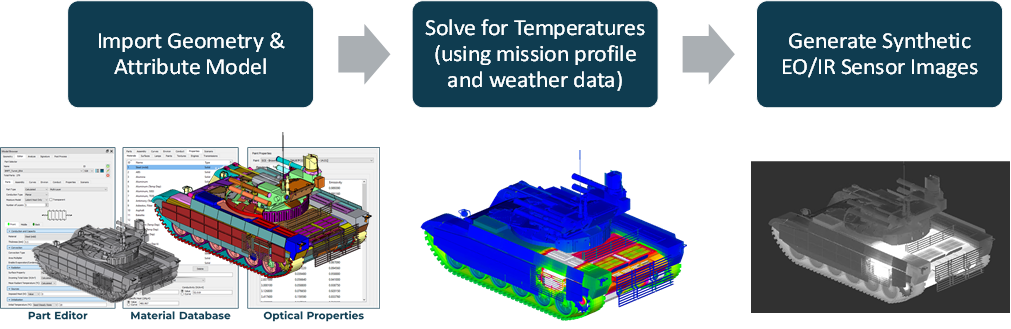
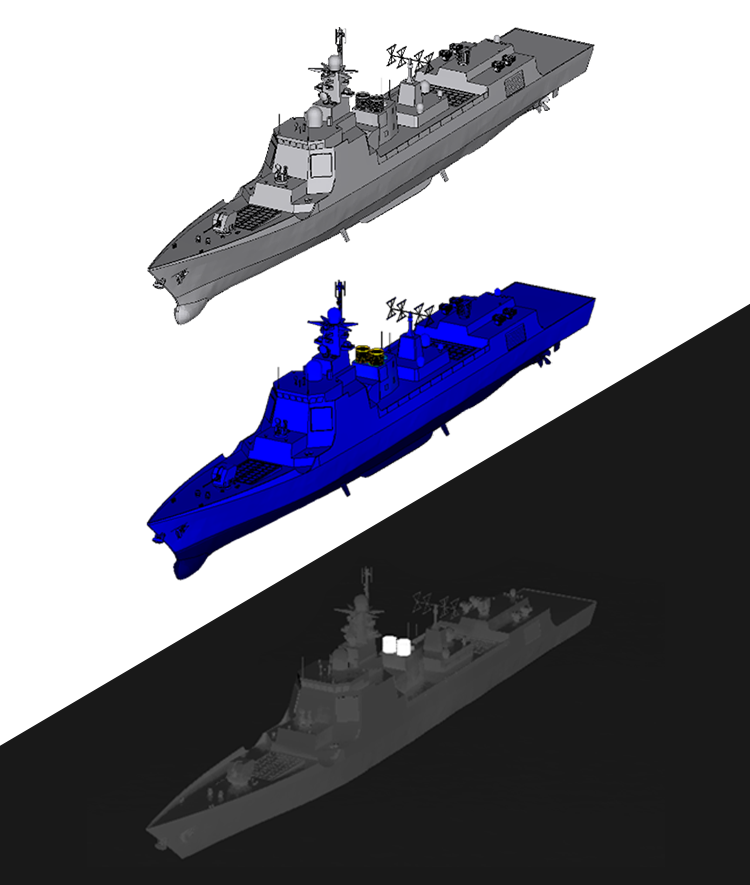
The precision of a maritime thermal virtual prototype relies on simulating the interaction between the vessel and high-fidelity synthetic environment. MuSES drives this by calculating transient heat transfer across the ship’s geometry while simultaneously accounting for the time-varying radiative loads of the atmosphere and sea state. This physics-based approach replaces static assumptions with dynamic, wavelength -dependent calculations to ensure the vessel’s signature is accurate for any time of day or geographic location.
To achieve this level of accuracy, MuSES utilizes a multi-physics integration strategy:

Atmospheric & Solar Loading
MuSES models the complex radiation exchange between the sun, sky, and clouds, including the “shadowing” effects where the ship’s own superstructure occludes environmental thermal loads.

Sea Surface Physics
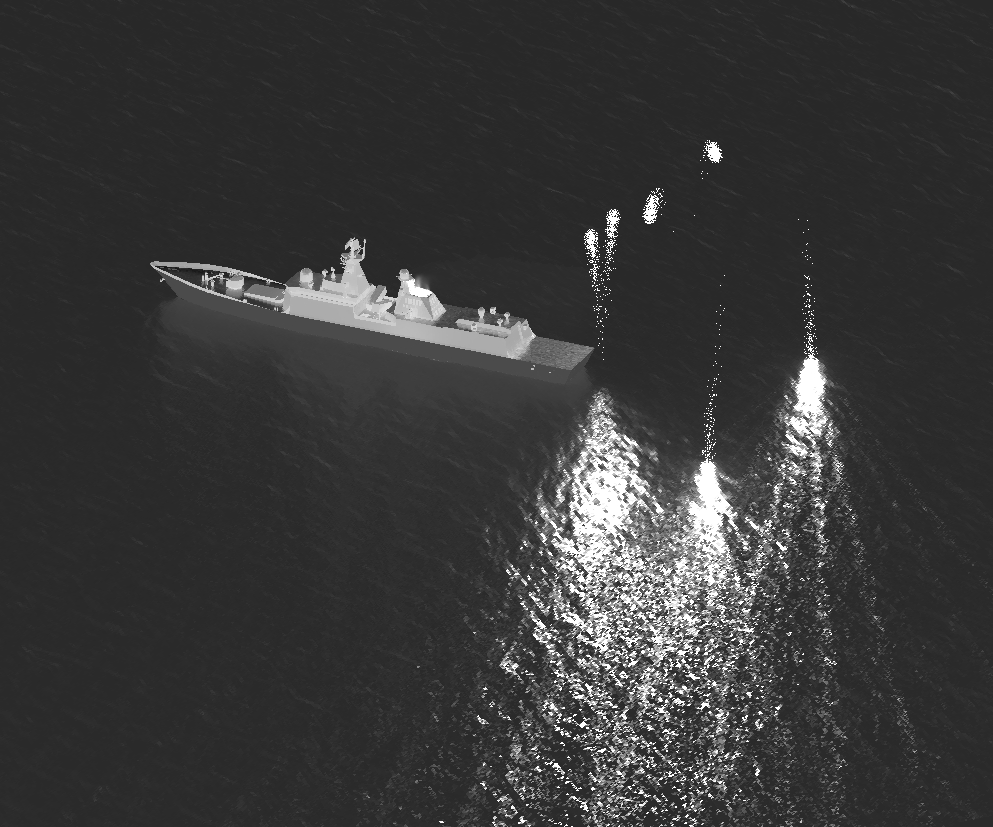
Utilizing advanced BRDFs, the simulation captures how light and heat scatter off a moving ocean, accurately rendering phenomena like lunar glint or solar reflections that can mask or highlight a target.

Dual-Domain Fluid Coupling
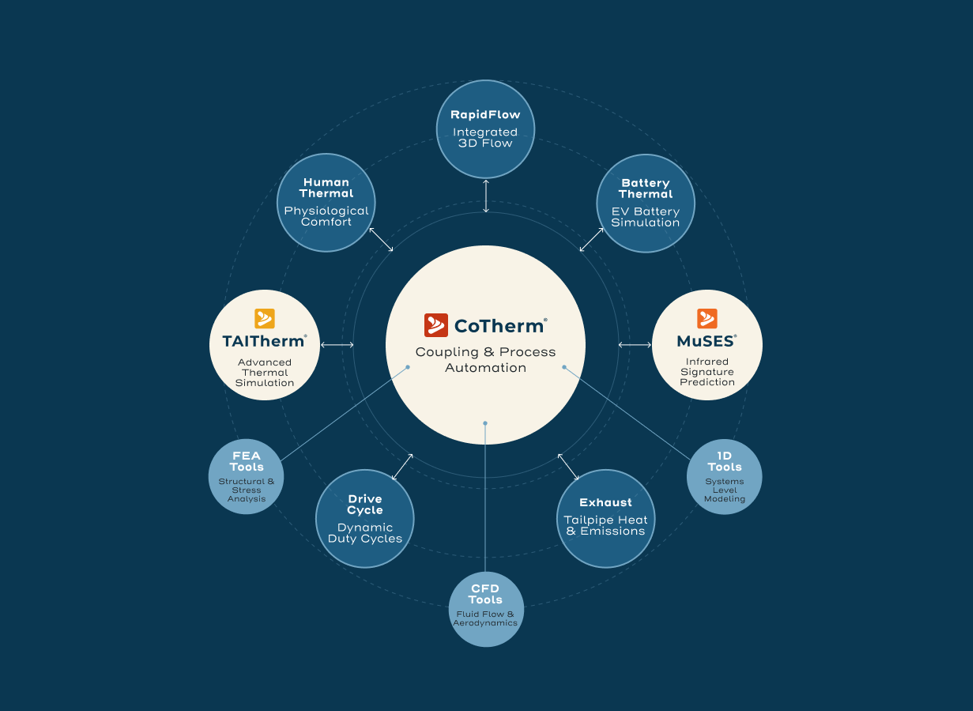
*RapidFlow is utilized for external wind loads, providing the convective heat transfer coefficients (HTCs) necessary to model skin cooling.
3rd Party CFD/Hydrodynamic codes can be coupled via CoTherm to account for the whitewater and physical displacement of the ship’s wake.
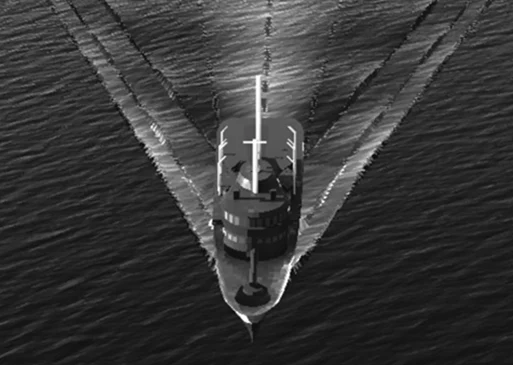
Native Kelvin Wake model captures displacement wake phenomena for realistic signature analysis.
Thermal-Electrical Integration
The software maps internal heat generation from high-energy propulsion and sensor systems to the external hull, ensuring that internal operational states are reflected in the outward-facing IR signature.
Engineering Without Compromise
By integrating ThermoAnalytics into your design workflow, you transform thermal management from a reactive fix into a competitive advantage.
Multi-Band Signature Analysis & Environmental Contrast
The primary engineering challenge in naval design is minimizing a vessel’s thermal contrast against highly variable backgrounds, a task that requires precise spectral radiance calculations across multiple wavebands. By utilizing MuSES, engineers can generate MWIR, LWIR, and VIS-NIR signatures to ensure concealment against diverse sensor threats and backgrounds, such as open ocean or rugged landmasses. The simulation accounts for complex environmental factors, including lunar glint in the NIR spectrum and high-intensity solar loading, which are critical for predicting the ship’s visibility during both day and night-time operations. This physics-based approach enables strategic placement of an ambient exhaust entrainment system, along with insulation and external water wash, to disrupt the ship’s silhouette and reduce detection range by enemy EO/IR systems.
Exhaust Plume Integration
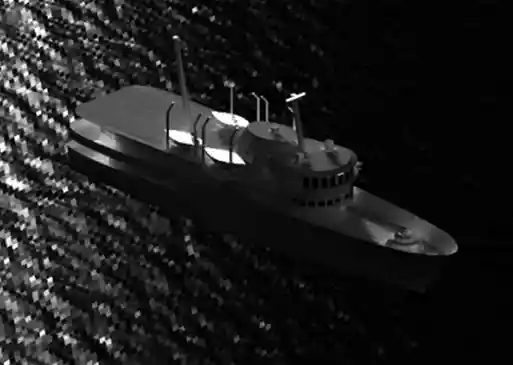
High-temperature exhaust gases present a major risk for both IR tracking and structural integrity. Simulation allows engineers to analyze the interaction between hot exhaust plumes and the ship’s mast or superstructure. By utilizing 1D/3D coupling, designers can optimize the mixing of ambient air with exhaust flow to lower gas temperatures before they exit the stack. This prevents the “hot metal” signature of the funnel and protects sensitive components located on the mast from thermal degradation, ensuring long-term hardware reliability. Additionally, it reduces the temperatures on topside structures, helping to ensure compliance with human contact (skin burn) safety requirements.
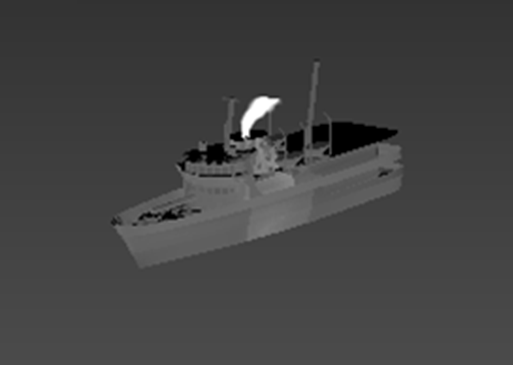
Maritime Sea Surface and Wakes
MuSES provides various mechanisms for representing both the maritime sea surface and ship wakes. The maritime model uses a Cox–Munk approach that combines large-scale gravity waves with statistical perturbations representing capillary waves. Sea spectrum and spreading angles (e.g., Pierson-Moskowitz, JONSWAP, Neumann or Bretschneider spectra) can control the wave characteristics for realistic simulation based on wind speed or sea state code. Sea facets incorporate area-weighted contributions from both clear water and foam to accurately model sea surface radiance. Water facet geometry can also be created to simulate discrete waves and ship wakes. Ship wakes include surface gravity waves generated by ship movements (e.g., Kelvin displacement wakes) as well as turbulent wakes along the ship track due to propulsion and hull-induced disturbances. The Kelvin wake model, which comes standard with MuSES, incorporates both divergent (longitudinal) waves and transverse (perpendicular) waves, with behavior dependent on vessel type, waterline length, stern width, draft, and overall displacement of the hull volume.