
Thermal Management & Heat Transfer
Radiant Panels
Maximizing EV Range Through Occupant-Centric Heating
The transition from Internal Combustion Engine Vehicles (ICEV) to Battery Electric Vehicles (BEV) has fundamentally altered cabin thermal management. In BEVs, the HVAC system is the second largest energy consumer, and heating requirements can reduce driving range by up to 30% depending on ambient conditions. Traditional “soak and flow” methods that heat the entire cabin volume are inherently inefficient in this new paradigm.
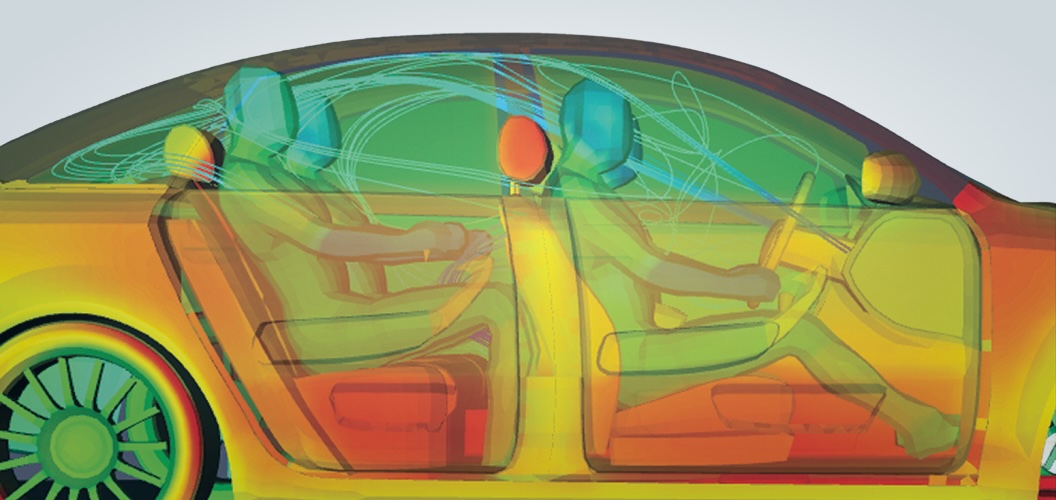
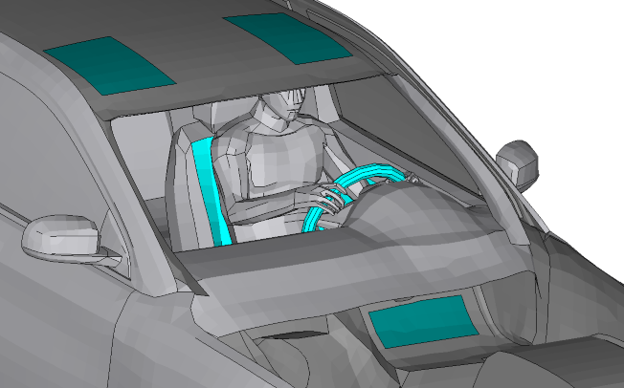
TAITherm and CoTherm provide a high-fidelity solution to these challenges by shifting the focus from the cabin air to the human occupant. By utilizing radiant panels, engineers can deliver heat directly to passengers, maintaining comfort at lower ambient air temperatures. This approach allows for a sophisticated balance between occupant comfort and energy consumption, directly extending vehicle mission success and range.
How it works
The integration of radiant panels requires an advanced understanding of transient heat transfer, specifically the complex radiation exchange between cabin surfaces and the human body.
Our methodology distinguishes itself through multi-physics integration:
Transient Analysis
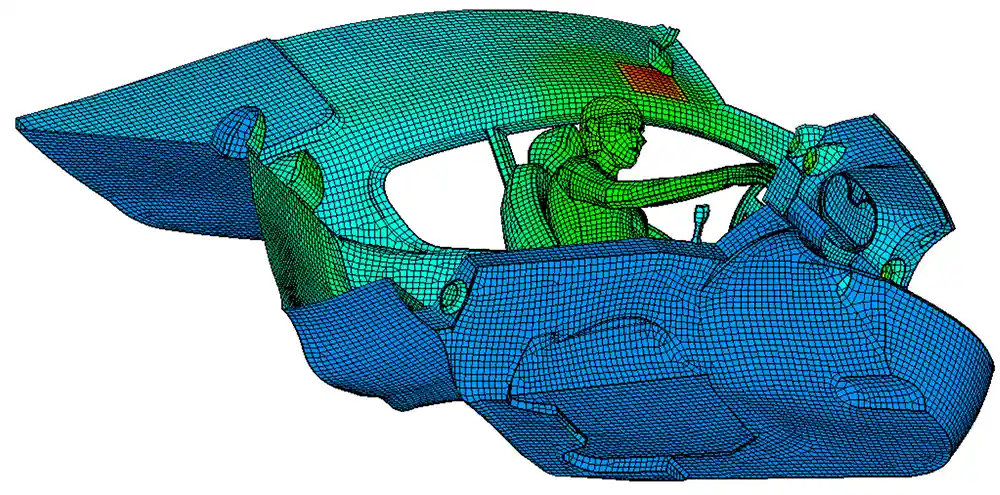
TAITherm solves the thermal structures of the cabin, accounting for the multi-layer properties of solid parts and active comfort devices.

Multi-Physics Coupling
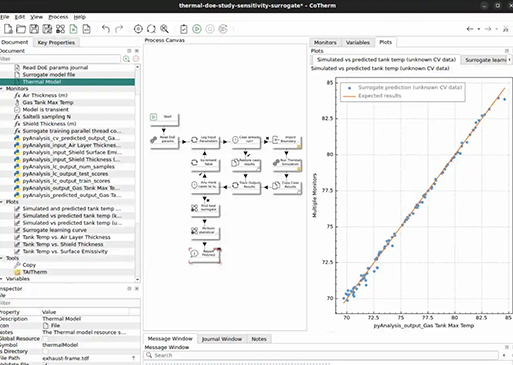
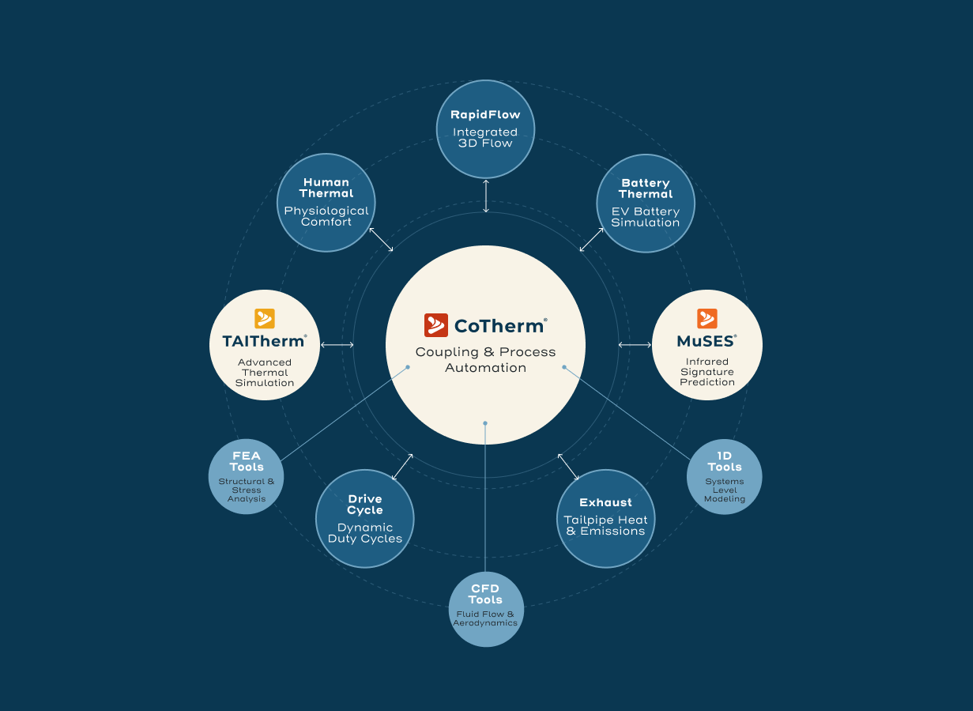
Using CoTherm, engineers can automate the coupling between TAITherm and CFD solvers or 1D systems.
schedule a demo
Thermal-Electrical Integration
The simulation accounts for the electrical load of radiant heaters while simultaneously calculating the human thermal response, including skin temperature and metabolic activity.
schedule a demo
Radiation Modeling
Surface to surface radiation is automatically handled in TAITherm during the viewfactor calculation that occurs when you start a simulation.
schedule a demo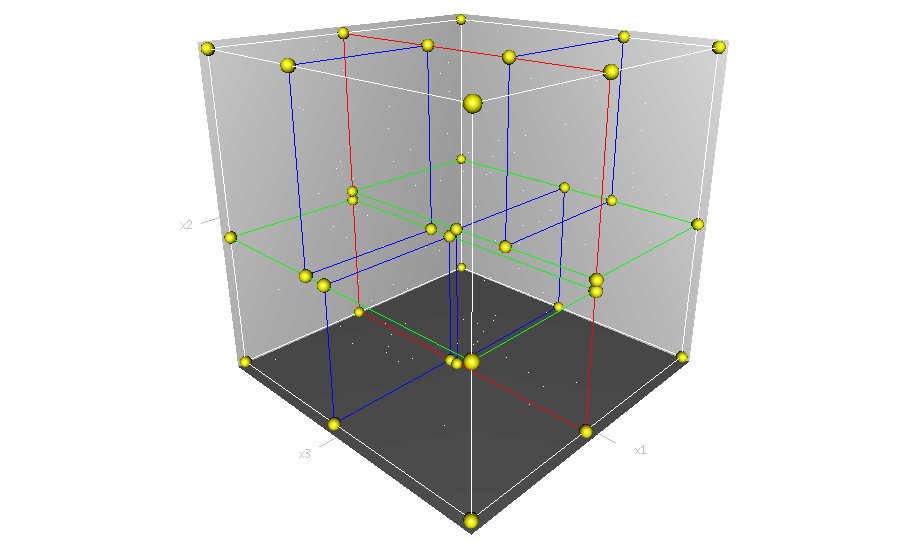
Automated View Factors
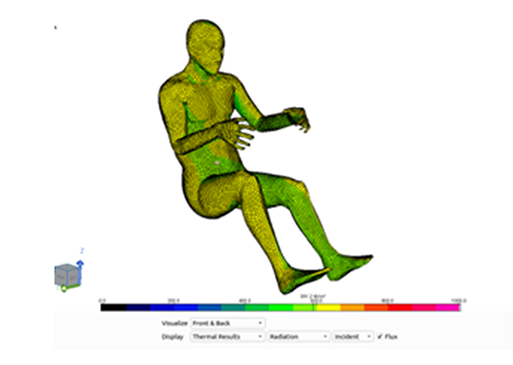
Eliminate the manual labor of calculating complex surface-to-surface visibility. TAITherm automatically computes view factors for intricate cabin geometries, ensuring that the energy emitted from a radiant knee panel or door insert is accurately “tracked” as it hits the occupant.
schedule a demoEngineering Without Compromise
By integrating ThermoAnalytics into your design workflow, you transform thermal management from a reactive fix into a competitive advantage.
Optimal Occupant Thermal Sensation and Comfort
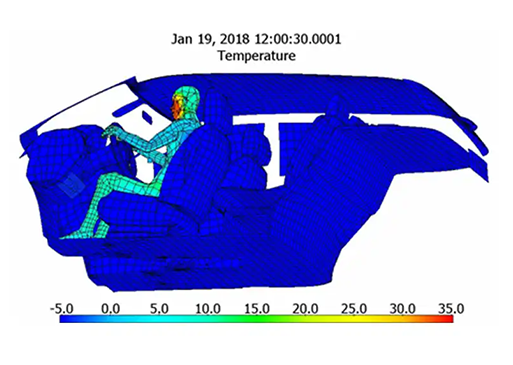
Achieving a balance between energy consumption and occupant comfort is a primary challenge in modern vehicle design, as heating the entire cabin volume is often inefficient. By integrating radiant panels, engineers can focus on localized “Human-Centric” heating, which accounts for specific passenger activity levels and clothing. TAITherm allows for an objective assessment of comfort performance by predicting local temperatures and human thermal responses across different body segments. This approach ensures that passengers remain comfortable even when the ambient cabin air is kept at a lower, more energy-efficient temperature.
EV Range Extension through Active Comfort Strategy
In electric vehicles, the HVAC system is the second largest energy consumer, and heating requirements can reduce driving range by up to 30% depending on operating conditions. Radiant panels serve as critical active comfort devices that provide targeted heat, allowing the primary HVAC system to operate at a lower load. Utilizing a co-simulation interface, engineers can model the thermal-electrical trade-offs of these panels accurately. This high-fidelity analysis helps size materials like insulation and glazing around the cabin to maximize mission success and vehicle range in extreme cold.
Rapid Virtual Prototyping and Design Optimization
Simulation provides a superior alternative by allowing engineers to test a vast array of design variables, such as panel placement and HVAC modes, early in the development phase. By utilizing CoTherm’s Design of Experiments (DOE) features engineers can quickly test multiple design variables through an automated process. Convection level of detail is flexible using TAITherm, RapidFlow and CoTherm’s capabilities, bringing you from early design considerations all the way through detailed high-fidelity simulation. These tools and workflows ensure the final cabin architecture is optimized for both comfort and efficiency.