
Human Centric Design
Solar Loading
Predict Solar Loading and Its Impact on Thermal Performance
Solar radiation is a primary driver of thermal instability in engineered systems, often accounting for the largest external heat gain in terrestrial and aerospace applications. Managing this load is critical for ensuring occupant safety, preserving electronic integrity, and optimizing energy efficiency. By leveraging the specialized capabilities of TAITherm, MuSES, and CoTherm, engineers can mitigate solar-induced thermal stress and predict complex signatures long before a physical prototype exists.
How It Works:
The Physics of Radiation & Multi-Physics Coupling
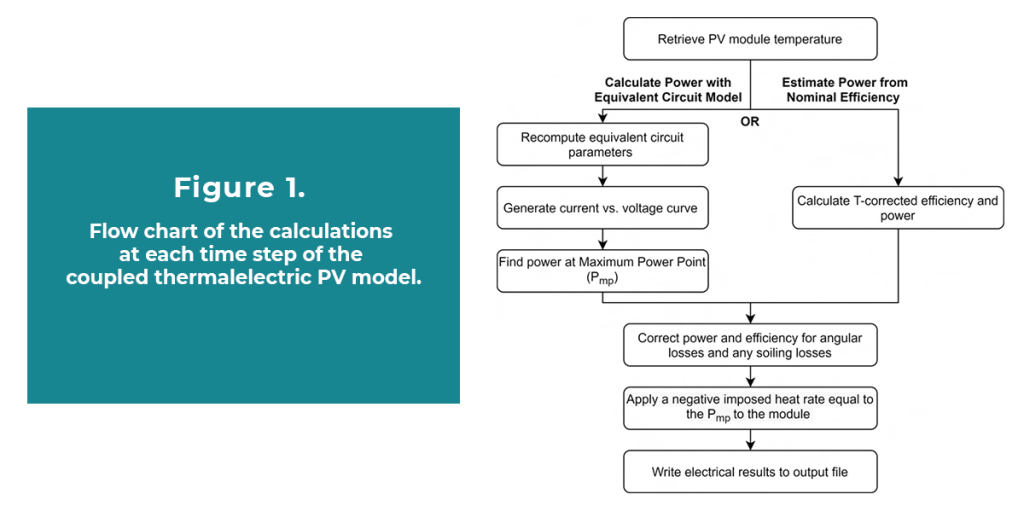
At the core of solar loading analysis is the accurate calculation of transient heat transfer and multi-bounce radiation exchange. Our solvers utilize a sophisticated ray-tracing algorithm to account for direct, diffuse, and reflected solar energy, including the spectral effects of transparent surfaces like glass or specialized coatings.
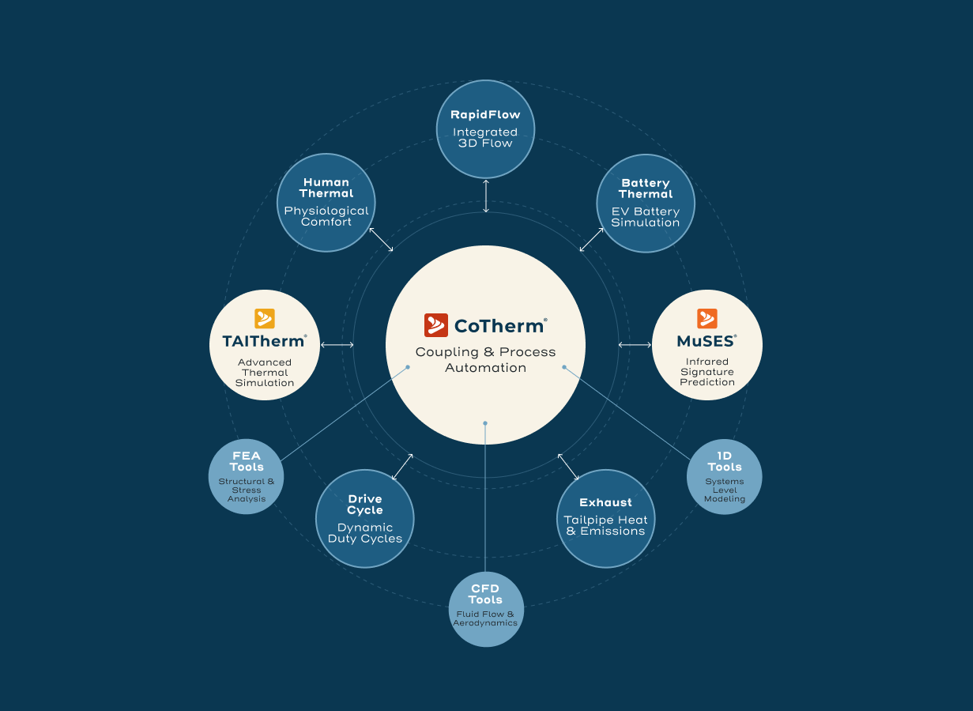
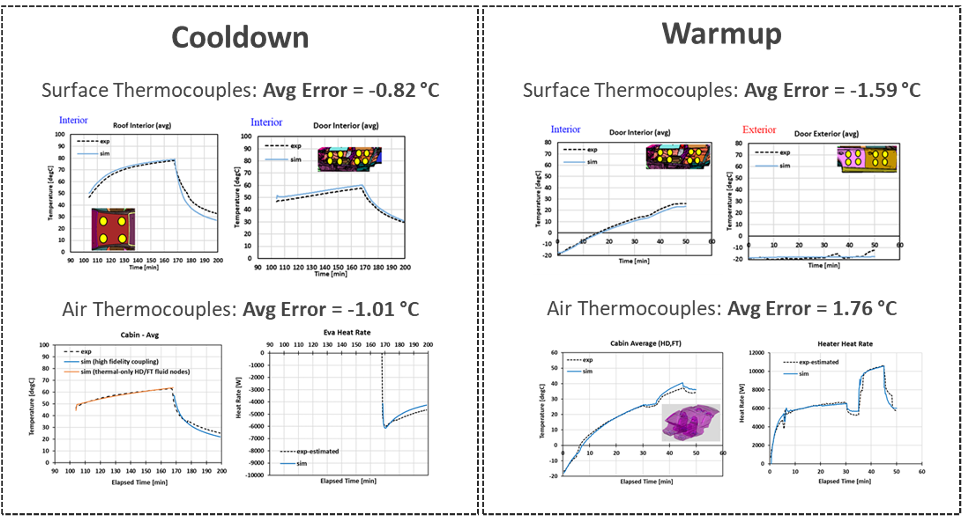
To achieve a true multi-physics virtual prototype, CoTherm acts as the orchestration software, automating the coupling between thermal solvers and 3rd-party CFD or Finite Element Analysis (FEA) tools.

Automotive Precision with TAITherm
Provides the industry-standard thermal solver for vehicle soak and HVAC efficiency.

Defense Fidelity with MuSES
Delivers specialized modeling for complete environmental signature prediction, accounting for complex backgrounds and atmospheric effects.

Process Automation via CoTherm
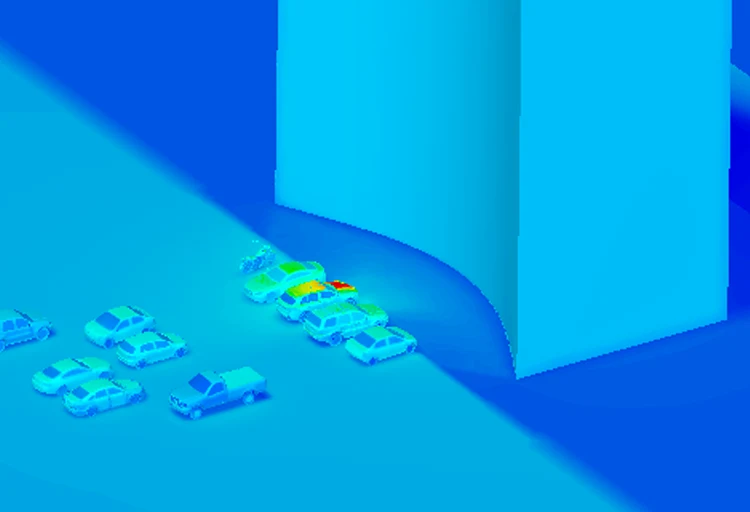
Manages the iterative data exchange between solvers to capture non-linear interactions, such as how solar-heated surfaces influence surrounding air convection.
Engineering Without Compromise
By integrating ThermoAnalytics into your design workflow, you transform thermal management from a reactive fix into a competitive advantage.
Cabin Comfort & HVAC Optimization
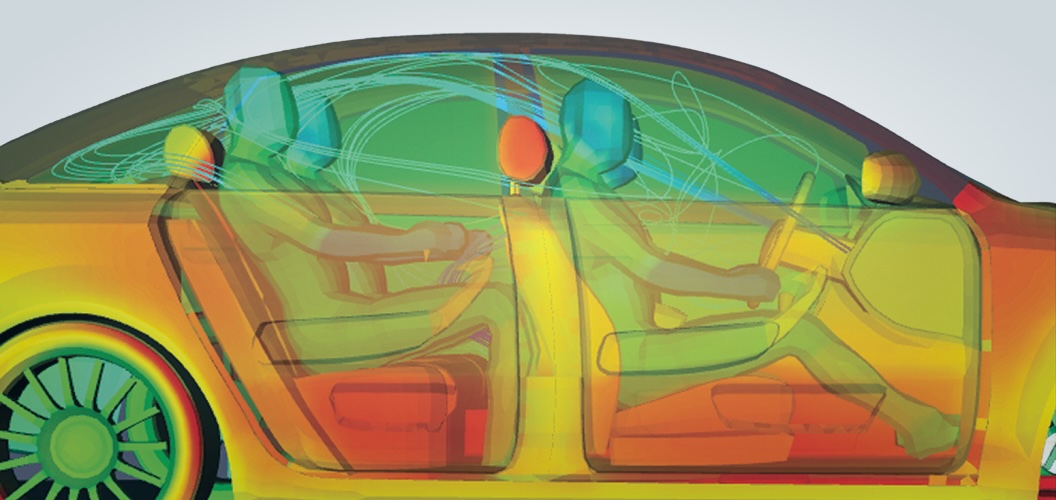
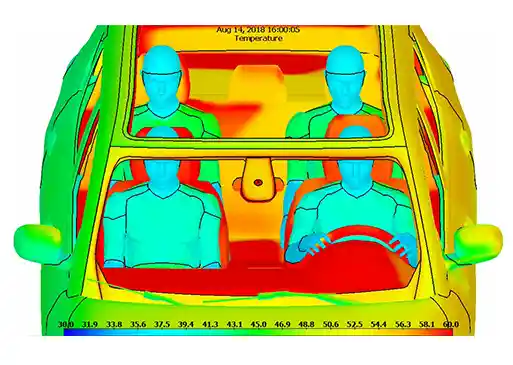
In the automotive sector, solar loading through expansive glass surfaces is the leading cause of thermal discomfort and high HVAC energy draw. Using TAITherm, engineers simulate the heat soak of interior components and the effectiveness of solar-reflective coatings. By accurately predicting how solar flux impacts the cabin environment, designers can optimize air-vent placement and insulation to reduce energy consumption, which is critical for extending the range of electric vehicles.
Defense & Infrared (IR) Signature Management
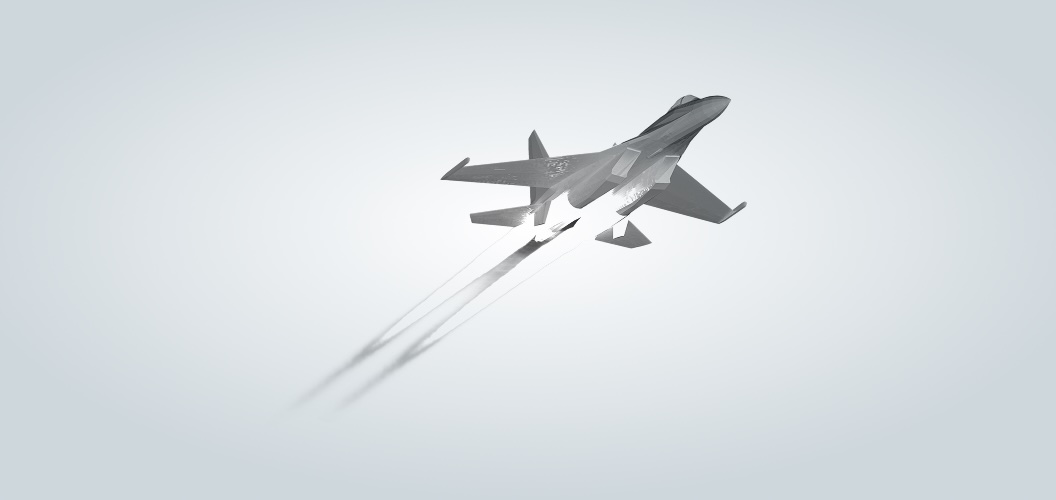
For defense applications, solar loading is a critical factor in survivability. The sun heats the skin of ground vehicles and aircraft, creating a distinct thermal signature detectable by infrared sensors. MuSES provides the high-fidelity modeling required to analyze these signatures against complex, transient backgrounds. By simulating how different camouflage systems and materials react to solar heating throughout a 24-hour cycle, engineers can develop “low-observable” strategies to reduce the probability of detection in diverse geographical theaters.

Aerospace & Satellite Thermal Control
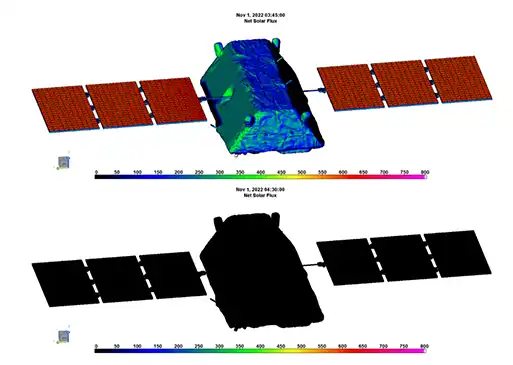
In the vacuum of space, solar loading becomes a binary challenge of extreme heat soak and deep-space cold sinks. CoTherm facilitates the coupling of thermal solvers with orbital mechanics data to predict temperature gradients as a spacecraft transitions from “sun” to “eclipse.” This simulation provides the solution for testing Multi-Layer Insulation and radiator placement, ensuring that sensitive onboard electronics remain within their survival temperature limits during long-duration missions.