
How MuSES-generated synthetic EO/IR imagery is closing the data gap for AI and ATR development
Automated Target Recognition systems are only as reliable as the data used to train them. Measured EO/IR imagery alone cannot reasonably or successfully train these algorithms. Gathering sufficient real-world data across every target type, environment, and sensor condition is slow and expensive. In many cases, it’s also operationally impossible.
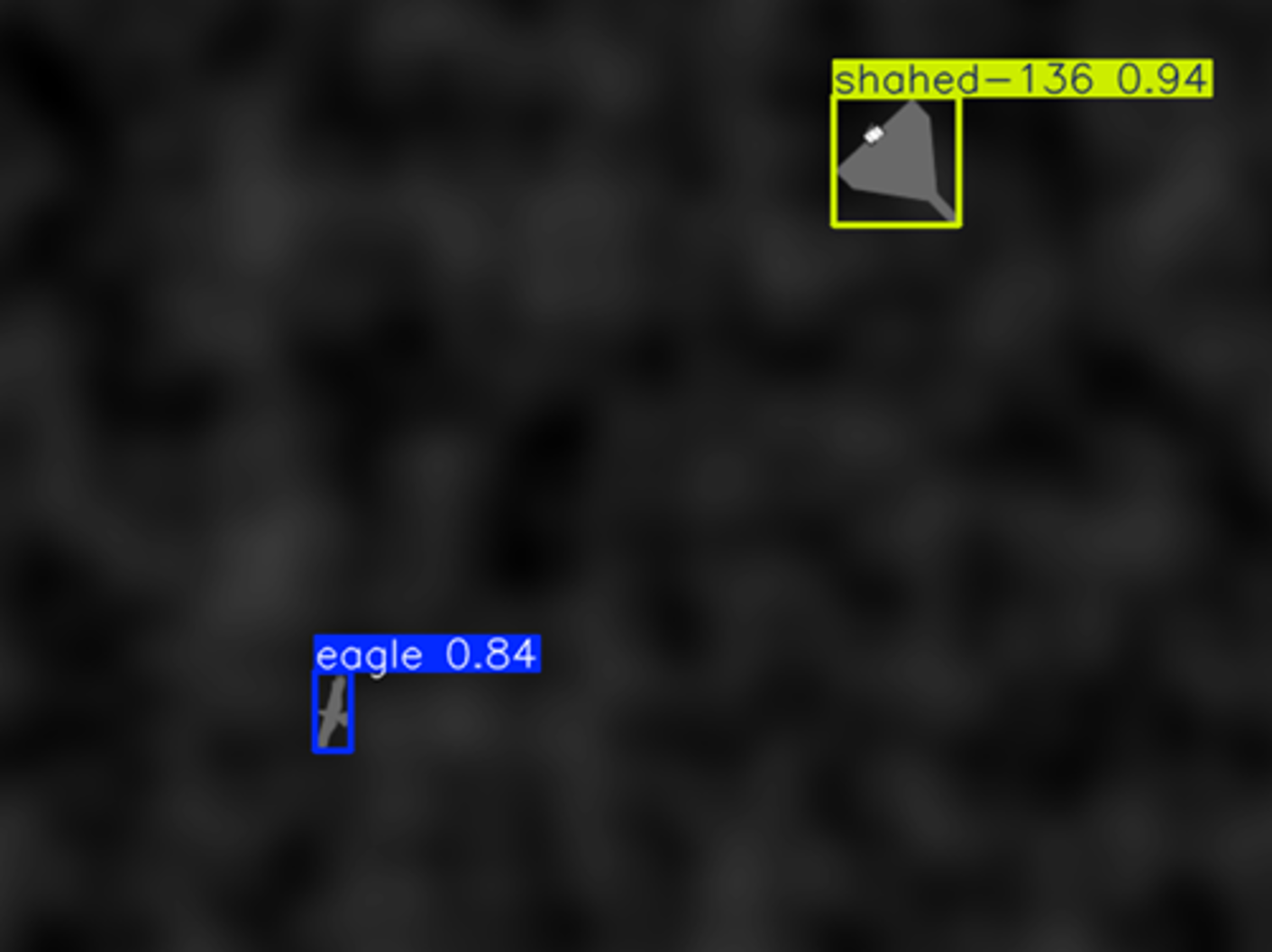
In ThermoAnalytics Role in Applications of Artificial Intelligence, Machine Learning and Automated Target Recognition, we look at how MuSES generates radiometrically accurate synthetic imagery to fill that gap. MuSES is now TRL 9 and regarded as the U.S. Army’s primary tool for thermal and EO/IR platform prediction and Low Observable design and assessment. In addition, MuSES is paired with CoTherm, also TRL 9, which automates the generation of millions of labeled training images. Together, they support the scale and variety that ATR and machine learning algorithms need to perform reliably in the field.
You’ll also see how this same physics-based approach extends further. It applies to change detection, an application originating with the US Army in 2008, as well as to EO/IR-assisted navigation, a passive alternative to LiDAR in detection-avoidance scenarios.
What You’ll Learn
- How MuSES predicts thermal and EO/IR signatures of ground, maritime, airborne, and space-based targets
- Why measured data alone cannot successfully train EO/IR learning algorithms, and how synthetic image sets solve this
- How CoTherm automates the generation of millions of labeled EO/IR training images
- How MuSES has supported major DoD programs, including the XM30 MICV, JLTV, GCV, FCS, and DDG 1000
- Applications in change detection and passive EO/IR-assisted navigation