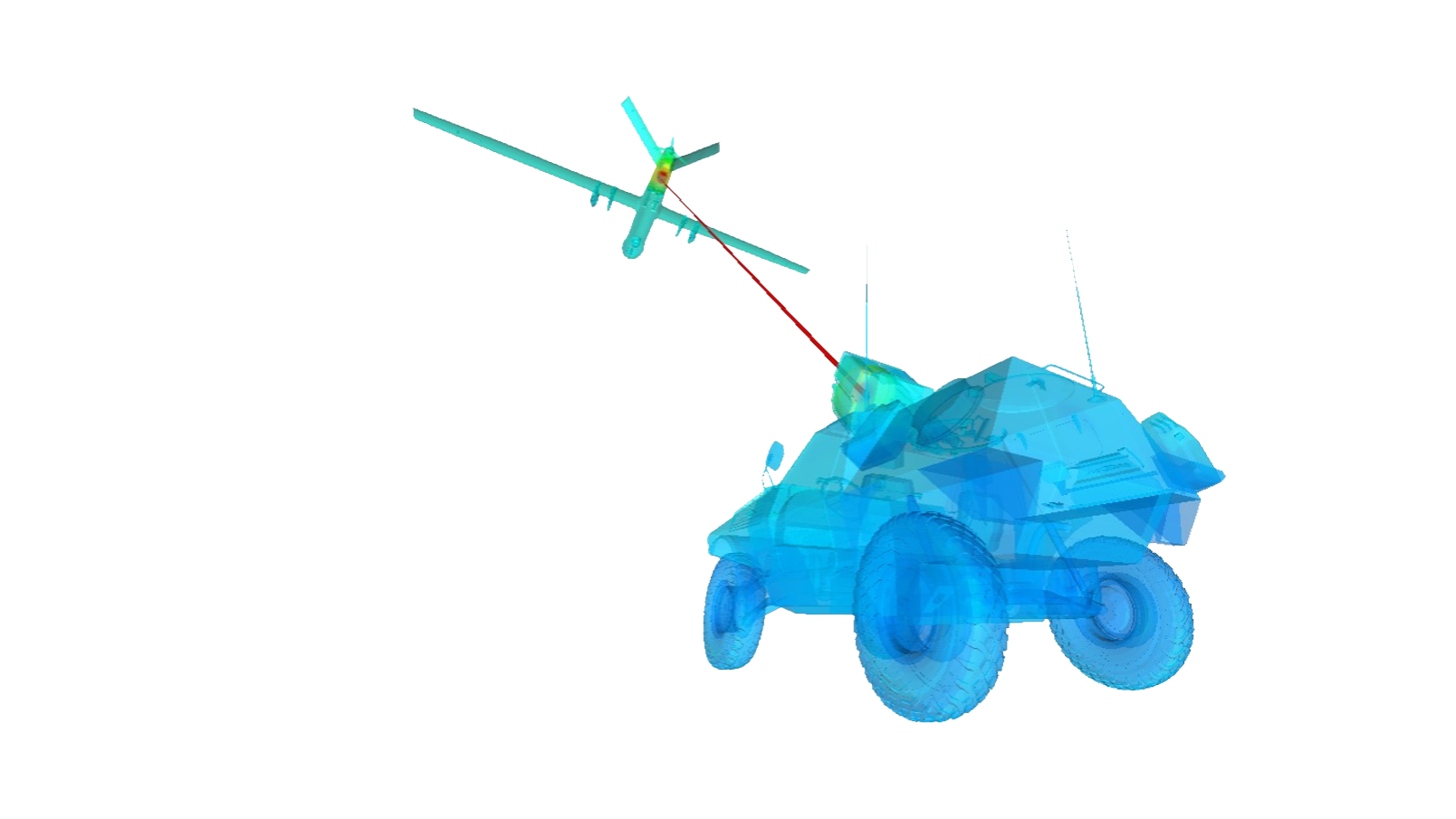

How physics-based thermal simulation supports HEL platform design, energy management, and adversarial assessment
Directed Energy Weapons, and High-Energy Lasers in particular, create unique engineering challenges. Power concentration and firing time constants place real demands on the platforms that carry them. Systems like the Mobile Short Range Air Defense (M-SHORAD) program are already integrating 50 kW-class Direct Energy Interceptors onto ground platforms such as Stryker. As a result, engineers must solve for on-demand power delivery and thermal management at the same time.
In Physics-Based Simulation of High-Energy Lasers: Directed Energy Weapons, we look at how MuSES, now TRL 9, supports HEL system development from two directions. First, it helps engineers manage the power and thermal demands of HEL-equipped platforms. Second, it predicts how adversary systems will perform against HEL threats, so weaknesses can be identified before physical testing begins.
This paper also covers bioeffects modeling, since protecting the warfighter means understanding how HEL exposure interacts with the human body, not just the platform. In addition, we look at how MuSES supports assessment of adversary HEL systems, including those developed by near-peer threats such as China.
What You’ll Learn
- How MuSES simulates power, thermal, and EO/IR signature outcomes for HEL-equipped platforms like Stryker
- How engineers can perform what-if energy management analyses, including auxiliary power unit and electric-drive configurations
- How MuSES supports a predictive bioeffects model for protective shielding and exposure limit assessment
- How 3D thermal analysis identifies adversary target vulnerabilities to HEL systems
- How MuSES supports DoD requirements such as DoDI 5000.97-Digital Engineering, backed by program-sponsored validation