
On Demand Webinar
OPIR surveillance detection presents real technical challenges. Specifically, identifying ground-based targets from space-based platforms in the thermal infrared spectrum (MWIR and LWIR) is difficult. This is largely due to atmospheric interference and limited image resolution. Even so, this webinar explored how synthetic imagery can enhance deep learning performance for exactly these conditions.
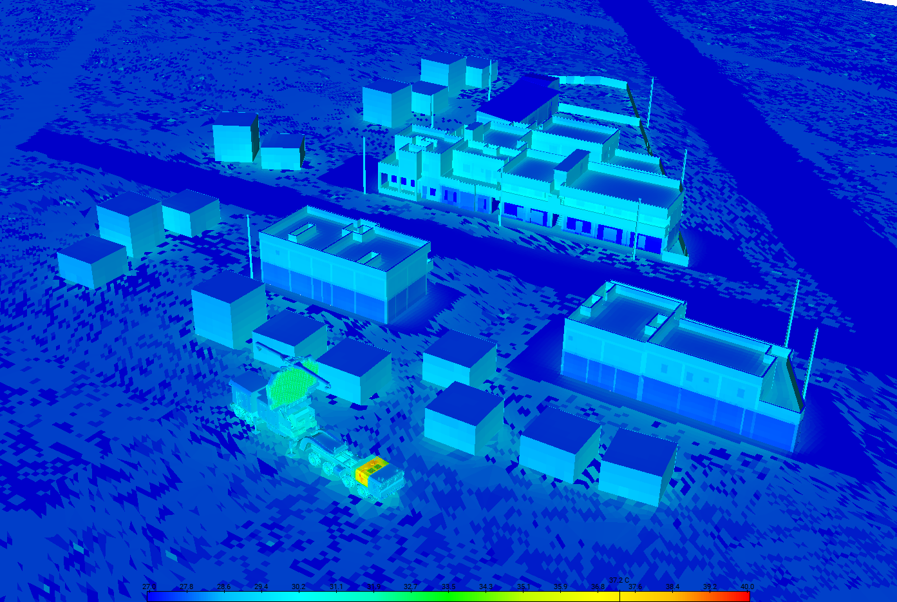
We presented how synthetic EO/IR datasets, generated using MuSES and CoTherm, supplement real-world data. As a result, training improves for machine learning algorithms operating in demanding conditions. In addition, we shared a case study using YOLO (“You Only Look Once”) deep learning models. These models were trained on synthetic datasets of adversarial ground vehicles across varying weather conditions, times of day, and operational states. Overall, the session emphasized how image resolution impacts detection and recognition performance, offering insight into how future high-resolution space sensors might enhance OPIR effectiveness.
What You’ll Learn
- Challenges in OPIR surveillance and data acquisition in the IR spectrum
- How synthetic data generation supports robust training for ML algorithms
- Use of MuSES and CoTherm to simulate realistic thermal IR overhead imagery
- Impact of image resolution on YOLO algorithm performance
- Implications for future space-based sensor system design
We’ll present a case study using YOLO (“You Only Look Once”) deep learning models trained on synthetic datasets of adversarial ground vehicles across varying weather conditions, times of day, and operational states. The webinar will emphasize how image resolution impacts detection and recognition performance, offering insights into how future high-resolution space sensors might enhance OPIR effectiveness.
Who Should Attend
Professionals and researchers in remote sensing, aerospace defense, EO/IR imaging, and AI/ML applications in surveillance.
Explore how simulation, AI, and next-generation sensing platforms intersect to shape the future of global overhead surveillance.
Presenter

Mark Klein
Senior Thermal and EO/IR Analyst