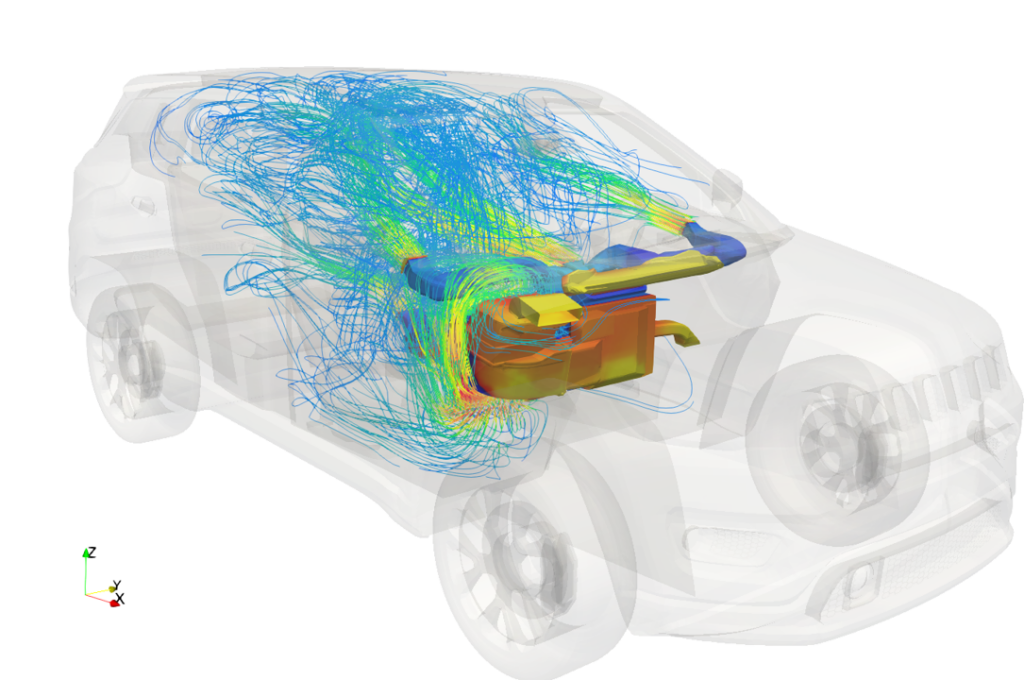

Thermal Management & Heat Transfer
Battery Thermal Management
The Thermal Imperative of Modern Electrification
The shift toward high-energy-density battery systems introduces a complex set of thermal challenges that dictate the performance, longevity, and safety of modern EVs and energy storage systems. Unlike traditional components, batteries operate within a narrow temperature “Goldilocks zone.” Deviations, whether caused by aggressive fast-charging cycles, extreme ambient conditions, or high-discharge mission profiles, lead to accelerated capacity fade, reduced range, and, in extreme cases, catastrophic thermal runaway.
Effective Battery Thermal Management (BTM) requires more than steady-state approximations. Engineers must account for the highly dynamic interplay between chemical heat generation, complex cooling geometries, and varying environmental loads. ThermoAnalytics provides the high-fidelity simulation ecosystem necessary to predict these transient behaviors, allowing for the optimization of thermal systems long before a physical prototype is built.
How It Works
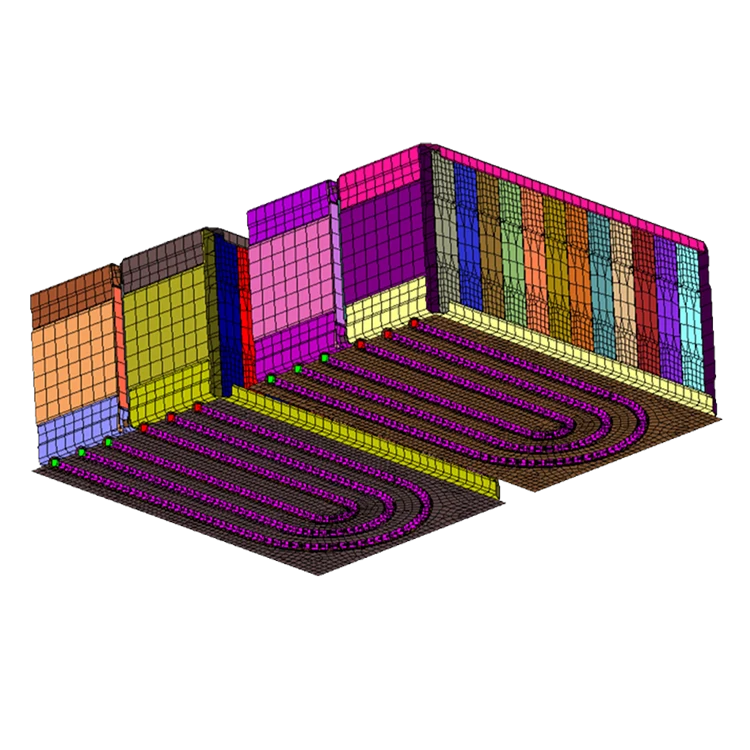
At the core of our approach is the seamless integration of transient heat transfer, multi-mode radiation exchange, and convective fluid coupling. While standard CFD tools focus primarily on the fluid domain, ThermoAnalytics’ suite captures the complete thermal “life cycle” of the battery pack.

TAITherm & MuSES
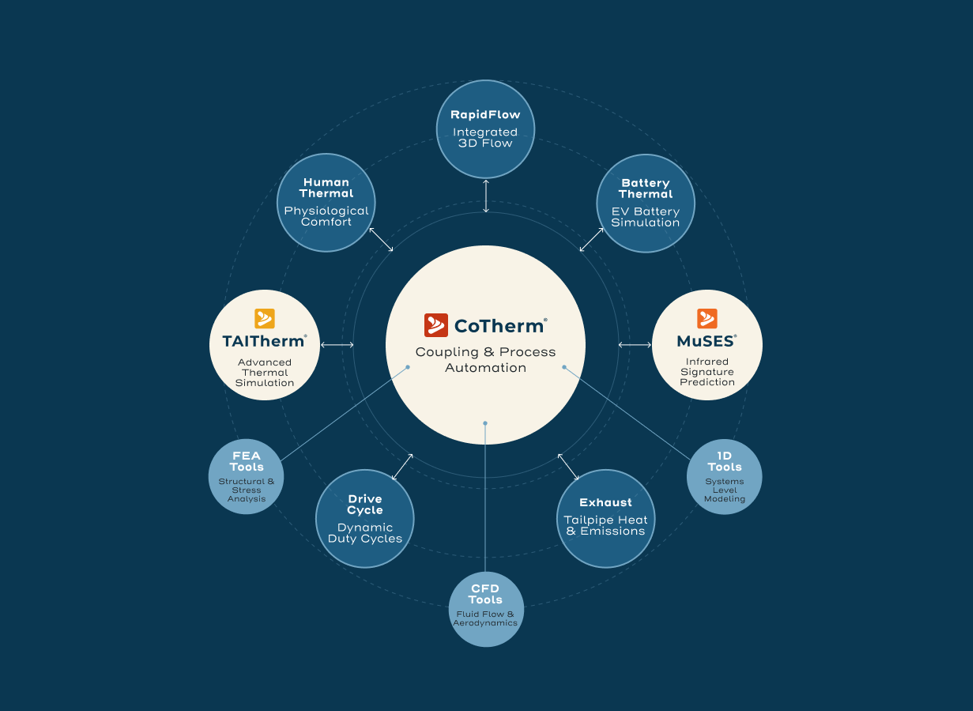
Our flagship thermal solvers utilize a multi-grid approach to handle conduction and radiation. By leveraging TAITherm, engineers can simulate long-duration mission profiles, such as a full drive cycle or a multi-hour soak, with unrivaled speed and accuracy. MuSES adds a layer of signature management and advanced materials analysis, ensuring the thermal footprint is managed alongside performance.

The Battery Thermal Extension
This specialized module enables a Thermal-Electrical coupling. It calculates heat generation based on state-of-charge (SoC), depth-of-discharge (DoD), and local temperature. By solving the electrical and thermal circuits simultaneously, we capture the non-linear “vicious cycles” where rising heat increases internal resistance, further driving temperatures upward.

CoTherm
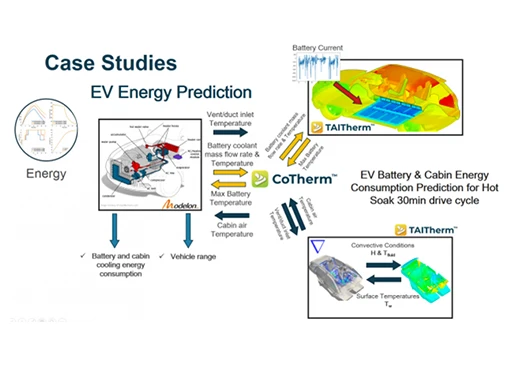
To achieve true multi-physics excellence, CoTherm acts as the orchestration engine, automated coupling between TAITherm and 3D CFD solvers or 1D systems tools. This allows for high-fidelity cooling jacket analysis without the prohibitive computational cost of a standalone CFD transient run.
Engineering Without Compromise
By integrating ThermoAnalytics into your design workflow, you transform thermal management from a reactive fix into a competitive advantage.
Thermal Runaway & Safety Propagation Analysis
The most critical engineering challenge in high-voltage packs is the prevention of cell-to-cell propagation during a failure event. Using TAITherm’s transient solver, engineers can model the exothermic energy release of a single failing cell and analyze how heat moves through busbars, thermal interface materials (TIM), and separators. This simulation allows for the design of effective “firewalls” and venting strategies, ensuring that a localized failure does not escalate into a full-pack thermal runaway event, thereby meeting stringent global safety certifications.
LEARN MORE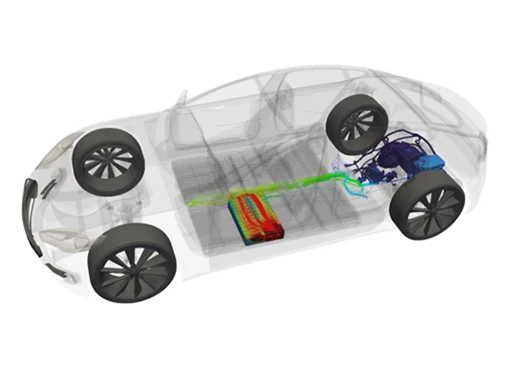
Fast-Charging Optimization & Cold-Weather Performance
Extreme temperature scenarios represent a hurdle for consumer adoption of EVs. Our tools allow engineers to simulate “Cold Soak” scenarios where the battery must be pre-conditioned using internal or external heaters. Conversely, during ultra-fast charging, we analyze the efficiency of the liquid cooling plates to prevent localized hotspots. By optimizing the thermal mass and fluid flow paths through simulation, OEMs can reduce charging times and extend the life of the battery chemistry by preventing lithium plating and other degradations.
LEARN MORE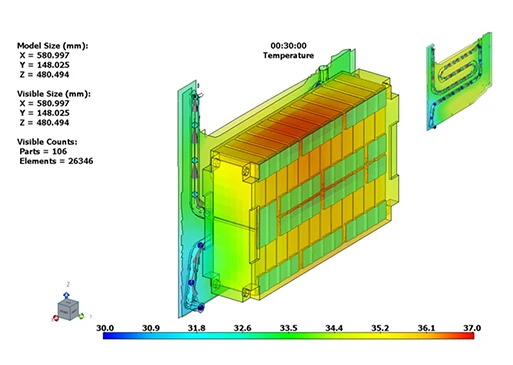
Integrated Vehicle Thermal Management & Passenger Comfort
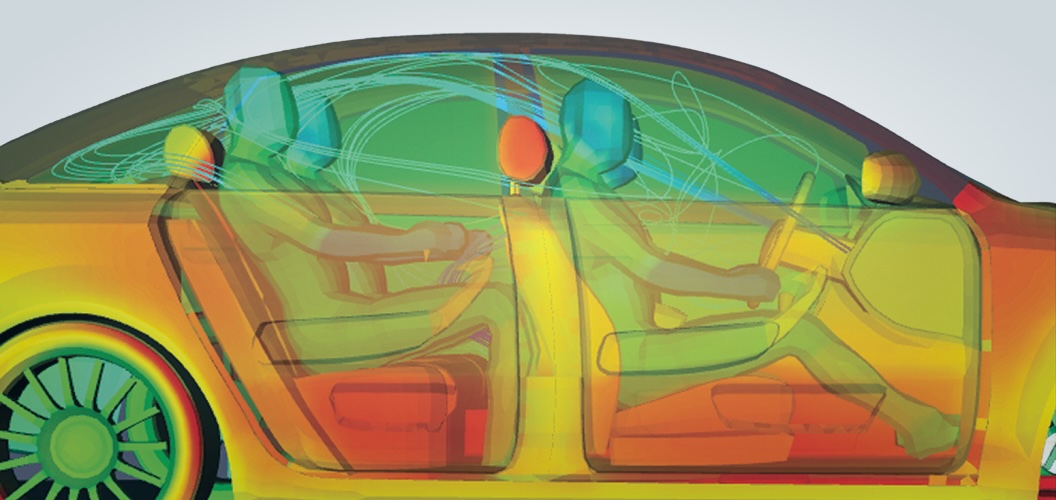
A battery does not exist in a vacuum; it is part of a complex thermal ecosystem. Using CoTherm to link the battery pack with the cabin HVAC and motor cooling loops, engineers can perform holistic energy audits. We simulate how waste heat from the battery can be scavenged to warm the cabin, or how the AC compressor load affects driving range. This multi-physics approach ensures that maximizing passenger comfort does not come at the expense of vehicle range, allowing for the intelligent balancing of energy across the entire platform.
LEARN MORE