
Thermal Management & Heat Transfer
Electronics Thermal Analysis
Prevent Overheating in High-Performance Electronics
In the rapidly evolving landscape of vehicle electrification, the stakes for battery safety have never been higher. Thermal Runaway, a self-sustaining, uncontrolled increase in temperature, represents the most critical failure mode for high-energy-density battery packs. Managing this risk requires more than just cooling; it demands a deep understanding of how local cell failures propagate into system-wide events.
ThermoAnalytics provides high-fidelity simulation solutions that allow engineers to predict, analyze, and mitigate thermal runaway risks long before physical prototypes are built. By accurately modeling the complex interplay of chemical kinetics and heat transfer, we empower manufacturers to deliver safer, more resilient energy storage systems.
How It Works:
The Physics of High-Fidelity Simulation
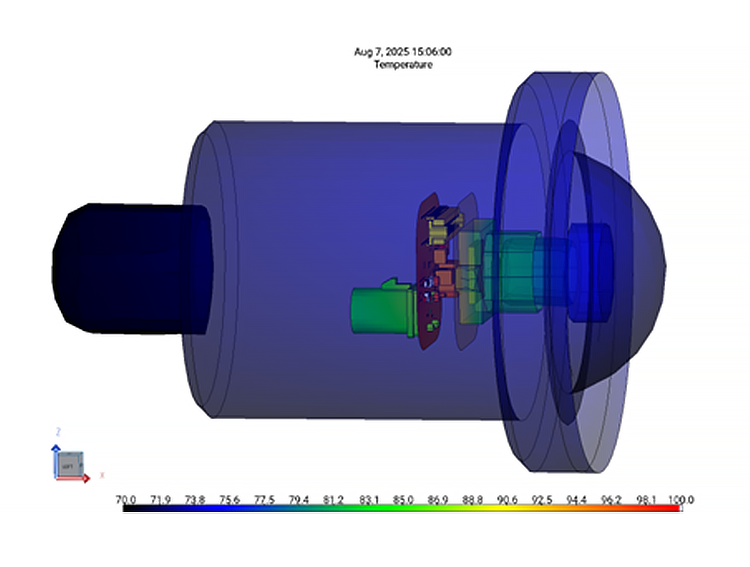
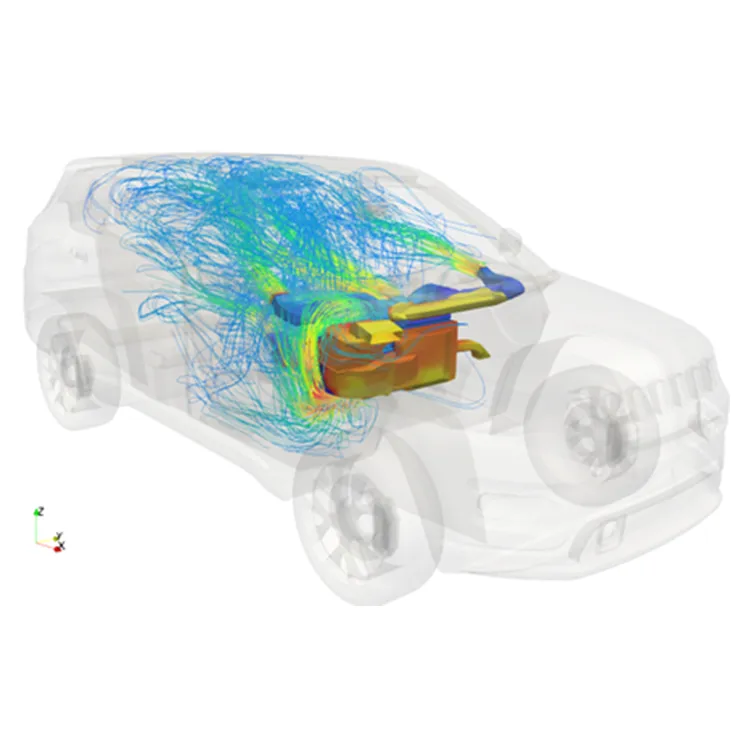
Our electronics thermal analysis is built on a multi-grid, parallelized solver that accounts for all modes of heat transfer: conduction, convection, and radiation. Unlike traditional steady-state tools, TAITherm excels in transient analysis, capturing the thermal “spikes” and fluctuations that occur during rapid power cycling or changing environmental conditions.
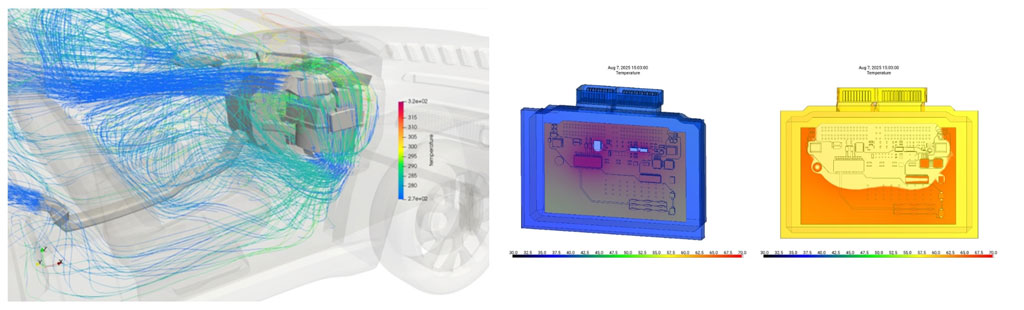
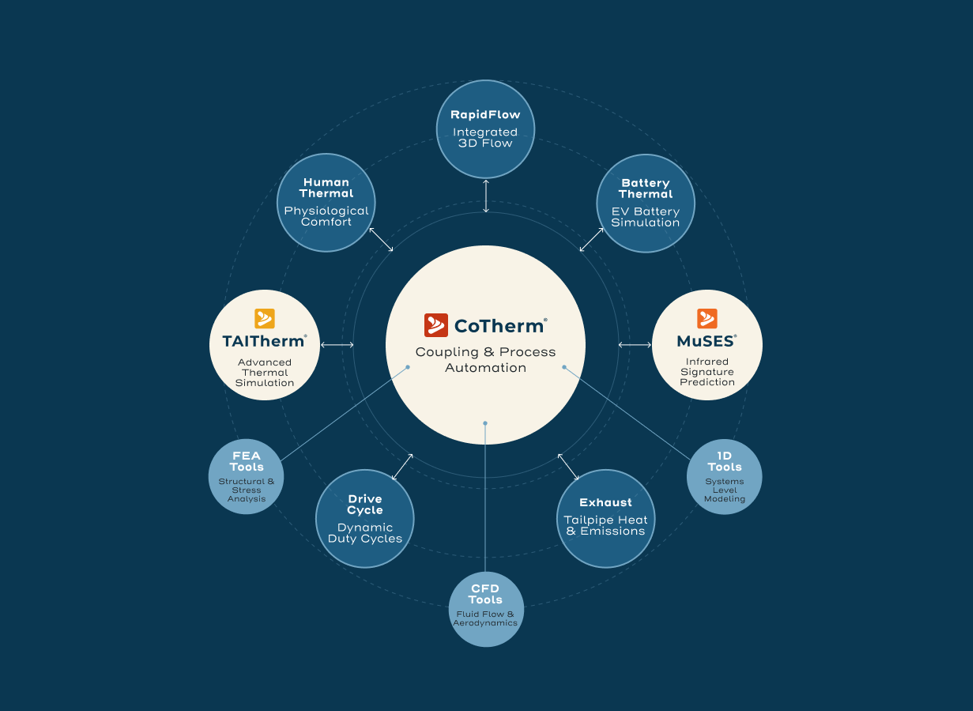
The software utilizes a sophisticated Joule Heating module to calculate localized heat generation by solving electrical circuit equations directly on the 3D geometry. This allows for temperature-dependent electrical resistivity modeling—essential for bus bars and high-current connectors where resistance changes as the component heats up. To streamline the workflow, RapidFlow integrates a 3D convective solver that automates the thermal-fluid coupling, providing fast and accurate air or liquid cooling results without the overhead of traditional, high-resource CFD.
Engineering Without Compromise
By integrating ThermoAnalytics into your design workflow, you transform thermal management from a reactive fix into a competitive advantage.
Battery Thermal Management
The transition to electrification requires rigorous battery safety and performance standards. Our Battery Thermal Extension provides a coupled thermal-electrical solver that predicts temperature distribution at both the cell and pack levels. Engineers can simulate complex scenarios such as high-rate fast charging, thermal runaway propagation, and long-term capacity fade (aging). This ensures that cooling systems—whether passive, active air, or liquid-cooled—are optimized to keep cells within their narrow prime temperature window for maximum life.
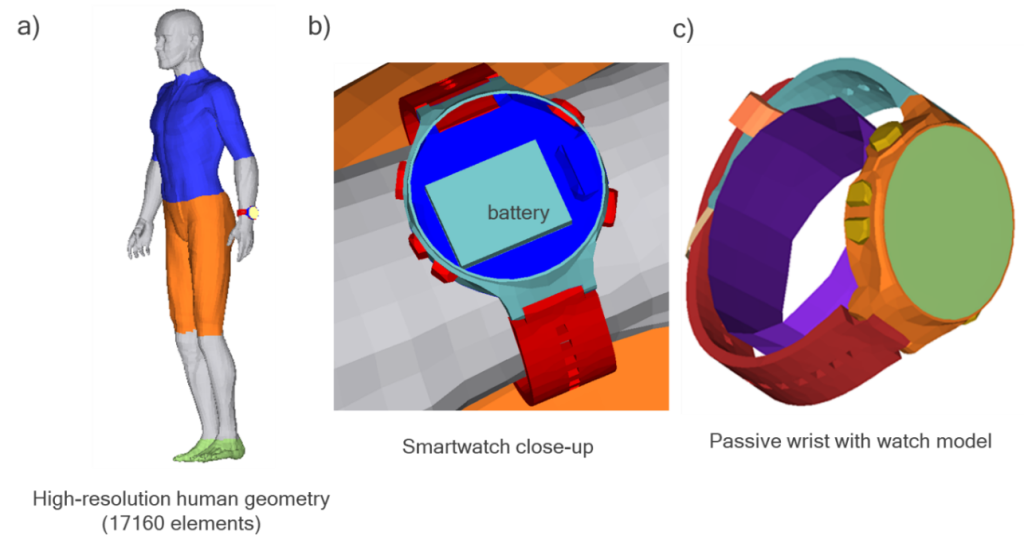
Wearable Electronics and Human Comfort
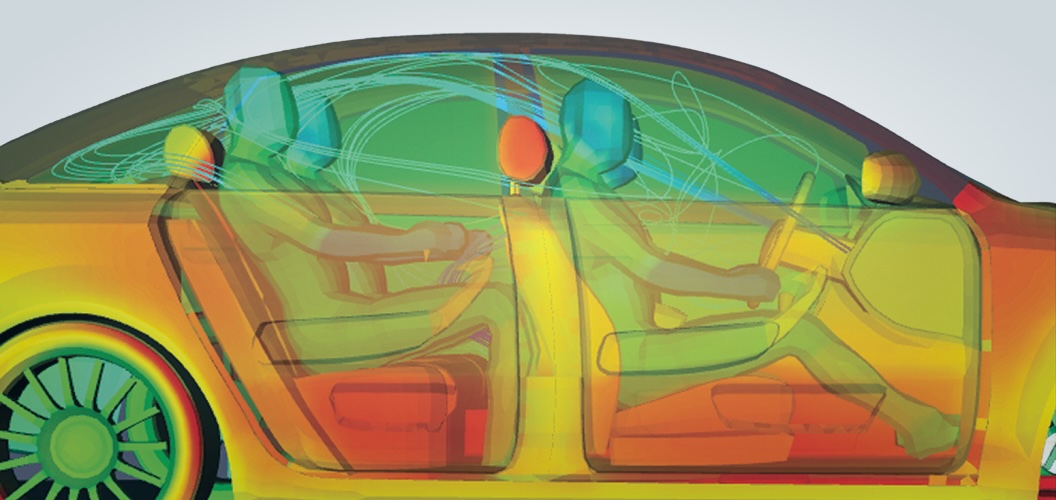
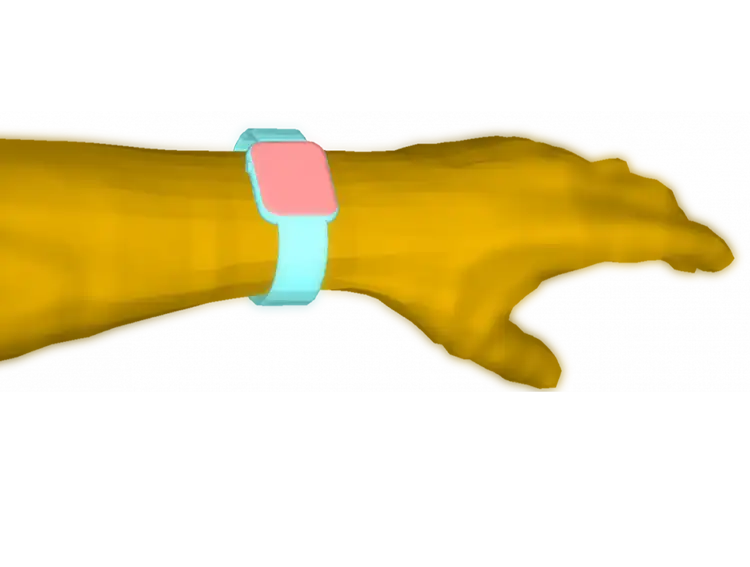
Designing wearables requires a unique balance between device performance and user safety. Using our Human Thermal Extension, we go beyond standard electronics cooling to simulate how a device interacts with human physiology. We predict not only the device’s surface temperature but also the wearer’s skin temperature, sensation, and potential “time-to-pain” or “time-to-burn.” This ensures that high-performance wearables remain comfortable and safe during prolonged contact with the body.
Semiconductor & Power Electronics
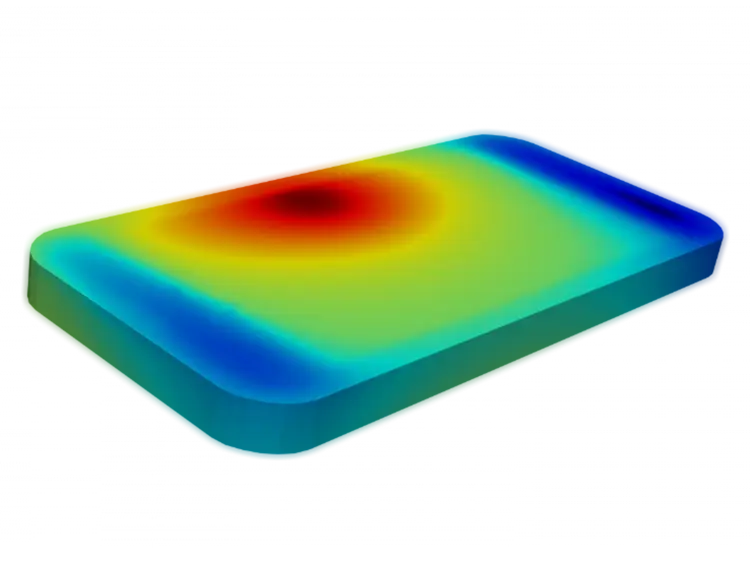
For high-power semiconductors and IGBTs, managing junction temperatures is critical to preventing premature failure. Our analysis enables detailed component-level modeling, including the effects of thermal interface materials (TIMs), heat sinks, and localized air velocities. By predicting transient heat soak and “hot spot” formation, designers can implement effective derating strategies and material selections early in the design phase, long before physical prototypes are built.