 Skip to main content

Thermal Simulation of Atmospheric Re-entry from Low-Earth Orbit with TAITherm/MuSES and CoTherm
Thursday, April 30, 2026 | 9:00 - 10:00AM ET
When a spacecraft transitions from the vacuum of Low Earth Orbit (LEO) to the searing heat of at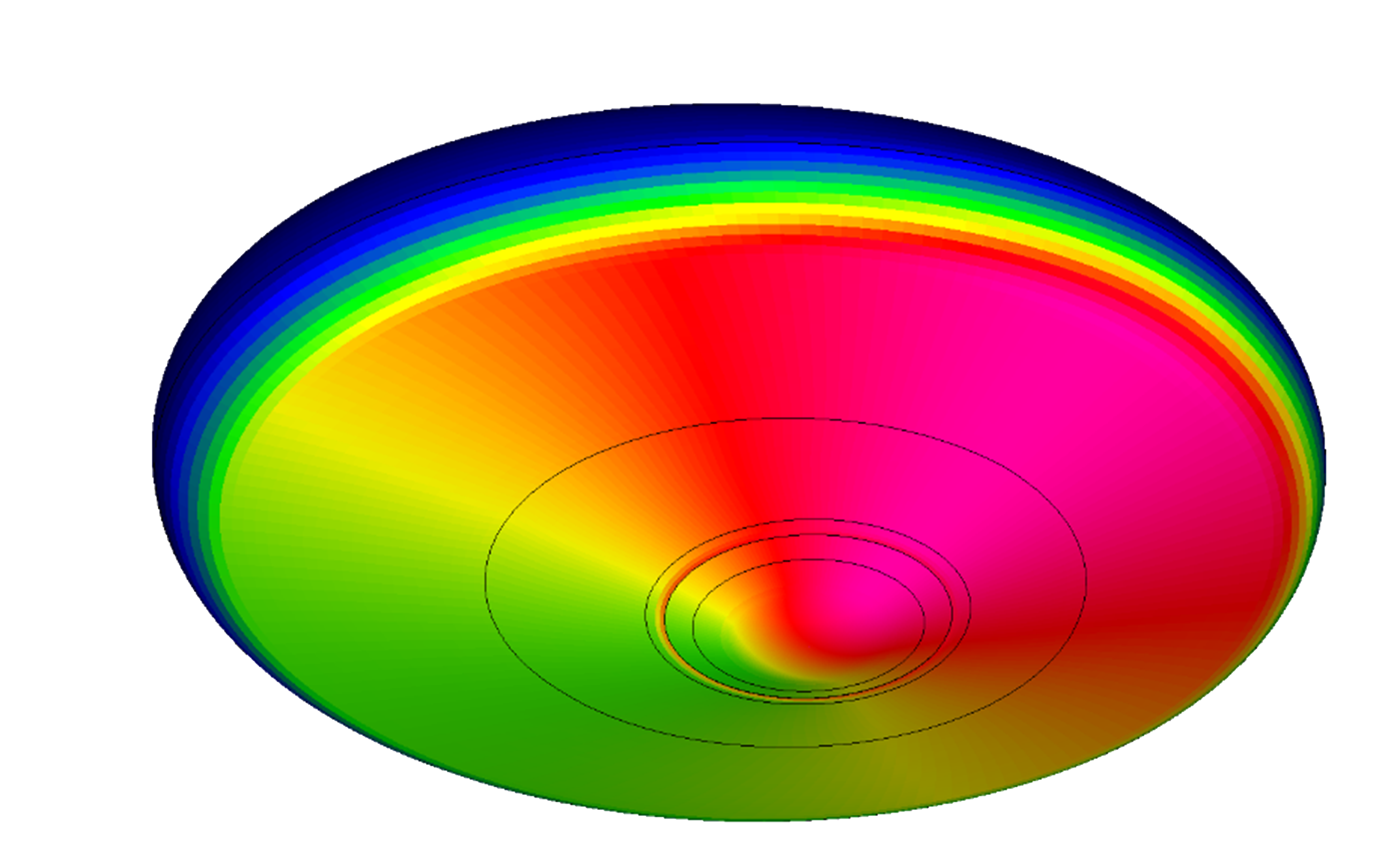 mospheric re-entry, thermal management is the difference between mission success and total loss. Join us for an in-depth webinar exploring advanced transient thermal modeling techniques for high-velocity descent.
Featuring a real-world application of the Inflatable Atmospheric Decelerator (IAD) by ATMOS Space Cargo GmbH, we demonstrate how to predict extreme heating environments for reusable spacecraft. Wil will walk through the 20-minute re-entry descent, spanning both hypersonic and supersonic regimes. Attendees will gain insight into how TAITherm/MuSES and CoTherm accurately predict heat flux, surface temperatures, and internal payload conditions through automated setup of radiation, conduction, and convection.
Key Takeaways:
- Precision Modeling: Use MuSES and CoTherm to accurately predict thermal conditions prior to re-entry.
- Trajectory Optimization: Learn how to optimize re-entry trajectories to minimize the thermal load on critical components.
- Payload Security: Ensure internal components remain within safe operating limits.
- Automated Physics: See how hypersonic and supersonic convective heating correlations are automatically applied to 3D geometry.
Who should attend:
- Aerospace and Spacecraft Thermal Engineers seeking high fidelity in transient analysis.
- Systems Engineers tasked with return from orbit missions.
- Thermal Design Engineers developing automated workflows.
- Space Industry Professionals focused on LEO operation and payload return.
Presenter
Logan Canull
Thermal/CFD Engineer
 | Logan Canull is a Thermal/CFD Engineer at ThermoAnalytics, Inc., where he supports research and development efforts focused on advancing the thermal modeling of orbital systems, unmanned aerial systems (UAS), and lithium-ion batteries. He joined ThermoAnalytics in 2022 after earning his B.S. in Mechanical Engineering from Michigan Technological University and completed his M.S. in Mechanical Engineering in 2023. |